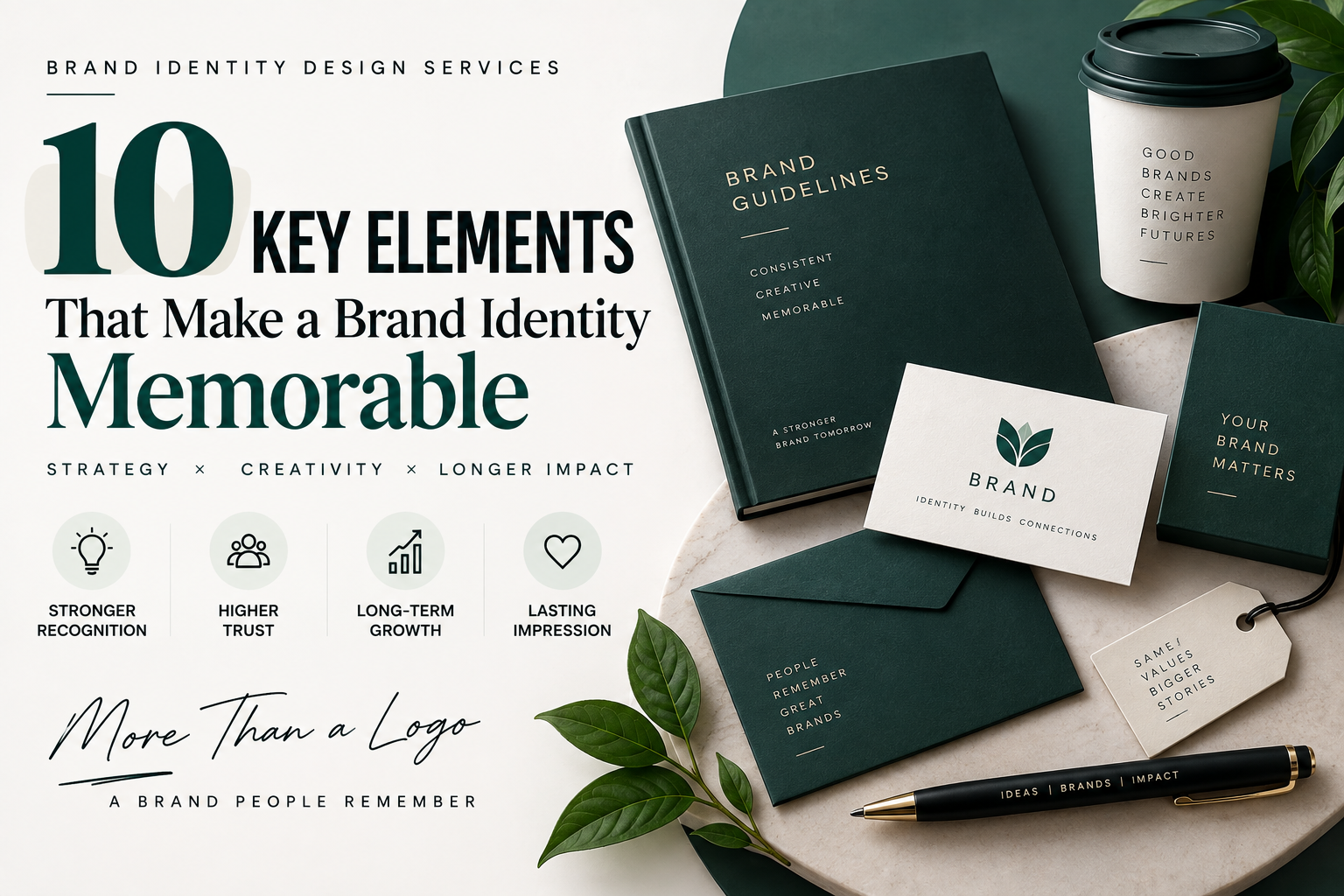
A memorable brand is not created by a logo alone. People remember brands because of the complete experience they have with them—the colours they see, the language they read, the visual style they recognize, and the feelings they associate with the business.
Think about brands you can identify without seeing their names. A particular colour combination, typeface, packaging style, advertisement, or even a familiar tone of voice can be enough to tell you which company is behind it. That level of recognition does not happen by accident. It comes from a carefully developed and consistently applied brand identity.
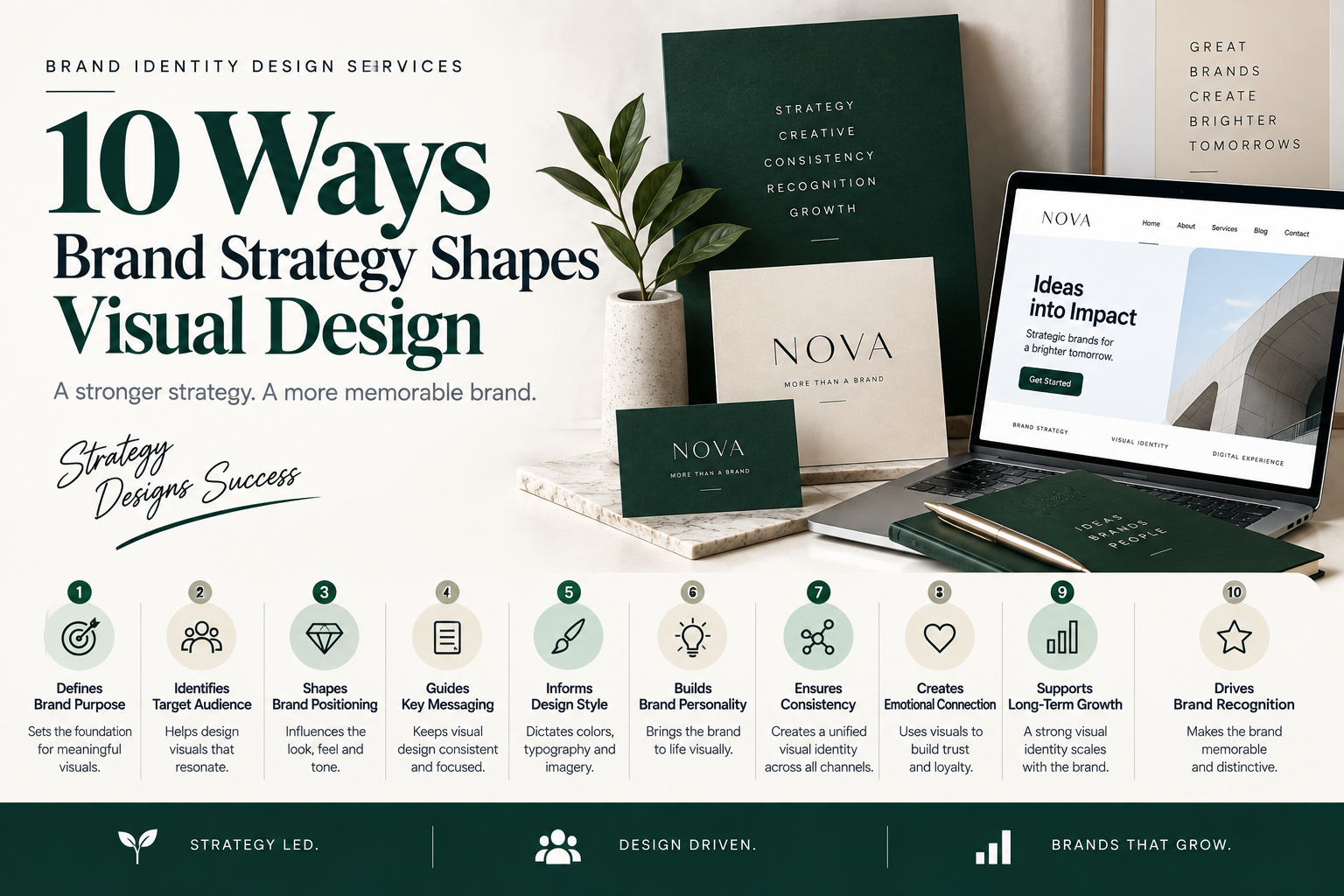
This is where Brand Identity Design Services become important. Professional brand identity development connects strategy with visual communication so that a business can present itself clearly and consistently across different platforms.
A memorable identity should do more than look attractive. It should communicate what the business represents, make the company recognizable, create an emotional connection with its audience, and remain consistent as the business grows.
In this guide, we will explore 10 key elements that make a brand identity memorable, how each element contributes to recognition, and what businesses should consider when developing their own identity.
Table of Contents
What Is a Brand Identity?
Why Does Brand Memorability Matter?
10 Key Elements That Make a Brand Identity Memorable
A Distinctive Logo
A Strong and Consistent Colour Palette
Strategic Typography
A Clear Brand Personality
Consistent Visual Language
Strong Brand Messaging
Memorable Imagery
Consistency Across Touchpoints
Simplicity and Recognition
Emotional Connection
How Brand Identity Design Services Build Memorability
Common Mistakes That Make Brands Forgettable
How to Build a Memorable Brand Identity Step by Step
FAQs
Conclusion
What Is a Brand Identity?
Brand identity is the collection of visual and verbal elements a business uses to present itself to its audience.
It can include:
Logo
Colours
Typography
Photography style
Illustrations
Icons
Graphics
Brand voice
Messaging
Packaging
Website design
Social media visuals
Marketing materials
Brand guidelines
These elements work together to create a recognizable identity.
It is also important to understand the difference between brand identity and brand image.
Brand identity is what a company intentionally creates and communicates. Brand image is how customers actually perceive that company.
For example, a business may want to appear innovative, friendly, and trustworthy. Its brand identity should therefore use visual and verbal choices that communicate those characteristics. If customers consistently perceive the company that way, the identity is doing its job.
A professional identity is not simply a collection of attractive design elements. It is a system in which each element supports the same overall message.
This is one reason businesses invest in Brand Identity Design Services rather than treating branding as a one-time logo design project.
Why Does Brand Memorability Matter?
Consumers encounter hundreds or even thousands of brands through websites, social media, advertisements, search engines, packaging, emails, and physical locations.
Most of those brands are quickly forgotten.
Memorability gives a business an advantage because customers are more likely to recognize a company they have seen before.
A memorable brand identity can help a business:
Improve brand recognition
Create stronger customer associations
Look more professional
Build trust
Differentiate itself from competitors
Create consistency across marketing channels
Make advertising easier to recognize
Strengthen customer loyalty
However, memorability does not mean making a design complicated or unusual simply for attention.
A memorable identity is usually distinctive, relevant, consistent, and easy to recognize.
10 Key Elements That Make a Brand Identity Memorable
1. A Distinctive Logo
A logo is often one of the first things people associate with a company.
However, a memorable logo does not necessarily need to be complicated. In many cases, simple logos are easier to recognize, reproduce, and remember.
A strong logo should reflect the character of the business while remaining functional across different applications.
For example, a logo may need to appear on:
Websites
Mobile screens
Business cards
Social media profiles
Product packaging
Signboards
Advertisements
Documents
Merchandise
A design that looks good only in one format is not practical.
Professional Brand Identity Design Services typically consider the complete logo system rather than creating one isolated graphic. This can include a primary logo, secondary variation, icon, monochrome version, and guidelines for proper usage.
What makes a logo memorable?
A memorable logo generally has:
The goal is not to explain the entire business through the logo. Instead, the logo should provide a recognizable visual anchor for the wider identity.
2. A Strong and Consistent Colour Palette
Colour is one of the most noticeable parts of a visual identity.
A carefully selected colour palette can make a brand easier to recognize and can influence how people interpret the company.
Different colours can create different associations. Blue may communicate stability or professionalism, while green can be associated with nature, health, or growth. Black may communicate sophistication, while bright colours can create a more energetic personality.
However, colour psychology should not be treated as a rigid formula.
The meaning of a colour can change depending on:
Industry
Culture
Audience
Colour combinations
Context
Design style
A strong brand palette normally includes primary colours, supporting colours, neutral shades, and clear rules for how they should be used.
Consistency is particularly important.
If a company uses completely different colours on its website, Instagram account, packaging, and advertisements, customers may struggle to connect those experiences to the same brand.
This is where Brand Identity Design Services can help establish a practical colour system that works across different communication channels.
A good colour system should define:
The objective is not simply choosing attractive colours. It is creating a colour system people can eventually associate with the brand.
3. Strategic Typography
Typography is another powerful part of brand recognition.
The fonts a company chooses can influence whether the brand feels modern, traditional, premium, playful, technical, or approachable.
Imagine a luxury brand using a playful children’s font for all of its communication. The message would feel disconnected from the business.
Typography should support the brand personality.
A professional identity may use:
Primary typeface
Secondary typeface
Heading styles
Body text styles
Display typography
Font weights
Spacing rules
Typography also affects usability.
A beautiful font is not useful if customers struggle to read the website or marketing material.
A memorable typography system therefore needs to balance personality and readability.
Questions to consider when selecting brand fonts
Does the font reflect the brand personality?
Is it readable at small sizes?
Does it work on websites?
Is it available across required platforms?
Does it support the required languages?
Does it work alongside the logo?
Can it create a consistent hierarchy?
When these choices are documented and applied consistently, typography becomes part of the brand’s recognizable visual language.
4. A Clear Brand Personality
A brand identity becomes much easier to remember when the business feels like it has a recognizable personality.
Think of brand personality as the human characteristics associated with a company.
A brand might be:
Friendly
Bold
Professional
Innovative
Premium
Playful
Reliable
Minimal
Energetic
Sophisticated
The personality should influence design decisions.
For example, a technology startup targeting young professionals may choose a modern and energetic identity. A financial institution may prefer a more established and trustworthy visual direction.
Neither approach is automatically better.
The important thing is alignment between the audience, business positioning, and identity.
Before designing, businesses should define a few personality traits that describe how they want to be perceived.
A simple exercise is to complete this sentence:
“If our brand were a person, it would be…”
The answer can help guide choices around colour, typography, imagery, messaging, and overall design style.
5. Consistent Visual Language
A logo alone cannot create a complete brand identity.
A memorable brand needs a visual language that extends beyond the logo.
This can include:
Shapes
Lines
Patterns
Icons
Illustrations
Photography
Textures
Layouts
Graphic elements
Design compositions
When these elements follow consistent rules, customers begin to recognize the brand even when the logo is not immediately visible.
For example, a company may consistently use a specific combination of geometric shapes, photography style, spacing, and colours.
Over time, those characteristics become associated with the company.
This is one of the major advantages of professional Brand Identity Design Services. Instead of creating individual designs whenever a business needs marketing material, the service can establish a visual system that designers can repeatedly use.
That system makes future design work faster and more consistent.
6. Strong Brand Messaging
Visual design gets attention, but messaging explains what the brand stands for.
A memorable brand should have a clear verbal identity.
This includes:
Brand positioning
Tagline
Key messages
Brand promise
Value proposition
Tone of voice
Communication style
For example, a brand might communicate in a way that is:
The tone should remain recognizable across different channels.
A company should not sound formal on its website, extremely casual on social media, and completely different in customer emails without a reason.
Strong messaging reinforces the visual identity.
When customers repeatedly see the same visual style and hear a consistent message, the brand becomes easier to recognize and understand.
7. Memorable Imagery
Photography and imagery can dramatically influence how a brand is perceived.
Two businesses can use the same logo and colours but still feel completely different because their photography styles are different.
A brand may use:
The important thing is consistency.
If a brand wants to appear premium, low-quality or inconsistent imagery can damage that perception.
If it wants to appear approachable, overly staged stock photography may create the opposite impression.
A defined imagery style helps designers make better decisions.
For example, brand guidelines may specify:
Lighting style
Composition
Backgrounds
Subject positioning
Image treatments
Cropping
Filters
Illustration style
This makes imagery another recognizable part of the identity.
8. Consistency Across Brand Touchpoints
A customer may interact with a company through many different touchpoints before making a purchase.
They might see:
A Google search result
A website
An Instagram post
An advertisement
An email
A product package
A sales presentation
A physical store
Every interaction contributes to their perception of the brand.
If each touchpoint looks different, the customer may not immediately realize that all of them belong to the same company.
Consistency solves this problem.
A strong identity should be adaptable enough to work across:
Websites
Social media
Email marketing
Digital advertising
Print material
Packaging
Presentations
Signage
Mobile applications
This does not mean every design should look identical.
Instead, the same core identity should remain visible while the design adapts to the context.
Professional Brand Identity Design Services can establish these rules so the identity remains recognizable without becoming repetitive.
9. Simplicity and Recognition
Memorable does not mean complicated.
In fact, excessive design elements can make an identity harder to recognize.
A brand with five fonts, ten colours, multiple illustration styles, and inconsistent layouts may appear creative, but it can also become visually confusing.
Simplicity helps customers identify the most important elements quickly.
A simplified identity can provide:
This is particularly important in digital environments.
A logo may appear as a tiny social media icon or a small mobile interface element. A complicated design can lose its impact at smaller sizes.
The best approach is to remove unnecessary elements without removing the brand’s personality.
10. Emotional Connection
The strongest brands are not remembered only because of how they look.
They are remembered because of how they make people feel.
Customers may associate a brand with:
Trust
Excitement
Comfort
Confidence
Belonging
Inspiration
Convenience
Status
Visual identity can support those emotions, but the entire customer experience needs to reinforce them.
For example, a company cannot create a trustworthy identity through design alone while providing a poor customer experience.
Brand identity sets expectations. The business experience needs to deliver on them.
This is why effective Brand Identity Design Services should begin with understanding the business, audience, positioning, and customer experience rather than jumping directly into visual design.
How Brand Identity Design Services Build Memorability
Professional Brand Identity Design Services generally approach branding as a system rather than a single design task.
A typical process may involve several stages.
1. Brand Discovery
The first step is understanding the business.
This can involve researching:
Business goals
Target audience
Competitors
Industry
Current brand perception
Market position
Business strengths
Customer expectations
Without this information, design decisions can become subjective.
2. Brand Strategy
The next stage establishes the foundation.
This may include:
Brand positioning
Mission
Vision
Values
Personality
Audience
Differentiators
Messaging
The strategy gives designers a reason behind their creative decisions.
3. Visual Direction
Designers then explore possible visual directions.
This can include moodboards, colour concepts, typography options, imagery styles, and graphic references.
The goal is to identify a visual direction that fits the brand rather than simply selecting what looks fashionable.
4. Identity Design
The visual system is developed through elements such as:
Logo
Colour palette
Typography
Graphics
Imagery
Icons
Layout principles
5. Brand Guidelines
Finally, the identity needs rules.
Brand guidelines explain how different elements should be used.
They can cover logo spacing, colour values, typography, imagery, layouts, social media applications, and other brand requirements.
This prevents the identity from becoming inconsistent as more people begin using it.
Common Mistakes That Make Brands Forgettable
Even businesses with good design can struggle with recognition if they make certain mistakes.
Changing the Identity Too Often
Constantly changing colours, fonts, logos, and visual styles prevents customers from developing strong associations.
Evolution is sometimes necessary, but unnecessary changes can weaken recognition.
Copying Competitors
Following competitors too closely can make a brand look interchangeable.
Research competitors to understand the market, but use that information to find opportunities for differentiation.
Using Too Many Design Elements
More does not always mean better.
Too many colours, fonts, patterns, and graphic styles can make the identity difficult to understand.
Ignoring the Target Audience
A design can be beautiful and still be wrong for its audience.
Brand identity should be developed around the people the business wants to reach.
Focusing Only on the Logo
A logo is important, but it is only one part of the identity.
A strong brand needs a complete visual and verbal system.
Inconsistent Application
Even a great identity becomes weak when different teams use different fonts, colours, imagery, or logo versions.
Clear guidelines can reduce this problem.
How to Build a Memorable Brand Identity Step by Step
Businesses that want to develop a memorable identity can follow a structured approach.
Step 1: Understand Your Audience
Identify who you want to reach.
Understand their:
Step 2: Define Your Position
Ask:
Why should customers choose your business instead of another option?
Your answer should influence the identity.
Step 3: Define Your Personality
Choose three to five characteristics that represent the brand.
For example:
Modern + Reliable + Approachable + Professional
These traits become creative filters for design decisions.
Step 4: Develop the Visual System
Create your:
Logo
Colour palette
Typography
Imagery
Graphics
Icons
Layout principles
Step 5: Create Brand Guidelines
Document the identity so other people can use it correctly.
Step 6: Apply It Consistently
Use the identity across every relevant customer touchpoint.
Step 7: Review and Improve
A brand identity should remain relevant as the business evolves.
Review performance and customer perception periodically without changing the identity unnecessarily.
How Gowenza Can Support Your Brand Identity
Building a recognizable brand requires more than creating attractive visuals. It requires strategy, consistency, and the ability to carry the same identity across different digital experiences.
At Gowenza, Brand Identity Design Services can work alongside other digital services to create a more connected brand presence. Businesses can combine Brand Identity Design Services with Website Development Services for a consistent website experience, SEO Services to improve search visibility, Graphic Design Services for ongoing visual communication, Digital Marketing Services for broader campaigns, and Google Ads Services for paid customer acquisition.
The goal is simple: create a brand that looks consistent, communicates clearly, and gives customers a reason to remember it.
Gowenza — Create. Innovate. Elevate.
FAQs About Memorable Brand Identity
1. What makes a brand identity memorable?
A memorable brand identity usually combines distinctive visual elements, consistent colours, typography, messaging, imagery, personality, and customer experiences. The key is making these elements work together consistently.
2. Is a logo enough to create a memorable brand?
No. A logo is an important recognition element, but a complete identity includes colours, typography, imagery, graphics, messaging, and other brand touchpoints.
3. How important is colour in brand identity?
Colour can strongly contribute to recognition and emotional perception. A consistent colour palette makes it easier for customers to associate visual content with a particular brand.
4. Can a simple brand identity be memorable?
Yes. Simplicity can improve recognition because customers can process and remember clear visual elements more easily. The identity still needs to be distinctive and relevant.
5. How often should a business change its brand identity?
There is no universal timeline. Businesses should consider a change when their positioning, audience, market, or business direction has significantly changed. Rebranding simply because a design feels old can sometimes weaken recognition.
6. Why are brand guidelines important?
Brand guidelines help maintain consistency. They give designers, marketers, employees, and external partners clear instructions for using logos, colours, fonts, imagery, and other identity elements.
7. Can small businesses benefit from professional Brand Identity Design Services?
Yes. A well-developed identity can help small businesses establish a professional presence, differentiate themselves from competitors, and create consistency across their marketing channels.
8. What is the difference between branding and brand identity?
Branding is the broader process of shaping how a business is perceived. Brand identity is the collection of visual and verbal elements a business uses to communicate that positioning.
9. How long does it take to create a brand identity?
The timeline depends on the project’s scope, research requirements, number of concepts, revisions, and brand applications. A complete identity system generally requires more work than creating a logo alone.
10. Can a brand identity improve customer trust?
A consistent and professional identity can contribute to perceived credibility and familiarity. However, trust also depends heavily on the actual products, services, communication, and customer experience.
Conclusion
A memorable brand identity is not created by adding more design elements. It comes from making the right elements work together.
A distinctive logo gives customers something to recognize. Colours create visual associations. Typography adds personality. Imagery strengthens the visual language, while messaging explains what the business stands for. Consistency connects all of these elements across different customer touchpoints.
The most successful identities are also flexible. They can work on a website, social media post, business card, advertisement, packaging, or mobile screen without losing their core characteristics.
That is the real value of Brand Identity Design Services. Instead of treating branding as a collection of disconnected designs, professional identity development creates a system that can grow with the business.
The 10 key elements discussed in this guide—logo, colour, typography, personality, visual language, messaging, imagery, consistency, simplicity, and emotional connection—provide a strong foundation for building an identity customers can recognize and remember.
Ultimately, the goal is not simply to make a brand look good.
The goal is to make it recognizable, meaningful, consistent, and worth remembering.
Helpful Resources
When building a memorable brand identity, using reliable design resources can help businesses make more informed creative decisions. For example, Adobe Color can be useful when developing and exploring colour palettes, while Google Fonts provides a wide range of typefaces that can support different brand personalities. Businesses can also explore research and usability guidance from the Nielsen Norman Group to better understand how people perceive and interact with visual communication. Using resources like these alongside professional Brand Identity Design Services can help create a brand identity that is both visually appealing and easier for customers to recognize and remember.

3 Responses