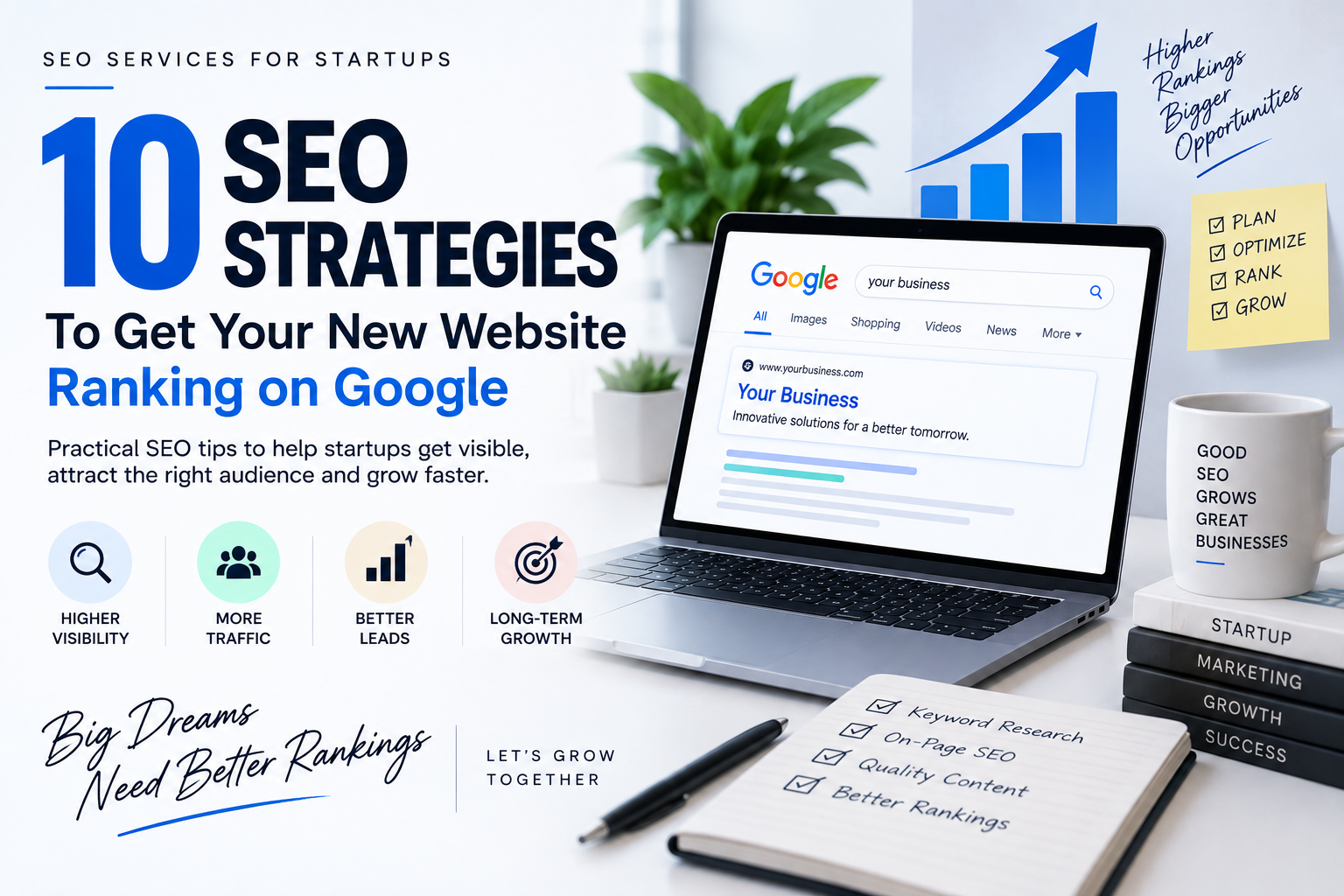
SEO Services for Startups: 10 SEO Strategies to Get Your New Website Ranking on Google
Building a memorable brand takes more than a good-looking logo. Every successful business that customers instantly recognize has one thing in common—a consistent and well-planned brand identity. From your logo and colors to your typography, messaging, and customer experience, every element influences how people perceive your business.
This is where Brand Identity Design Services become essential. They help businesses create a unique visual and emotional identity that customers remember, trust, and choose over competitors.
Whether you’re launching a startup, rebranding an established company, or expanding into new markets, investing in professional Brand Identity Design Services lays the foundation for long-term growth. A strong brand identity doesn’t just make your business attractive—it communicates your values, builds credibility, and creates lasting impressions.
In this guide, you’ll discover ten powerful ways Brand Identity Design Services help businesses create memorable brands that stand out in today’s competitive marketplace.
Table of Contents
- Why Brand Identity Matters More Than Ever
- What Are Brand Identity Design Services?
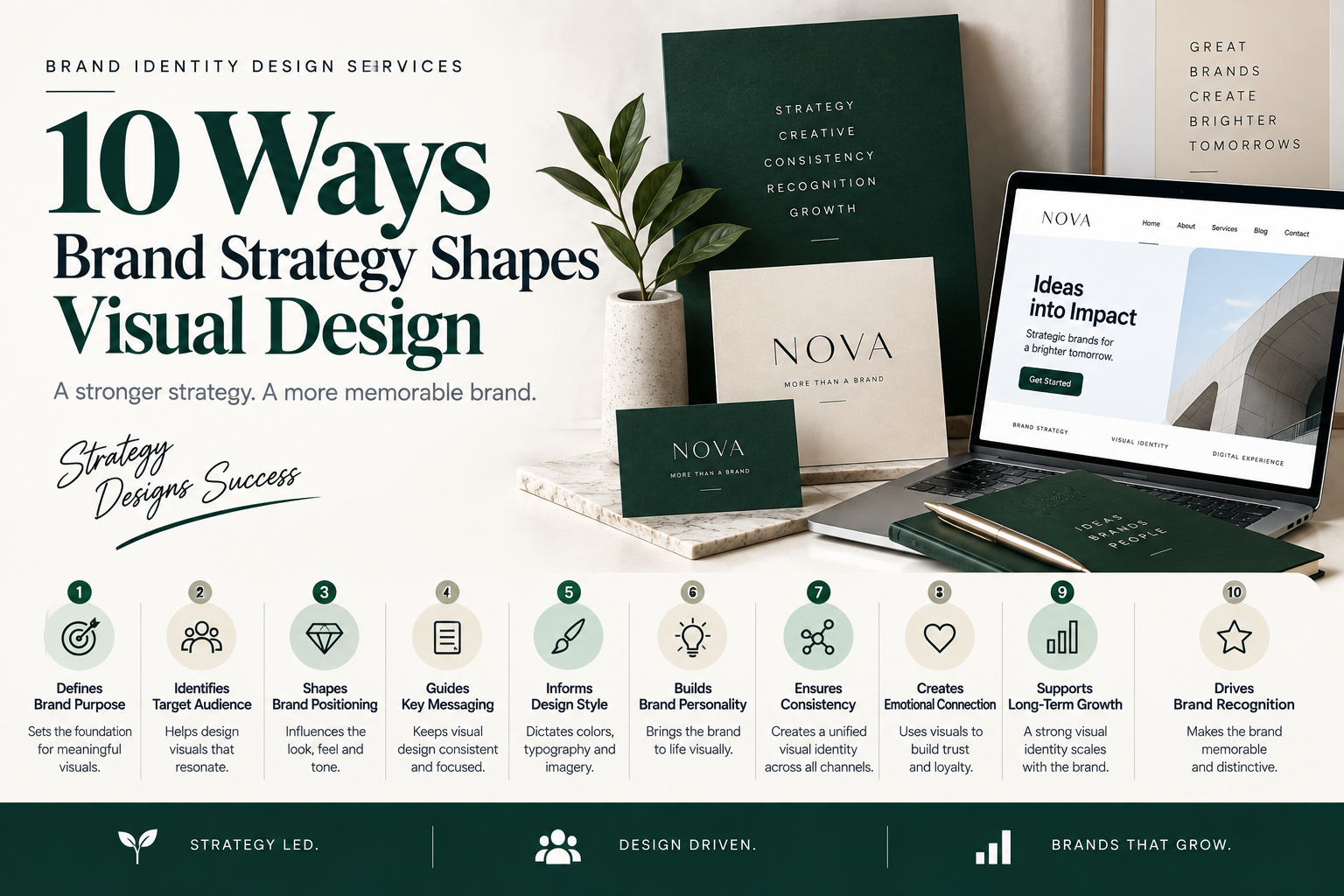
- 10 Powerful Ways Brand Identity Design Services Create a Memorable Brand
- Create a Unique Visual Identity
- Build Trust Through Consistency
- Communicate Your Brand Personality
- Improve Brand Recognition
- Differentiate You From Competitors
- Create Emotional Connections
- Support Marketing Across Every Channel
- Increase Customer Loyalty
- Strengthen Business Credibility
- Prepare Your Brand for Future Growth
- Common Mistakes Businesses Make
- Final Thoughts
- Frequently Asked Questions
Why Brand Identity Matters More Than Ever
Consumers see thousands of advertisements, social media posts, and business promotions every day. With so much competition, grabbing attention isn’t enough—you also need to be remembered.
People often make purchasing decisions within seconds of seeing a brand. During that brief moment, they subconsciously evaluate whether a business appears trustworthy, professional, and relevant to their needs.
Your brand identity influences these decisions before customers even interact with your products or services.
A strong identity helps people instantly recognize your business, remember your name, and associate your company with positive experiences.
Businesses with a clear and consistent identity are often perceived as more reliable than businesses with inconsistent visuals or messaging. This perception can significantly influence purchasing decisions.
What Are Brand Identity Design Services?
Brand Identity Design Services involve creating the visual and strategic elements that define how a business presents itself to the world.
These services typically include:
- Logo design
- Brand color palette
- Typography selection
- Iconography
- Brand guidelines
- Business stationery
- Social media branding
- Marketing collateral
- Packaging design
- Visual communication systems
Professional designers don’t simply create attractive graphics. They build a complete identity system that reflects your company’s mission, values, target audience, and long-term goals.
Instead of random designs, every visual element works together to tell one consistent story.
1. They Create a Unique Visual Identity
Every successful brand has a visual style that people recognize almost instantly.
Think about how easily you recognize certain companies simply by their colors, typography, or packaging—even before seeing their names.
That level of recognition doesn’t happen by chance.
Professional Brand Identity Design Services begin by understanding your business, industry, competitors, and audience. They research your market before designing visual assets that genuinely represent your brand.
A complete visual identity usually includes:
- A professionally designed logo
- Primary and secondary color palettes
- Typography hierarchy
- Icon styles
- Photography guidelines
- Graphic elements
- Design patterns
These elements work together to create consistency across every customer touchpoint.
Without a defined identity, businesses often end up using different colors, fonts, and styles across platforms, making them look unprofessional and forgettable.
A unique visual identity immediately helps customers distinguish your business from competitors.
2. They Build Trust Through Consistency
Consistency is one of the biggest factors behind memorable brands.
Imagine visiting a company’s website that looks modern and professional, but then seeing outdated social media pages with different logos and colors.
It creates confusion.
Customers naturally question whether the business is reliable.
Professional Brand Identity Design Services eliminate this problem by creating detailed brand guidelines that ensure consistency across every platform.
Consistency applies to:
- Website design
- Social media
- Business cards
- Packaging
- Email signatures
- Advertisements
- Brochures
- Presentations
- Office branding
When customers repeatedly see the same visual identity, they begin to recognize and trust your brand.
Consistency also makes your marketing more effective because every interaction reinforces your brand image instead of creating confusion.
Over time, this consistency becomes one of your strongest competitive advantages.
3. They Communicate Your Brand Personality
Every business has a personality.
Some brands want to appear premium.
Others aim to be friendly, creative, luxurious, innovative, or youthful.
Your visual identity should communicate that personality without requiring customers to read lengthy descriptions.
For example:
- Minimal designs often communicate sophistication.
- Bright colors suggest creativity and energy.
- Dark color palettes create a premium feel.
- Rounded typography appears approachable.
- Bold typography communicates confidence.
Professional designers carefully select every visual element to align with your business personality.
Rather than choosing colors simply because they look attractive, they consider the emotions each design decision creates.
This emotional consistency helps customers understand who you are before reading a single sentence about your company.
4. They Improve Brand Recognition
Recognition is one of the biggest goals of branding.
The easier people recognize your business, the easier it becomes to generate repeat customers and referrals.
Recognition develops when customers repeatedly encounter consistent visual elements.
Professional Brand Identity Design Services help establish these recognizable assets by maintaining uniformity across every marketing channel.
For example, when someone sees:
- Your Instagram post
- Your website banner
- Your packaging
- Your email newsletter
- Your advertisement
They should instantly know it belongs to your business.
This immediate recognition increases familiarity.
And familiarity often leads to trust.
Businesses that maintain strong recognition typically spend less effort reminding customers who they are because their identity already does the work.
5. They Help You Stand Out From Competitors
Every industry has businesses offering similar products or services.
Price alone rarely creates lasting differentiation.
Brand identity does.
Professional Brand Identity Design Services begin by analyzing your competitors to identify common design trends, visual styles, and messaging patterns.
Instead of blending into the crowd, they develop an identity that highlights what makes your business unique.
This differentiation can come from:
- Distinctive logo concepts
- Memorable typography
- Unique color combinations
- Consistent brand voice
- Creative visual elements
- Original marketing materials
Standing out isn’t about being louder.
It’s about being more recognizable, more authentic, and more relevant to your ideal customers.
A distinctive identity makes your business easier to remember when customers are ready to make a purchasing decision.
6. They Create Emotional Connections with Customers
People rarely remember businesses because of a logo alone. They remember how a brand made them feel.
A thoughtfully designed brand identity creates emotions before a customer even makes a purchase. The choice of colors, typography, imagery, and messaging can communicate confidence, excitement, luxury, reliability, or innovation.
This is why professional Brand Identity Design Services focus on more than aesthetics. Every design decision is made with your target audience in mind.
For example:
- A healthcare brand often uses calming colors and clean layouts to build trust.
- A children’s brand may use bright colors and playful illustrations to create excitement.
- A luxury brand typically relies on minimal designs, elegant typography, and refined color palettes to convey exclusivity.
When customers emotionally connect with a brand, they are more likely to remember it, recommend it, and return in the future.
Over time, these emotional connections become one of the strongest drivers of customer loyalty.
7. They Support Marketing Across Every Channel
Modern businesses interact with customers through multiple channels. Your website, social media profiles, email campaigns, printed materials, advertisements, and packaging should all look like they belong to the same brand.
Without a consistent identity, every marketing campaign starts from scratch, making your business appear disconnected.
Professional Brand Identity Design Services create a flexible identity system that works everywhere, including:
- Websites
- Social media platforms
- Digital advertisements
- Email newsletters
- Product packaging
- Business cards
- Brochures
- Presentation decks
- Trade show materials
- Company merchandise
When every touchpoint reflects the same identity, customers begin to recognize your business instantly.
This consistency also improves the effectiveness of your marketing campaigns because people are more likely to engage with brands they already recognize.
Instead of redesigning assets for every campaign, your marketing team can build on an established identity, saving time while maintaining professionalism.
8. They Increase Customer Loyalty
Customers are naturally drawn to brands they trust and recognize.
Think about the businesses you buy from repeatedly. In many cases, your loyalty isn’t based only on the product—it is also influenced by your overall experience with the brand.
A consistent brand identity creates familiarity. Familiarity builds trust, and trust encourages repeat business.
Professional Brand Identity Design Services ensure that every interaction reinforces the same promise your business makes to its customers.
This consistency helps customers feel confident about choosing your business again.
Loyal customers often:
- Make repeat purchases
- Recommend your business to friends and family
- Leave positive reviews
- Engage with your social media content
- Become long-term advocates for your brand
Acquiring a new customer usually costs more than retaining an existing one. A memorable brand identity supports customer retention by creating a reliable and recognizable experience every time someone interacts with your business.
9. They Strengthen Business Credibility
First impressions matter, especially in competitive industries.
Before customers contact your business, they often visit your website, browse your social media pages, or search for reviews online.
If your branding looks inconsistent or outdated, potential customers may question your professionalism—even if you offer excellent products or services.
Professional Brand Identity Design Services help establish credibility by presenting your business as organized, trustworthy, and established.
Signs of a credible brand include:
- A professionally designed logo
- Consistent typography and colors
- High-quality marketing materials
- Well-designed website
- Branded social media graphics
- Clear messaging
- Professional business documents
These details may seem small individually, but together they shape how customers perceive your business.
Strong branding tells people that you care about quality, attention to detail, and the customer experience.
That confidence can influence buying decisions long before a sales conversation begins.
10. They Prepare Your Brand for Future Growth
Many businesses create branding based only on their current needs. As the company grows, they realize their original identity no longer reflects who they are.
A scalable brand identity avoids this problem.
Professional Brand Identity Design Services are designed with long-term growth in mind.
Whether you plan to:
- Launch new products
- Expand into different cities or countries
- Introduce additional services
- Open new branches
- Enter new markets
- Grow your online presence
your brand identity should remain consistent while adapting to new opportunities.
A well-developed identity system includes guidelines for logos, colors, typography, imagery, icons, layouts, and messaging. These guidelines ensure that future marketing materials maintain the same professional appearance without requiring a complete redesign.
Instead of rebuilding your brand every few years, you can confidently expand while maintaining recognition and trust.
Common Brand Identity Mistakes Businesses Should Avoid
Even businesses with excellent products can struggle if their branding lacks consistency or strategy.
Here are some of the most common mistakes:
Using Multiple Logo Variations
Switching between different logo styles confuses customers and weakens brand recognition.
Choosing Colors Without Strategy
Colors influence emotions and purchasing decisions. Selecting them randomly can send the wrong message about your business.
Ignoring Brand Guidelines
Without documented guidelines, every designer or marketer may interpret your brand differently, leading to inconsistent visuals.
Copying Competitors
Trying to imitate another brand may make your business blend into the market instead of standing out.
Focusing Only on the Logo
A logo is just one part of your brand identity. Typography, imagery, tone of voice, and visual consistency are equally important.
Inconsistent Social Media Branding
Different profile pictures, colors, and graphic styles across platforms create confusion and reduce professionalism.
Forgetting the Customer Experience
Brand identity extends beyond visuals. Every customer interaction—from emails to packaging—should reinforce your brand values.
Avoiding these mistakes helps create a stronger, more memorable brand that customers can trust.
Conclusion
Creating a memorable brand isn’t about following the latest design trends or using flashy graphics. It’s about building a consistent identity that reflects your business values, connects with your audience, and remains recognizable wherever customers encounter your brand.
Professional Brand Identity Design Services provide the strategic foundation needed to achieve that goal. From crafting a distinctive visual identity to strengthening credibility and supporting future growth, every element works together to create a lasting impression.
Whether you’re launching a startup, refreshing an existing business, or expanding into new markets, investing in your brand identity is an investment in your long-term success.
Businesses that prioritize strong branding are often better positioned to attract customers, build trust, and maintain loyalty in an increasingly competitive marketplace.
A memorable brand isn’t created overnight—but with the right strategy and consistent execution, it becomes one of your most valuable business assets.
Frequently Asked Questions
What are Brand Identity Design Services?
Brand Identity Design Services involve creating the visual and strategic elements that define how a business presents itself, including logo design, color palette, typography, brand guidelines, stationery, social media branding, and other marketing assets.
Why is brand identity important?
A strong brand identity helps customers recognize your business, builds trust, differentiates you from competitors, and creates a consistent experience across all marketing channels.
How is brand identity different from a logo?
A logo is only one component of a brand identity. Brand identity also includes colors, typography, imagery, messaging, tone of voice, and design guidelines that work together to represent your business.
How long does it take to develop a brand identity?
The timeline depends on the project’s scope. A complete brand identity typically takes anywhere from a few weeks to a couple of months, depending on research, revisions, and the number of deliverables.
Can small businesses benefit from professional branding?
Absolutely. A strong brand identity helps small businesses appear more professional, compete with larger companies, and build customer trust from the beginning.
A memorable brand starts with a clear strategy and a consistent visual identity. If you’re looking to establish a strong presence in your industry, professional Brand Identity Design Services can help you create a brand that reflects your values, connects with your audience, and stands out from the competition. At Gowenza, we combine creative design with strategic branding to develop logos, brand guidelines, color palettes, typography, and complete visual identity systems tailored to your business goals. Whether you’re launching a new business or rebranding an existing one, our team can help you build a brand that leaves a lasting impression.
1. Branding Research (Best after “Why Brand Identity Matters”)
A strong brand identity doesn’t just improve how your business looks—it influences how customers recognize and remember your company over time. Research and industry insights consistently show that consistent branding helps businesses build trust and create stronger customer relationships. Learning from reputable branding and marketing resources can help you understand why investing in a cohesive brand identity is a long-term business strategy rather than just a design decision.
SEO Services for Startups: 10 SEO Strategies to Get Your New Website Ranking on Google
Launching a new website is only the first step toward building an online presence. The bigger challenge is getting that website discovered by the right people on Google. A new website usually has little or no search authority, limited backlinks, few indexed pages, and no established history in search results. That means simply publishing a website and waiting for traffic is rarely enough.
This is where SEO Services for Startups become valuable. A structured SEO strategy helps a new business build search visibility from the beginning instead of trying to fix ranking problems months later.
For startups, SEO is not about publishing hundreds of articles or targeting every keyword available. It is about understanding what potential customers search for, creating pages that satisfy those searches, building technical foundations correctly, and developing authority over time.
The good news is that startups can compete with established businesses by being more focused. A new website does not need to rank for thousands of keywords immediately. It needs to identify realistic opportunities, create genuinely useful content, and consistently improve its visibility.
This guide explains 10 practical SEO strategies that can help a new website establish a stronger presence on Google. Whether you are doing SEO yourself or working with a provider offering SEO Services for Startups, these strategies provide a practical roadmap for turning a new website into a search-friendly business asset.
Table of Contents
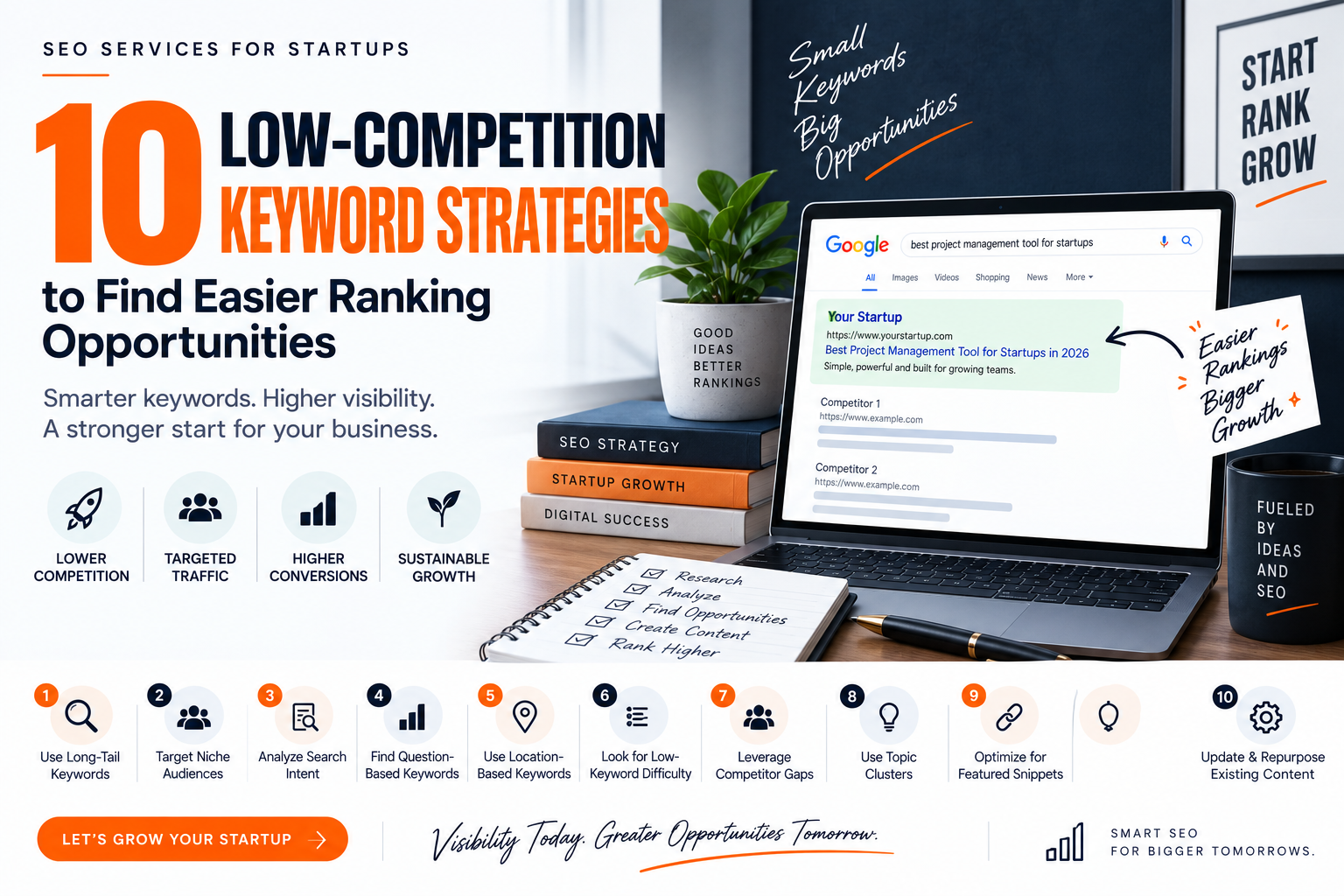
1. Start With Thorough Keyword Research
Keyword research should happen before you start producing large amounts of website content.
A common mistake among startup founders is choosing keywords based only on what they think customers search for. The phrases that sound logical internally are not always the phrases customers actually type into Google.
Effective SEO Services for Startups begin with identifying keywords that match three things:
What the business offers
What potential customers are searching for
What the website has a realistic opportunity to rank for
Focus on realistic keywords
A new website should not immediately target extremely competitive terms.
For example, imagine a startup sells accounting software.
Trying to rank immediately for:
“accounting software”
could be difficult because the search results may contain major software companies, review websites, publishers, and established brands.
Instead, the startup could investigate more specific searches such as:
accounting software for small businesses
accounting software for freelancers
simple accounting software for startups
cloud accounting software for small companies
invoicing and accounting software for freelancers
These searches can be more specific and may better reflect the needs of potential customers.
Use different keyword types
Your keyword research should include several categories.
Commercial keywords are searches made by people considering a purchase.
Examples:
best CRM software for startups
affordable website development company
SEO agency for small business
Informational keywords are used when someone wants to learn something.
Examples:
how does technical SEO work
how to improve website rankings
what is local SEO
Transactional keywords indicate stronger purchase intent.
Examples:
buy CRM software
hire SEO agency
website development services
Navigational keywords are searches for a particular company, website, or brand.
A balanced keyword strategy gives your website opportunities to attract users at different stages of the buying journey.
Look for long-tail opportunities
Long-tail keywords are especially useful for new websites because they are often more specific.
Instead of targeting:
“digital marketing”
a startup might target:
“digital marketing services for SaaS startups.”
The second keyword may have fewer searches, but the people searching it could be much closer to becoming customers.
The goal is not simply to generate the largest possible traffic number. The goal is to attract relevant traffic that can contribute to business growth.
2. Build a Clear Website Structure
Google needs to understand how your website is organized.
Visitors also need to understand it.
A confusing website structure can make it harder for search engines to discover important pages and harder for users to find what they need.
A startup website should have a logical hierarchy.
For example:
Homepage
→ Services
→ Service A
→ Service B
→ Service C
→ Industries
→ Industry A
→ Industry B
→ Resources
→ Blog
→ Guides
→ Case Studies
→ About
→ Contact
This structure creates clear relationships between different sections of the website.
Keep important pages easy to reach
Your most valuable pages should not be buried several clicks deep.
If a page is important for generating leads or sales, users and search engines should be able to reach it easily.
For example, if your primary service is SEO, the SEO service page should be clearly accessible from the main navigation or relevant website sections.
Use descriptive URLs
Avoid URLs that provide no useful information.
Poor example:
example.com/page?id=123
Better:
example.com/seo-services-for-startups/
A descriptive URL tells users and search engines what the page is about.
Create dedicated service pages
One page should not attempt to rank for every service your company offers.
If a startup provides:
SEO
Google Ads
Website Development
Social Media Marketing
Branding
each important service should have its own useful page.
This allows each page to target a specific topic and search intent.
A structured site architecture is one of the foundational areas covered by professional SEO Services for Startups because technical organization affects both discoverability and user experience.
3. Create Search Intent-Focused Landing Pages
Finding a keyword is not enough.
You need to understand why someone searches for it.
This is called search intent.
For example, someone searching:
“what is SEO”
is probably looking for an explanation.
Someone searching:
“SEO services for startups”
is more likely to be researching service providers.
Someone searching:
“hire SEO agency for startup”
has stronger commercial intent.
These searches should not necessarily lead to the same page.
Match the page with the intent
If the keyword is informational, create educational content.
If the keyword is commercial, create a service or comparison page.
If the keyword is transactional, make it easy for the visitor to take action.
For example, a service page might include:
Clear service description
Problems the service solves
Benefits
Process
Deliverables
Examples
Pricing guidance where appropriate
FAQs
Testimonials
Case studies
Strong call to action
Don’t force keywords
Search intent should guide your content rather than keyword repetition.
If a page is written naturally and thoroughly answers the visitor’s question, there is usually no need to repeat the same keyword in every paragraph.
A good startup SEO strategy prioritizes relevance and usefulness over keyword density.
This is one reason effective SEO Services for Startups focus on building pages around topics and customer needs rather than producing pages designed purely for search engines.
4. Optimize On-Page SEO Elements
Once your pages are structured around relevant topics and search intent, optimize the important on-page elements.
Page title
The title tells users and search engines what the page is about.
For example:
SEO Services for Startups | Startup SEO Agency
is more descriptive than:
Our Services
Your primary topic should appear naturally in the title where appropriate.
Meta description
A meta description summarizes the page and can influence whether users choose your result.
For example:
“Explore practical SEO Services for Startups designed to improve search visibility, organic traffic, and qualified leads.”
Keep descriptions useful and relevant instead of filling them with keyword variations.
H1 heading
Each important page should have a clear primary heading.
For example:
SEO Services for Startups: Strategies for Sustainable Growth
The heading should accurately describe the page.
Subheadings
Use H2 and H3 headings to divide information into logical sections.
This improves readability and makes long pages easier to scan.
Image optimization
Images should have descriptive filenames and appropriate alt text when the image conveys useful information.
Instead of:
IMG001.jpg
use something descriptive such as:
startup-seo-strategy.jpg
Alt text should describe the image when appropriate rather than stuffing keywords into every image.
Content optimization
Make sure important pages clearly answer:
What is this page about?
Who is it for?
What problem does it solve?
What information does the visitor need?
What action should they take next?
On-page SEO is not about making a page look optimized. It is about making the page genuinely useful and easy to understand.
5. Publish Useful Content Consistently
A new website needs more than service pages if it wants to build long-term organic visibility.
A blog or resource section can help a startup cover questions and topics related to its products, services, and industry.
However, publishing content simply to meet a quota is not a strategy.
Build content around customer problems
Suppose a startup offers cybersecurity software.
Instead of publishing generic posts such as:
“Why Cybersecurity Is Important”
the business could create more specific content:
How to create a cybersecurity checklist for a small business
Common security mistakes made by startups
How to protect customer data on a small business website
Website security checklist for SaaS companies
What to check before choosing cybersecurity software
These topics are connected to the audience’s real problems.
Create topic clusters
Instead of publishing unrelated articles, organize content around important topics.
For example:
Main topic: SEO for Startups
Supporting articles:
Startup keyword research
Technical SEO for startups
Local SEO for startups
SEO content strategy
Startup link building
SEO analytics
SEO mistakes
SEO timelines
These supporting pages can link to the main topic and to one another where relevant.
Over time, this creates topical depth.
Update older content
SEO content should not always be treated as “publish once and forget.”
Review important articles periodically.
Update:
Outdated statistics
Old screenshots
Broken links
Incorrect information
Outdated recommendations
Missing sections
New examples
For startups using SEO Services for Startups, content maintenance should be part of the ongoing strategy rather than an afterthought.
6. Build a Strong Internal Linking System
Internal links connect one page on your website to another page on the same website.
They are useful for both visitors and search engines.
For example, an article about keyword research could naturally link to a detailed article about technical SEO.
A blog post discussing local search could link to the company’s local SEO service page.
Why internal links matter
Internal links can help:
Users discover related information
Search engines discover pages
Important pages receive more internal authority
Visitors navigate through your website
Content clusters become easier to understand
Use descriptive anchor text
Instead of:
Click here
use:
learn more about startup keyword research
The second option gives users more context about what they will find.
Link strategically
Don’t add internal links simply to increase the number of links.
Ask:
Would this link genuinely help the reader?
If the answer is yes, add it.
Connect informational and commercial content
This is particularly important for startups.
A visitor may first discover your website through a blog post.
For example:
“How Long Does SEO Take for a New Website?”
At the end of the article, the visitor may be interested in professional SEO support.
A relevant internal link to your SEO services page creates a natural path from education to conversion.
This is a practical area where SEO Services for Startups can directly support both search visibility and lead generation.
7. Fix Technical SEO Before Scaling Content
You can publish excellent content and still struggle if search engines cannot properly crawl, understand, or index your website.
Technical SEO provides the foundation.
Check indexing
Make sure important pages can be crawled and indexed.
Use Google Search Console to monitor:
Indexed pages
Page indexing problems
Search performance
Core Web Vitals
Mobile usability signals where available
Security issues
Create an XML sitemap
An XML sitemap helps search engines discover important URLs.
Make sure it contains useful, canonical URLs rather than pages that should not be indexed.
Check robots.txt
Your robots.txt file should not accidentally block important sections of the website.
A common launch mistake is leaving development-stage restrictions in place after the website goes live.
Use HTTPS
Your website should use HTTPS and correctly redirect HTTP versions to HTTPS.
Fix broken links
Broken internal links create poor user experiences and can make site maintenance harder.
Regularly check for:
404 pages
Broken internal links
Broken external links
Incorrect redirects
Improve page speed
Website performance matters because slow pages can frustrate users.
Review:
Image sizes
JavaScript
CSS
Hosting performance
Caching
Unnecessary plugins
Third-party scripts
Do not chase a perfect performance score at the expense of functionality. Focus on creating a fast, stable experience for real users.
Check mobile usability
Your website should work properly on smartphones and tablets.
Check:
Font sizes
Buttons
Navigation
Forms
Images
Tables
Pop-ups
Page layouts
Technical SEO should be completed before aggressively scaling content. Otherwise, you may build traffic on top of a weak foundation.
8. Build Relevant Backlinks and Brand Mentions
Backlinks are links from other websites to your website.
They can help search engines discover your website and can contribute to your site’s authority when they come from relevant, trustworthy sources.
But startups should not approach link building as a numbers game.
100 irrelevant backlinks are not automatically better than 10 highly relevant links.
Focus on relevance
Suppose your startup sells accounting software.
A link from a respected business publication, accounting resource, startup organization, or relevant technology website may be more useful than a random link from an unrelated website.
Create link-worthy resources
One of the best ways to earn backlinks is to create something worth referencing.
Examples include:
Original research
Industry reports
Useful statistics
Free tools
Calculators
Detailed guides
Templates
Original case studies
Expert surveys
Data-driven articles
For example, a startup could publish:
“2026 Small Business Marketing Benchmark Report”
If the research contains useful original data, other websites may reference it.
Consider digital PR
Startups can also use legitimate PR opportunities to increase brand visibility.
Potential opportunities include:
Founder interviews
Industry commentary
Expert contributions
Startup publications
Podcasts
Business directories
Industry associations
Relevant guest contributions
Avoid buying large numbers of low-quality links or participating in link schemes.
Good SEO Services for Startups should prioritize sustainable authority building rather than shortcuts that can create future problems.
9. Optimize for Local and Mobile Searches
If your startup serves a specific city, region, or physical location, local SEO can provide valuable opportunities.
A local strategy may include:
Google Business Profile optimization
Consistent business information
Location-specific pages
Local content
Customer reviews
Local citations
Relevant local backlinks
LocalBusiness structured data where appropriate
For example, a web development company serving Hyderabad could create a useful page targeting:
Website Development Company in Hyderabad
But the page should provide genuine local value instead of simply repeating “Hyderabad” throughout the content.
Build useful location pages
A location page can include:
Services offered in the area
Local customer needs
Areas served
Relevant case studies
Contact information
Business hours
Directions where applicable
FAQs
Avoid creating dozens of nearly identical location pages with only the city name changed.
Prioritize mobile users
Many local searches happen on smartphones.
Make sure mobile visitors can quickly:
Call your business
Find your location
Submit an inquiry
Read your services
Navigate the website
View important information
Local and mobile optimization can be particularly valuable for startups that depend on customers within a defined geographic area.
A strong combination of SEO Services for Startups and local SEO can help a new business build visibility among people who are actively looking for nearby solutions.
10. Measure SEO Performance and Improve Continuously
SEO is not a one-time website setup.
You need data to understand what is working.
Install and configure relevant measurement tools from the beginning.
Track organic traffic
Monitor how much traffic comes from search engines.
But don’t stop at total traffic.
Look at:
Landing pages
Search queries
Countries
Devices
Engagement
Conversions
Returning visitors
Monitor keyword performance
Track your priority keywords over time.
Don’t panic over daily fluctuations.
SEO rankings can change for many reasons, and individual ranking positions are not the only measure of success.
Track conversions
A startup’s ultimate goal is usually not “get more traffic.”
It may be:
Generate leads
Get demo requests
Sell products
Receive phone calls
Get consultation requests
Increase sign-ups
Drive purchases
Connect SEO performance to business outcomes whenever possible.
For example:
| SEO Metric | Business Question |
|---|---|
| Organic impressions | Are more people seeing the website? |
| Clicks | Are searchers choosing our pages? |
| Rankings | Are target topics becoming more visible? |
| Organic traffic | Are we attracting visitors? |
| Leads | Are visitors becoming prospects? |
| Sales | Is SEO contributing revenue? |
| Conversion rate | Is the traffic relevant? |
Improve pages that already show potential
One of the most efficient SEO tactics for a growing website is improving pages that already receive impressions but have low click-through rates or weak rankings.
You might improve:
Title
Meta description
Content depth
Search intent alignment
Internal links
Page structure
Supporting information
Calls to action
This is often more efficient than constantly creating new pages.
Professional SEO Services for Startups should therefore include regular analysis, testing, optimization, and reporting rather than treating SEO as a one-time campaign.
Common SEO Mistakes New Websites Should Avoid
A startup can waste months of effort by making a few avoidable mistakes.
1. Targeting only highly competitive keywords
New websites often lack enough authority to compete immediately for broad, high-volume terms.
Start with relevant, achievable opportunities.
2. Publishing AI-generated or generic content without adding value
Search engines are designed to surface useful content, not simply content produced at scale.
If your article says the same things as dozens of competitors, it gives users little reason to choose it.
Add:
Original examples
First-hand insights
Data
Expert opinions
Case studies
Practical instructions
Unique perspectives
3. Keyword stuffing
Repeating the same phrase excessively makes content difficult to read.
Use your primary keyword naturally and incorporate related terminology where appropriate.
4. Ignoring technical SEO
A beautiful website can still have indexing, speed, canonicalization, redirect, or mobile issues.
Technical checks should happen from launch.
5. Buying cheap backlinks
Thousands of low-quality links may look attractive because they are inexpensive.
They can also create an unnatural link profile and provide little genuine value.
6. Creating pages for every keyword variation
You do not need a separate page for every minor variation of the same search.
If several keywords share the same intent, one strong page may be more effective.
7. Forgetting conversion optimization
SEO traffic has limited business value if visitors cannot easily understand what you offer or take the next step.
Every important commercial page should have a clear conversion path.
8. Expecting immediate results
SEO usually requires time.
A new domain has to establish credibility, earn links, build content depth, and demonstrate consistent relevance.
How Long Does It Take for a New Website to Rank?
There is no universal SEO timeline.
A new website may begin appearing for some low-competition searches relatively quickly, while competitive commercial keywords can take considerably longer.
The timeline depends on factors such as:
Domain history
Competition
Keyword difficulty
Content quality
Website authority
Technical health
Backlink profile
Search intent
Industry
Geographic targeting
SEO consistency
The first stage should focus on establishing the technical foundation and getting important pages indexed.
The next stage is usually about building content, internal links, authority, and improving pages based on performance data.
Over time, the website can move from ranking for highly specific searches toward more competitive topics.
This is why businesses should view SEO Services for Startups as a long-term growth strategy rather than a quick traffic campaign.
Final Checklist for a New Website
Before expecting significant organic growth, review the following checklist.
Keyword Research
Primary keywords identified
Long-tail keywords researched
Search intent analyzed
Commercial keywords mapped to service pages
Informational keywords mapped to content
Website Structure
Clear navigation
Logical URL structure
Important pages easily accessible
Dedicated service pages
Relevant category structure
On-Page SEO
Unique page titles
Useful meta descriptions
Clear H1 headings
Proper H2/H3 structure
Optimized images
Natural keyword placement
Helpful content
Technical SEO
HTTPS enabled
XML sitemap created
Robots.txt checked
Important pages indexable
Broken links fixed
Redirects checked
Mobile experience tested
Website speed reviewed
Content
Core service content published
Supporting articles planned
Topic clusters created
Internal links added
Content update schedule established
Authority
Relevant backlink opportunities identified
Digital PR opportunities explored
Industry profiles created where appropriate
Link-worthy resources developed
Measurement
Google Search Console configured
Analytics configured
Conversion tracking established
Important keywords monitored
Organic traffic reviewed
Leads and sales attributed where possible
Frequently Asked Questions
1. Is SEO worth it for a new startup website?
Yes, especially if potential customers use search engines to discover products or services. SEO can create a long-term acquisition channel, but startups should approach it with realistic timelines and measurable goals.
2. What should a startup do first for SEO?
Start with keyword research, website structure, technical SEO, and the optimization of core commercial pages. Once the foundation is strong, build supporting content and authority.
3. How many keywords should a new website target?
There is no fixed number. Focus on a manageable group of relevant keywords that correspond to your products, services, audience, and business goals. Quality and relevance matter more than creating a huge keyword list.
4. Should startups focus on long-tail keywords?
Yes. Long-tail keywords can be useful because they are more specific and often align closely with particular customer needs. They can also provide realistic early ranking opportunities for newer websites.
5. Do backlinks still matter for startup SEO?
Relevant, trustworthy backlinks can contribute to a website’s authority and discoverability. However, startups should prioritize quality and relevance instead of trying to acquire as many links as possible.
6. Should every startup have a blog?
Not necessarily, but most startups can benefit from useful educational content if their customers search for questions related to their products or services. The content should have a clear purpose rather than exist simply because competitors have blogs.
7. Can a new website rank without backlinks?
A new website can rank for some less competitive searches without a large backlink profile. However, competitive industries generally require stronger authority, and relevant backlinks can become increasingly important as the site targets more difficult keywords.
8. How often should startup websites publish content?
There is no universal publishing frequency. A startup is usually better off publishing fewer high-quality articles that genuinely answer customer questions than publishing large amounts of thin or repetitive content.
9. Should I hire an SEO agency or do SEO myself?
That depends on your team’s expertise, available time, competition, and goals. If your team does not have technical SEO, content, analytics, or link-building experience, professional SEO Services for Startups can help establish and manage the strategy more efficiently.
10. What makes SEO Services for Startups different from regular SEO?
Startup SEO usually requires greater emphasis on prioritization. A startup often has limited resources, little domain authority, and a need to generate measurable business results. The strategy should therefore focus on realistic keywords, high-value pages, technical foundations, efficient content creation, and measurable conversions.
Conclusion
Getting a new website to rank on Google requires more than publishing a website and adding a few keywords. A startup needs a clear SEO foundation, realistic keyword targets, search-focused content, technical optimization, internal linking, authority building, and continuous performance analysis.
The most important principle is prioritization.
You do not need to compete for every keyword in your industry on day one. Start with searches that are relevant to your customers and realistic for your website. Build strong pages around those opportunities, connect them through internal links, publish useful supporting content, and gradually strengthen your site’s authority.
At the same time, monitor what happens after publication. The pages receiving impressions, clicks, leads, and conversions provide valuable information about what your audience wants.
For startups that lack the internal resources to manage these activities, SEO Services for Startups can provide a structured approach to keyword research, technical SEO, content strategy, on-page optimization, link building, and performance tracking.
SEO is a long-term investment. When it is built into the website from the beginning, every new page, article, link, and optimization can contribute to a stronger search presence.
The objective should not simply be to rank on Google.
The objective is to rank for the right searches, attract the right visitors, and turn that visibility into sustainable business growth.
A strong internal linking structure helps a new website connect related topics and guide visitors toward important service pages. For startups, SEO should work together with other digital marketing activities such as website development, content marketing, and Google Ads. If you are building a new website, you can also explore our Website Development Services to understand how a well-structured, fast, and user-friendly website supports your SEO efforts. Combining a strong website foundation with SEO Services for Startups can help improve search visibility while creating a smoother path for visitors to become leads or customers.
When launching a new website, startups should follow Google’s basic SEO recommendations to make their pages easier to discover and understand. Google’s SEO Starter Guide covers important fundamentals such as website structure, crawlability, titles, links, and useful content. Following these guidelines alongside a well-planned SEO Services for Startups strategy can help create a stronger foundation for long-term organic visibility. Google Search Central SEO Starter Guide
3 Responses