- Introduction
- Why Website Maintenance Is Essential for Long-Term Success
- Practice #1: Keep Your CMS, Themes, and Plugins Updated
- Practice #2: Perform Regular Website Backups
- Practice #3: Monitor Website Security Continuously
- Practice #4: Improve Website Speed and Performance
- Practice #5: Check and Fix Broken Links
- Practice #6: Keep Website Content Updated
- Practice #7: Monitor Technical SEO
- Practice #8: Monitor Website Analytics and User Behaviour
- Practice #9: Optimise Your Website Database
- Practice #10: Test Your Website Regularly
- How Often Should You Perform Website Maintenance?
- Website Maintenance Checklist
- Common Website Maintenance Mistakes to Avoid
- Why Partner with a Website Development Company for Ongoing Maintenance?
- Conclusion
- Frequently Asked Questions (FAQs)
Introduction
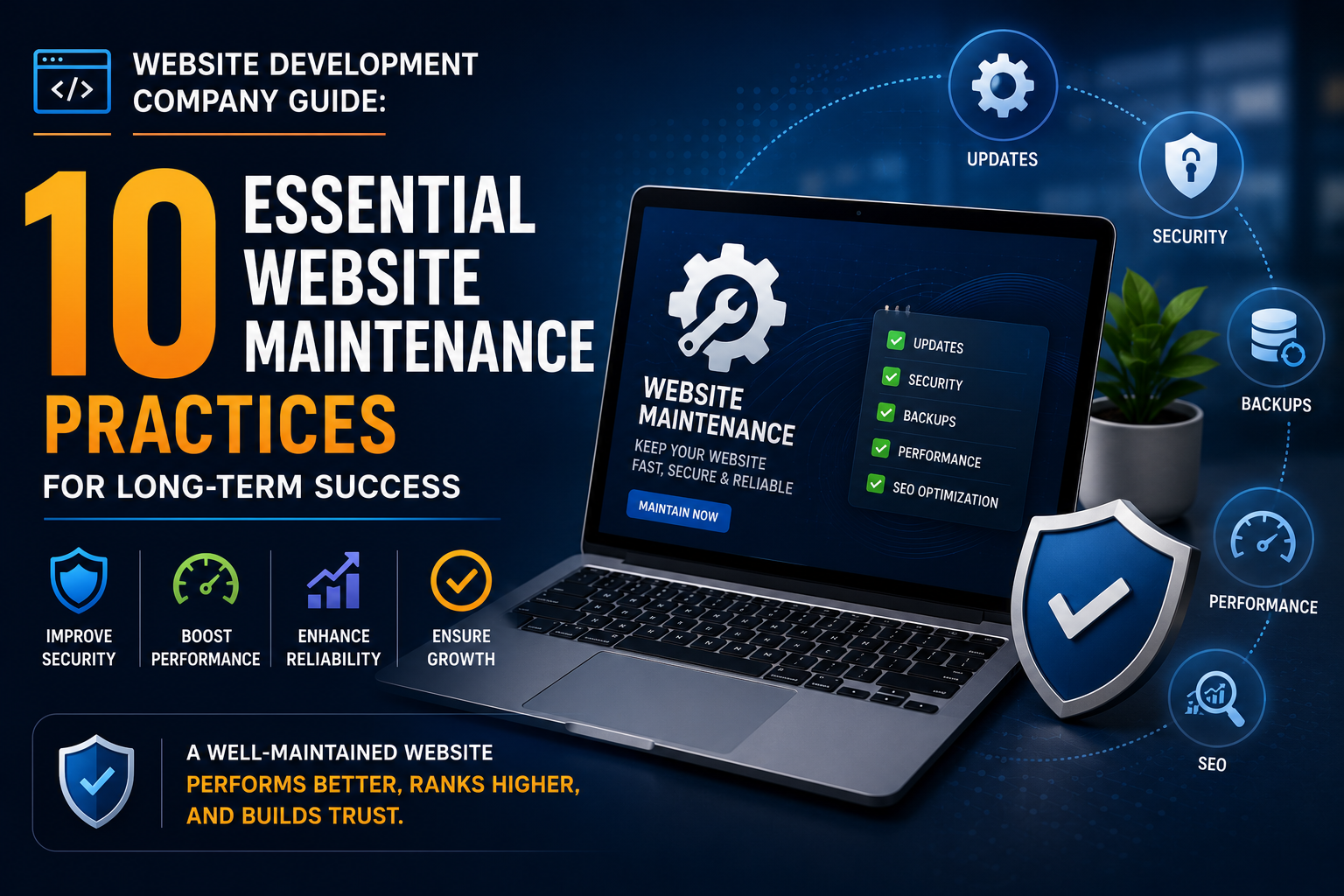
Building a professional website is a major milestone for any business, but launching your website is only the beginning. To keep your website secure, fast, and competitive, ongoing maintenance is essential. Many businesses invest heavily in website design and development but overlook the importance of maintaining their websites after they go live. This mistake can lead to slow loading speeds, broken features, security vulnerabilities, poor user experiences, and declining search engine rankings.
A website is a living digital asset that requires regular attention. Search engines like Google favour websites that are well-maintained, secure, and consistently updated. Likewise, customers expect websites to load quickly, function properly, and provide accurate information. Even minor issues such as broken links, outdated plugins, or expired security certificates can negatively affect customer trust and business credibility.
A professional Website Development Company understands that website maintenance is not an optional service—it’s a continuous process that protects your online investment. From updating software and monitoring security to improving performance and fixing technical issues, regular maintenance helps ensure your website continues to support your business goals.
Whether you operate a small business website, an eCommerce store, or a large corporate platform, following a structured maintenance routine reduces risks and improves long-term performance. Businesses that neglect maintenance often face unexpected downtime, security breaches, and costly repairs that could have been avoided with proactive care.
In this guide, you’ll discover 10 essential website maintenance practices that every business should follow. These practical steps will help you keep your website secure, improve user experience, strengthen SEO performance, and ensure your website continues to deliver value for years to come.
Why Website Maintenance Matters
Many business owners assume that once a website has been launched, it will continue working indefinitely. Unfortunately, that isn’t how modern websites operate.
Every website depends on multiple technologies, including:
- Content Management Systems (CMS)
- Themes
- Plugins
- Web servers
- Databases
- Security certificates
- Third-party integrations
These technologies are updated regularly to improve security, add new features, and fix bugs. Ignoring these updates can create compatibility issues and expose your website to security threats.
A professional Website Development Company performs ongoing maintenance to ensure every part of the website continues working together efficiently.
Regular maintenance provides several important benefits:
- Protects customer data
- Prevents security breaches
- Improves website speed
- Reduces downtime
- Supports better SEO rankings
- Enhances user experience
- Extends website lifespan
- Maintains business credibility
Instead of reacting to problems after they occur, regular maintenance prevents many of them from happening in the first place.
Practice #1: Keep Your CMS, Themes, and Plugins Updated
One of the most important website maintenance tasks is keeping your Content Management System (CMS), themes, and plugins up to date.
Platforms like WordPress, Joomla, and Drupal regularly release updates that improve performance, fix bugs, and patch security vulnerabilities.
Outdated software is one of the most common reasons websites become vulnerable to cyberattacks.
What Should Be Updated?
A maintenance schedule should include updates for:
- CMS core files
- Website themes
- Plugins and extensions
- Third-party integrations
- PHP versions
- Server software
Each update helps improve compatibility and security.
Why Updates Matter
Ignoring updates can result in:
- Website vulnerabilities
- Broken functionality
- Compatibility issues
- Slower performance
- Increased risk of malware
- Poor user experience
Before applying updates, it’s good practice to test them in a staging environment and create a backup of your website.
A reliable Website Development Company carefully manages updates to minimise disruption while ensuring the website remains secure and fully functional.
Practice #2: Perform Regular Website Backups
No matter how secure your website is, unexpected problems can still occur. Server failures, accidental deletions, hacking attempts, or software conflicts can all result in data loss.
Regular backups ensure you can quickly restore your website if something goes wrong.
A backup should include:
- Website files
- Images
- Videos
- Databases
- Configuration settings
- User information
- Content
Without a recent backup, recovering a damaged website can be difficult or even impossible.
Backup Best Practices
Professional developers recommend:
- Daily backups for frequently updated websites
- Weekly backups for standard business websites
- Multiple backup copies
- Off-site cloud storage
- Automatic backup scheduling
- Regular backup testing
Testing backups is just as important as creating them. A backup that cannot be restored provides little value during an emergency.
A professional Website Development Company typically automates the backup process while regularly verifying that backups are complete and recoverable.
Practice #3: Monitor Website Security Continuously
Cybersecurity threats continue to evolve every year, making ongoing security monitoring essential.
Hackers constantly search for websites with outdated software, weak passwords, or known vulnerabilities.
Website security is not something you configure once and forget.
It requires continuous monitoring.
Essential Security Tasks
Regular website security should include:
- Malware scanning
- Firewall monitoring
- Login activity reviews
- Security patch installation
- Password updates
- SSL certificate monitoring
- User permission audits
- Vulnerability scanning
These activities help identify potential risks before they become major security incidents.
Benefits of Continuous Security Monitoring
Consistent monitoring helps:
- Prevent hacking attempts
- Protect customer information
- Improve website reliability
- Maintain business reputation
- Reduce downtime
- Support SEO performance
Visitors are far more likely to trust a website that displays secure HTTPS connections and consistently protects their personal information.
A trusted Website Development Company continuously monitors website security to minimise risks and respond quickly to emerging threats.
Practice #4: Improve Website Speed and Performance
Website speed directly affects customer satisfaction, conversion rates, and search engine rankings.
Research consistently shows that visitors expect websites to load within a few seconds. Slow-loading pages often cause users to leave before interacting with your content.
Performance optimisation should be part of every maintenance schedule.
Performance Optimisation Includes
- Image compression
- Browser caching
- CSS and JavaScript minification
- Lazy loading
- Database optimisation
- Removing unused plugins
- CDN implementation
- Server optimisation
These improvements reduce loading times while providing a smoother browsing experience.
Why Performance Matters
A fast website helps:
- Improve user engagement
- Increase conversions
- Reduce bounce rates
- Strengthen SEO
- Improve mobile experience
- Increase customer satisfaction
An experienced Website Development Company regularly audits website performance and implements improvements to keep loading speeds competitive as your website grows.
Practice #5: Check and Fix Broken Links
Broken links are one of the most overlooked website maintenance issues. As websites grow, pages may be removed, URLs may change, or external websites may no longer exist. These changes can create broken links that frustrate visitors and reduce your website’s credibility.
Every broken link creates a poor user experience. Imagine a visitor clicking an important product page or service link only to receive a “404 Page Not Found” error. Many users leave immediately instead of searching for the correct page.
A professional Website Development Company regularly audits websites to identify and repair broken links before they affect users or search engine rankings.
What Should Be Checked?
Regular link audits should include:
- Internal links
- External links
- Navigation menus
- Footer links
- Blog post links
- Image links
- Downloadable files
- Call-to-action buttons
Fixing these issues helps visitors navigate your website without interruptions.
Why Broken Links Matter
Maintaining healthy links helps:
- Improve user experience
- Reduce bounce rates
- Strengthen SEO
- Improve website credibility
- Help search engines crawl your website efficiently
Link maintenance should be part of every monthly website maintenance routine.
Practice #6: Keep Website Content Updated
Fresh and accurate content tells both visitors and search engines that your website is active.
Many businesses launch their website and leave the content unchanged for years. Over time, this leads to outdated service information, old contact details, expired promotions, and inaccurate business information.
A professional Website Development Company often works alongside content teams to ensure websites remain current and relevant.
Content That Should Be Updated
Regular content reviews should include:
- Service pages
- Product descriptions
- Pricing information
- Contact details
- Team information
- Blog articles
- FAQs
- Testimonials
- Portfolio projects
Updating content doesn’t always require rewriting entire pages. Sometimes refreshing statistics, improving headings, adding new images, or expanding useful information is enough to improve value.
Benefits of Fresh Content
Updated content helps:
- Improve SEO rankings
- Increase visitor trust
- Generate more leads
- Reduce outdated information
- Encourage repeat visitors
Search engines generally favour websites that continue publishing and updating valuable information.
Practice #7: Monitor Technical SEO
Technical SEO is not a one-time task completed during website development. Every update, plugin installation, or website modification has the potential to affect search engine performance.
A professional Website Development Company regularly reviews technical SEO to ensure search engines can continue crawling and indexing the website efficiently.
Technical SEO Maintenance Includes
- Checking XML sitemaps
- Reviewing robots.txt
- Monitoring crawl errors
- Fixing duplicate pages
- Optimising page titles
- Reviewing meta descriptions
- Improving internal linking
- Monitoring Core Web Vitals
- Checking structured data
- Ensuring mobile usability
These technical elements support long-term visibility in search results.
Why Technical SEO Matters
Consistent technical maintenance helps:
- Improve search rankings
- Increase organic traffic
- Reduce indexing problems
- Improve website performance
- Enhance user experience
Technical SEO maintenance ensures your website remains competitive even as search engine algorithms evolve.
Practice #8: Monitor Website Analytics and User Behaviour
Website maintenance isn’t only about fixing technical problems. It also involves understanding how visitors interact with your website.
Analytics reveal valuable insights into what is working and where improvements are needed.
A professional Website Development Company uses analytics to make informed decisions rather than relying on assumptions.
Important Metrics to Monitor
Businesses should regularly review:
- Website traffic
- Bounce rate
- Average session duration
- Most visited pages
- Conversion rate
- Traffic sources
- Mobile performance
- User behaviour flow
These metrics help identify opportunities to improve both user experience and business results.
Why Analytics Matter
Regular monitoring helps businesses:
- Improve marketing strategies
- Identify underperforming pages
- Increase conversions
- Understand customer behaviour
- Improve content strategy
Maintenance should always include analysing website performance from a business perspective, not just a technical one.
Practice #9: Optimise Your Website Database
As websites grow, databases collect unnecessary information such as revisions, spam comments, temporary files, expired sessions, and unused data.
An overloaded database can reduce website performance and increase loading times.
A professional Website Development Company performs routine database optimisation to keep websites running efficiently.
Database Maintenance Tasks
Regular optimisation includes:
- Removing spam comments
- Deleting unnecessary revisions
- Clearing temporary files
- Optimising database tables
- Removing unused plugins
- Cleaning orphaned data
- Reviewing scheduled tasks
These improvements reduce server load and improve website responsiveness.
Benefits of Database Optimisation
A clean database helps:
- Improve loading speed
- Reduce server usage
- Improve website stability
- Reduce errors
- Improve overall performance
Although visitors never see the database, they immediately notice the faster experience it provides.
Practice #10: Test Your Website Regularly
A website should never be assumed to work perfectly simply because it worked last month.
Every update, browser release, plugin change, or device update can affect website functionality.
Routine testing ensures everything continues working as expected.
A professional Website Development Company follows structured testing procedures before and after major updates.
Areas That Should Be Tested
Regular testing should include:
- Contact forms
- Navigation menus
- Search functionality
- Checkout process
- Login systems
- Mobile responsiveness
- Browser compatibility
- Call-to-action buttons
- Images and videos
- Download links
Testing should be carried out on desktops, tablets, and smartphones using multiple browsers.
Why Regular Testing Is Important
Routine testing helps:
- Prevent customer frustration
- Detect issues early
- Improve user experience
- Protect business reputation
- Maintain website reliability
A few minutes of testing each month can prevent significant problems later.
How Often Should You Perform Website Maintenance?
Website maintenance is most effective when it follows a consistent schedule. Some tasks should be completed weekly, while others only need monthly or quarterly attention.
A professional Website Development Company usually follows a structured maintenance plan to ensure nothing important is overlooked.
| Task | Recommended Frequency |
|---|
| Website Backup | Daily or Weekly |
| CMS Updates | Weekly |
| Plugin & Theme Updates | Weekly |
| Security Scans | Weekly |
| Malware Checks | Weekly |
| Performance Testing | Monthly |
| Broken Link Checks | Monthly |
| Content Review | Monthly |
| Technical SEO Audit | Monthly |
| Database Optimisation | Monthly |
| Analytics Review | Monthly |
| Browser & Device Testing | Quarterly |
| Full Website Audit | Every 6 Months |
Following a maintenance schedule helps prevent small issues from becoming major problems.
Website Maintenance Checklist
Use this checklist to ensure your website remains secure, fast, and reliable throughout the year.
Security
✔ Update CMS regularly
✔ Update themes and plugins
✔ Renew SSL certificates
✔ Scan for malware
✔ Change administrator passwords
✔ Review user permissions
✔ Enable firewall protection
Performance
✔ Compress new images
✔ Remove unused plugins
✔ Optimise the database
✔ Test page loading speed
✔ Monitor Core Web Vitals
✔ Review server performance
SEO
✔ Check broken links
✔ Update XML sitemap
✔ Review robots.txt
✔ Monitor Google Search Console
✔ Refresh outdated content
✔ Improve internal linking
✔ Optimise new images
User Experience
✔ Test contact forms
✔ Check navigation menus
✔ Verify mobile responsiveness
✔ Test checkout or booking systems
✔ Review call-to-action buttons
✔ Check browser compatibility
Backup & Recovery
✔ Create automatic backups
✔ Store backups securely
✔ Test backup restoration
✔ Document recovery procedures
A professional Website Development Company performs these checks routinely, helping businesses maintain a secure and high-performing website without unexpected disruptions.
Common Website Maintenance Mistakes to Avoid
Many businesses understand that maintenance is important, but they unknowingly make mistakes that reduce their website’s performance over time.
Avoid these common issues:
Ignoring Software Updates
Running outdated CMS versions, themes, or plugins exposes your website to security vulnerabilities and compatibility issues.
Never Testing Backups
Creating backups is only half the job. If backups cannot be restored successfully, they provide little protection during emergencies.
Installing Too Many Plugins
Every additional plugin increases maintenance requirements and may affect website speed, compatibility, and security.
Only install plugins that provide genuine value.
Ignoring Website Speed
As websites grow, images, scripts, and databases become larger.
Without regular optimisation, loading times gradually increase, affecting both user experience and SEO.
Forgetting Mobile Users
Many businesses only test their websites on desktop computers.
Since most visitors browse using smartphones, every maintenance routine should include mobile testing.
Neglecting Technical SEO
Broken redirects, crawl errors, duplicate pages, and indexing issues often go unnoticed until search rankings begin to decline.
Regular SEO audits help prevent these problems.
Delaying Security Checks
Cyber threats evolve continuously.
Waiting until your website is hacked before improving security often results in greater financial and reputational damage.
Not Monitoring Analytics
Without reviewing website data, businesses miss opportunities to improve conversions, user experience, and marketing performance.
Why Partner with a Website Development Company for Ongoing Maintenance?
While some maintenance tasks can be handled internally, managing a business website requires time, technical knowledge, and consistent monitoring.
A professional Website Development Company offers a proactive approach to website maintenance, allowing businesses to focus on their operations while experts handle technical responsibilities.
Professional maintenance services typically include:
- Regular software updates
- Website backups
- Security monitoring
- Performance optimisation
- Technical SEO improvements
- Bug fixes
- Content support
- Analytics reporting
- Emergency troubleshooting
- Long-term technical guidance
Instead of reacting to issues after they occur, experienced developers identify and resolve potential problems before they affect your customers.
This proactive approach helps reduce downtime, improve website performance, and extend the lifespan of your website.
Conclusion
A successful website is not built once and forgotten. It requires regular attention to remain secure, fast, functional, and competitive.
The 10 essential website maintenance practices covered in this guide provide a practical framework for protecting your digital investment. From updating your CMS and creating regular backups to monitoring security, improving performance, fixing broken links, reviewing technical SEO, and testing website functionality, every task contributes to a healthier and more reliable website.
Website maintenance also has a direct impact on customer experience and search engine performance. Visitors are more likely to trust a website that loads quickly, functions correctly, and provides accurate information. Likewise, search engines reward websites that are secure, well-maintained, and regularly updated.
Partnering with a professional Website Development Company gives businesses access to the expertise needed to manage these responsibilities efficiently. Rather than waiting for problems to occur, experienced developers take a proactive approach that reduces risks, improves performance, and supports long-term growth.
No matter the size of your business, website maintenance should be viewed as an ongoing investment rather than an occasional task. A well-maintained website continues to attract visitors, generate leads, strengthen your brand, and support your business goals for years to come.
Frequently Asked Questions (FAQs)
1. Why is website maintenance important?
Website maintenance keeps your website secure, fast, and fully functional. It also helps improve user experience, protect customer data, and maintain strong search engine rankings.
2. How often should I update my website?
Content should be reviewed regularly, while CMS updates, plugin updates, security scans, and backups should follow a consistent schedule based on your website’s needs.
3. Can I maintain my website myself?
Basic tasks can be handled internally, but complex maintenance, security monitoring, technical SEO, and performance optimisation are often best managed by a professional Website Development Company.
4. What happens if I don’t maintain my website?
Neglecting maintenance can lead to security vulnerabilities, slower loading speeds, broken functionality, lower search rankings, and poor user experience.
5. Does website maintenance improve SEO?
Yes. Regular maintenance supports technical SEO by improving page speed, fixing broken links, updating content, maintaining mobile responsiveness, and ensuring search engines can crawl your website effectively.
6. How often should I back up my website?
Websites that are updated frequently should be backed up daily. Smaller business websites should be backed up at least weekly, with backups tested regularly.
7. What services does a Website Development Company provide during maintenance?
A Website Development Company typically provides software updates, security monitoring, backups, performance optimisation, technical SEO improvements, bug fixes, analytics reporting, and ongoing technical support.
8. Is website maintenance worth the investment?
Absolutely. Regular maintenance helps prevent expensive repairs, reduces downtime, improves customer trust, enhances SEO performance, and extends the lifespan of your website, making it a cost-effective long-term investment.
Keeping your website updated is essential for maintaining security, improving performance, and achieving long-term business growth. At Gowenza, our Web Development services include proactive website maintenance, security monitoring, performance optimization, technical SEO, and regular updates to ensure your website remains fast, secure, and fully functional. Whether you need ongoing maintenance for an existing website or a professionally built website designed for long-term success, our team is here to help. Explore our Web Development services to discover how we keep business websites performing at their be