Launching a startup is exciting, but getting consistent website traffic can be one of the biggest challenges. Many founders invest time and money into creating blog posts, yet months later they see little improvement in rankings, traffic, or leads. The problem usually isn’t a lack of content—it’s the absence of a well-planned SEO content strategy.
An SEO content strategy is more than publishing articles around random keywords. It’s a structured approach to creating content that aligns with your audience’s needs, search intent, and business goals. Every piece of content should have a purpose, whether it’s attracting new visitors, educating potential customers, or converting readers into paying clients.
In 2026, Google’s algorithms continue to prioritise helpful, experience-driven content that demonstrates expertise and satisfies user intent. Startups that focus on quality, topical authority, and strategic content planning consistently outperform those that publish content without a clear direction.
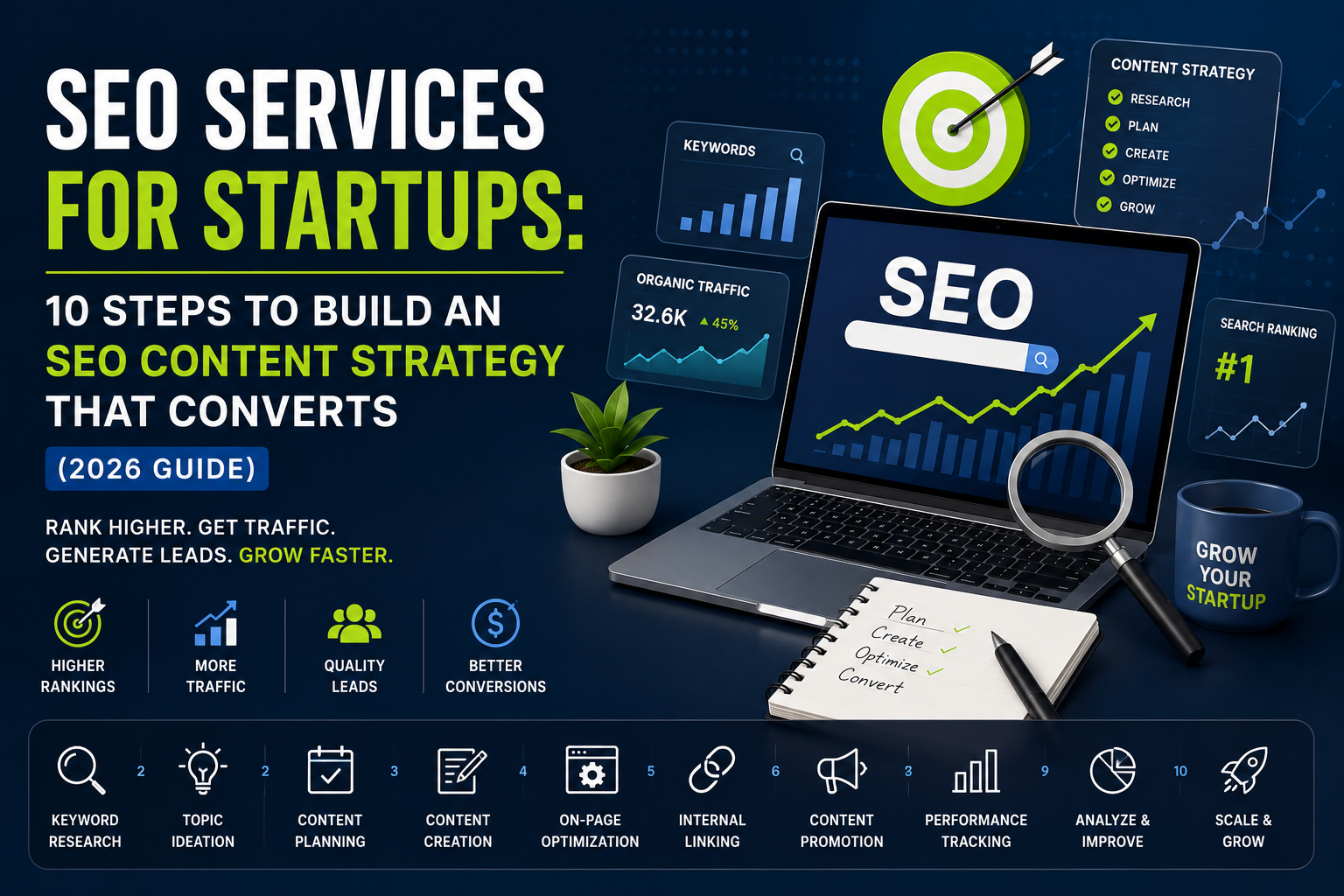
Professional SEO Services for Startups help businesses develop content strategies that don’t just improve rankings—they generate qualified traffic and measurable business results. By combining keyword research, content planning, on-page optimisation, internal linking, and performance analysis, startups can build a sustainable source of organic leads.
This guide explains the 10 essential steps to building an SEO content strategy that converts visitors into customers while strengthening your search visibility over the long term.
Table of Contents
- Why an SEO Content Strategy Matters
- Step 1: Define Clear Business Goals
- Step 2: Understand Your Target Audience
- Step 3: Perform Strategic Keyword Research
- Step 4: Build Topic Clusters
- Step 5: Create High-Quality Content
- Step 6: Optimise Every Page for SEO
- Step 7: Build Strong Internal Links
- Step 8: Refresh Existing Content
- Step 9: Measure Performance
- Step 10: Scale Your Content Strategy
- Common Mistakes to Avoid
- SEO Content Checklist
- Frequently Asked Questions
- Final Thoughts
Why an SEO Content Strategy Matters
Publishing content without a strategy is like building a house without a blueprint. You may create individual pages, but they won’t work together to support your business goals.
A well-planned content strategy helps your startup:
- Increase organic traffic
- Rank for valuable keywords
- Build topical authority
- Generate qualified leads
- Improve customer trust
- Support long-term growth
- Reduce dependence on paid advertising
Professional SEO Services for Startups focus on creating content ecosystems where every article supports another, strengthening your website’s authority and improving your chances of ranking for competitive search terms.
Step 1: Define Clear Business Goals
Before writing a single article, identify what you want your content to achieve.
Many startups create blogs simply because they know they “should.” Instead, every article should support a measurable business objective.
Ask yourself:
- Do you want more enquiries?
- Are you trying to increase product sales?
- Do you want to build brand awareness?
- Are you targeting local customers?
- Do you want to educate potential clients?
Your answers determine the type of content you should produce.
Example
If you sell website development services, your goals might include:
- Increasing consultation requests
- Ranking for service-related keywords
- Demonstrating technical expertise
- Building trust with potential clients
Every article should move readers one step closer to these objectives.
Professional SEO Services for Startups begin with business goals rather than keywords alone, ensuring your content supports revenue growth instead of simply generating page views.
Step 2: Understand Your Target Audience
Great content answers real questions from real people.
Before creating content, understand:
- Who your ideal customers are
- What problems they face
- What questions they ask
- What information they need before making a purchase
- Which platforms they use
Create Customer Personas
For example:
Startup Founder
- Limited marketing budget
- Wants predictable lead generation
- Needs practical advice
- Values measurable results
- Has limited technical knowledge
Understanding your audience allows you to create content that directly addresses their concerns.
Research Customer Questions
Useful sources include:
- Google autocomplete
- “People Also Ask” results
- Industry forums
- Customer emails
- Sales conversations
- Social media discussions
The more accurately your content answers customer questions, the more valuable it becomes to both readers and search engines.
Professional SEO Services for Startups use audience research to ensure every piece of content matches user intent.
Step 3: Perform Strategic Keyword Research
Keyword research is the foundation of every successful SEO content strategy.
Rather than targeting only high-volume keywords, focus on terms that attract users with genuine buying intent.
A balanced keyword strategy includes:
Primary Keywords
The main topic of a page.
Example:
- SEO Services for Startups
Secondary Keywords
Supporting phrases that strengthen topical relevance.
Examples:
- Startup SEO strategy
- Organic traffic
- Content marketing
- SEO content planning
- Technical SEO
- Keyword research
Long-Tail Keywords
These are longer, more specific search queries with lower competition and higher conversion potential.
Examples include:
- How to create an SEO content strategy for a startup
- Best SEO content plan for new businesses
- Startup content marketing strategy
Long-tail keywords often attract visitors who are closer to making a purchasing decision.
Analyse Search Intent
Every keyword reflects a specific user intention.
The four main intent types are:
- Informational
- Navigational
- Commercial
- Transactional
For example:
“What is SEO?”
The user wants information.
“Best SEO Services for Startups”
The user is comparing providers and may be ready to buy.
Matching content to search intent significantly improves ranking opportunities and conversion rates.
Professional SEO Services for Startups don’t simply collect keywords—they organise them into strategies that support every stage of the customer journey.
Step 4: Build Topic Clusters Instead of Isolated Articles
One of the biggest mistakes startups make is publishing unrelated blog posts that don’t support each other. While each article may be useful on its own, Google prefers websites that demonstrate expertise across an entire subject.
This is where topic clusters become essential.
A topic cluster is a group of related articles centred around one main subject. A comprehensive pillar page covers the broad topic, while several supporting articles explore individual subtopics in greater detail. All of these pages are connected through internal links.
Professional SEO Services for Startups use topic clusters to build topical authority, making it easier for search engines to understand your expertise.
Example Topic Cluster
Pillar Page
- SEO Services for Startups
Supporting Articles
- Local SEO for Startups
- Technical SEO Checklist
- SEO Content Strategy
- Keyword Research Guide
- Google Business Profile Optimization
- On-Page SEO Guide
- SEO Mistakes Startups Make
- SEO vs Google Ads
Instead of competing against each other, these articles strengthen one another.
Benefits of Topic Clusters
Topic clusters help you:
- Build authority in your niche
- Improve keyword rankings
- Increase internal linking opportunities
- Keep visitors on your website longer
- Improve crawl efficiency
- Generate more qualified traffic
Rather than publishing random content ideas, organise your blog into logical content clusters that support your core services.
Step 5: Create Helpful, High-Quality Content
Publishing content simply to meet a schedule rarely produces lasting SEO results.
Google’s Helpful Content System rewards content that demonstrates expertise, answers real questions, and provides practical value.
Every article should leave the reader with useful information they can apply immediately.
Professional SEO Services for Startups prioritise quality over quantity because one comprehensive article often delivers better long-term performance than several thin pages.
Characteristics of High-Quality Content
Every article should:
- Solve a specific problem.
- Answer search intent completely.
- Be easy to read.
- Include practical examples.
- Use credible information.
- Be logically structured.
- Encourage further exploration.
Structure Your Content Clearly
Readers rarely consume every word from start to finish.
Use:
- Clear headings
- Short paragraphs
- Bullet points
- Tables
- Numbered steps
- Checklists
These elements improve readability and help users quickly find the information they need.
Add Original Value
Ask yourself:
“What does this article offer that competitors don’t?”
Consider including:
- Practical frameworks
- Industry insights
- Case studies
- Step-by-step tutorials
- Downloadable templates
- Real examples
- Checklists
Unique value increases the likelihood of earning backlinks and shares.
Professional SEO Services for Startups focus on creating evergreen resources that continue attracting traffic long after publication.
Step 6: Optimise Every Page for Search Engines
Even excellent content can struggle to rank if it’s not properly optimised.
On-page SEO helps search engines understand your content while improving the user experience.
Essential On-Page SEO Elements
SEO Title
Include your primary keyword naturally near the beginning.
Example:
SEO Services for Startups: 10 Steps to Build an SEO Content Strategy That Converts
Meta Description
Write a compelling summary encouraging users to click.
Include your primary keyword naturally.
Headings
Use a logical heading hierarchy:
- H1
- H2
- H3
This improves readability and helps search engines understand the page structure.
URL Structure
Keep URLs:
- Short
- Descriptive
- Keyword-rich
Example:
seo-services-for-startups-content-strategy
Image Optimisation
Every image should include:
- Descriptive file name
- Alt text
- Appropriate size
- Fast loading speed
Optimised images improve accessibility and support image search visibility.
Internal Links
Link naturally to related articles and service pages.
For example:
A content strategy guide can link to:
- Keyword Research Guide
- Local SEO Guide
- Technical SEO Checklist
- SEO Services page
Professional SEO Services for Startups ensure every page supports the wider content strategy through effective on-page optimisation.
Step 7: Build Strong Internal Linking
Internal linking is one of the simplest yet most overlooked SEO techniques.
Every time you publish a new article, ask:
“What existing pages should this connect to?”
Internal links help both users and search engines navigate your website.
Benefits of Internal Linking
Strong internal linking:
- Improves crawlability
- Distributes page authority
- Increases time on site
- Reduces bounce rates
- Helps Google understand content relationships
- Encourages readers to explore more pages
Internal Linking Example
Suppose you’ve written this article about content strategy.
You could naturally link it to:
- SEO Services page
- Keyword Research Guide
- Local SEO Guide
- Google Business Profile Optimization Guide
- Technical SEO Checklist
- On-Page SEO Guide
Likewise, those articles should link back to this guide where appropriate.
This interconnected structure strengthens your website’s authority and helps users discover more relevant information.
Content Planning Calendar
Consistency is essential for SEO success.
A simple monthly publishing schedule can keep your content strategy organised.
| Week | Content Focus |
|---|---|
| Week 1 | Comprehensive pillar article |
| Week 2 | Supporting guide |
| Week 3 | Case study or success story |
| Week 4 | Frequently asked questions or checklist |
Publishing consistently is far more effective than producing many articles at once and then stopping for months.
Professional SEO Services for Startups often create editorial calendars several months in advance, ensuring every article supports broader business objectives.
Common Mistakes to Avoid
Avoid these common content strategy mistakes:
Publishing Without Keyword Research
Writing articles based solely on assumptions often results in low search visibility.
Always validate topics through keyword research.
Targeting Too Many Keywords
Trying to optimise one page for dozens of unrelated keywords weakens topical relevance.
Focus on one primary keyword supported by closely related secondary keywords.
Ignoring Existing Content
Older articles should be updated regularly with:
- Fresh statistics
- New examples
- Additional FAQs
- Updated screenshots
- Improved internal links
Updating existing content is often faster and more effective than constantly creating new articles.
Writing Only for Search Engines
If content sounds unnatural or repetitive, readers lose interest.
Always prioritise the reader while following SEO best practices.
Professional SEO Services for Startups balance optimisation with readability to maximise both rankings and conversions.


Sk samiul
Lorem ipsum dolor sit amet, consectetur adipiscing elit. Ut elit tellus, luctus nec ullamcorper mattis, pulvinar dapibus leo.