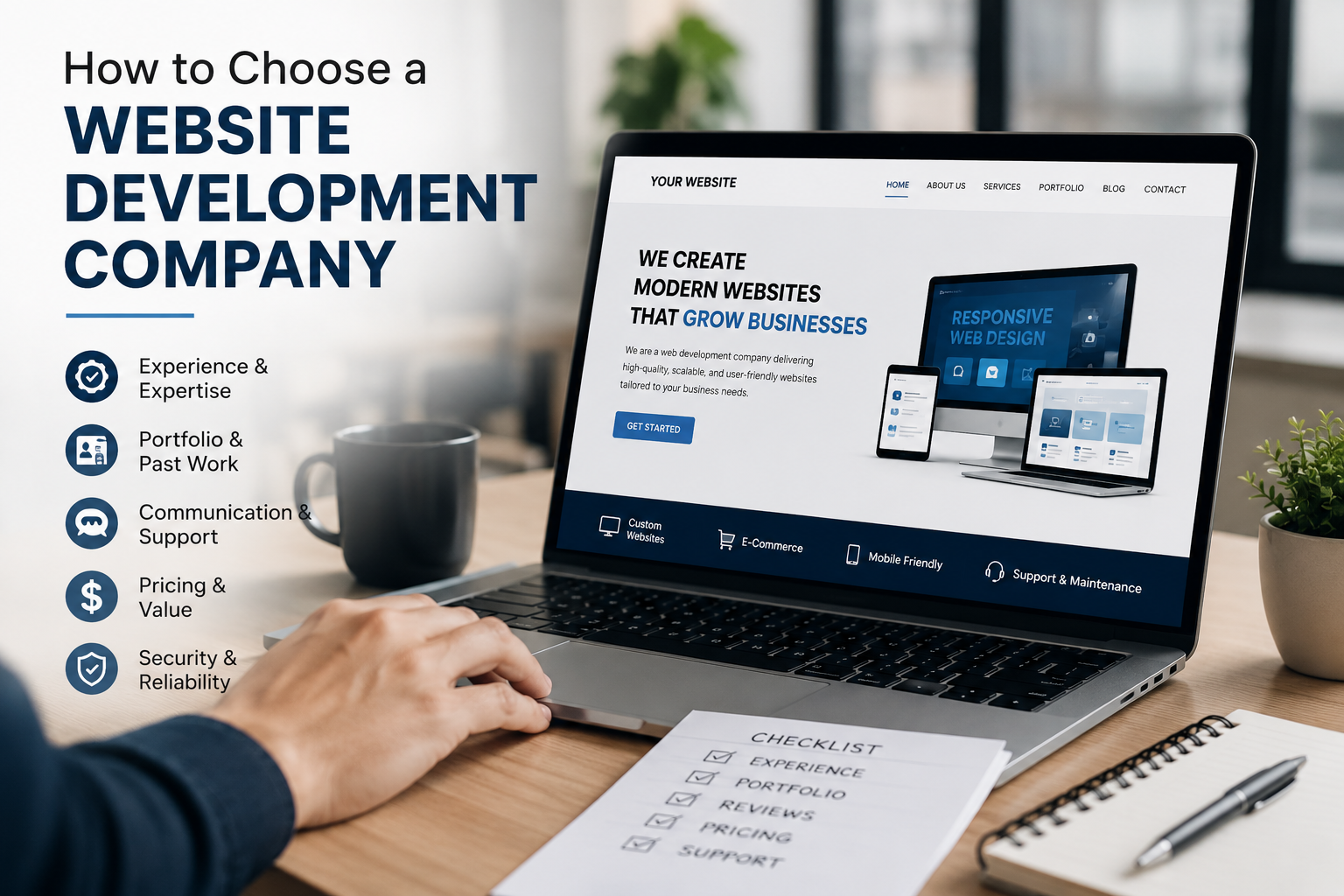
How to Choose the Right Website Development Company
Introduction
Your website is often the first interaction potential customers have with your business. Within seconds, visitors decide whether to stay, explore your services, or leave for a competitor. That’s why choosing the right website development company is one of the most important business decisions you can make.
Many businesses focus only on price when hiring a developer. While staying within budget matters, the cheapest option doesn’t always deliver the best results. A poorly built website can lead to slow loading speeds, security issues, poor search engine rankings, and lost customers.
A professional website should do much more than look attractive. It should load quickly, work seamlessly on every device, rank well on search engines, and encourage visitors to take action—whether that’s making a purchase, filling out a contact form, or requesting a quote.
In this guide, you’ll learn how to evaluate a website development company, what qualities to look for, the questions to ask before signing a contract, and the mistakes that businesses commonly make during the hiring process.
Why Choosing the Right Website Development Company Matters
A website isn’t just an online brochure. It’s one of your most valuable business assets. It represents your brand, supports your marketing efforts, and helps generate leads around the clock.
The right website development company can help you build a website that:
- Creates a strong first impression
- Loads quickly on desktop and mobile devices
- Ranks better on Google with SEO-friendly development
- Provides a smooth user experience
- Protects customer data with modern security practices
- Grows with your business over time
On the other hand, choosing the wrong company can lead to repeated redesigns, expensive fixes, missed deadlines, and lost revenue.
Think of your website as an investment rather than an expense. A professionally built website can continue delivering value for years.
Understand Your Business Goals First
Before contacting any agency, take time to define what you want your website to achieve.
Ask yourself:
- Do you want to generate more leads?
- Will you sell products online?
- Are you showcasing services or a portfolio?
- Do you need appointment booking?
- Should customers be able to contact you directly?
- Will you regularly publish blogs?
- Do you plan to expand your website in the future?
Having clear goals helps a website development company recommend the right technologies, features, and design approach instead of giving you a generic solution.
For example, a local plumbing business has different website requirements than an online clothing store or a software company.
Look Beyond Attractive Design
Many business owners judge a website only by its appearance.
While visual design is important, great websites combine aesthetics with functionality.
A professional website should offer:
Fast Loading Speed
Visitors expect pages to load within seconds. Slow websites increase bounce rates and negatively affect search rankings.
Mobile Responsiveness
More than half of web traffic now comes from mobile devices. Your website should adapt smoothly to different screen sizes without compromising usability.
SEO-Friendly Structure
A good website development company builds websites with clean code, optimized page structure, proper heading hierarchy, image optimization, and fast performance—all of which support better visibility on search engines.
Easy Navigation
Users should find information quickly. A clear menu, logical page structure, and well-organized content improve the overall experience.
Security
SSL certificates, secure coding practices, regular updates, and protection against common vulnerabilities are essential for building trust with customers.
Review Their Portfolio Carefully
Every reputable website development company should have a portfolio showcasing previous projects.
Don’t simply look at screenshots.
Visit the actual websites and evaluate them.
Ask yourself:
- Do they load quickly?
- Are they mobile-friendly?
- Is the navigation simple?
- Does the design look modern?
- Are the websites easy to use?
- Do they reflect different industries?
A company that has successfully worked with businesses in multiple sectors often demonstrates flexibility and problem-solving skills.
If every project looks identical, they may rely heavily on templates rather than creating tailored solutions.
Check Their Technical Expertise
Modern websites involve much more than design.
The company should have expertise in areas such as:
- Custom website development
- Responsive web design
- WordPress development
- E-commerce solutions
- Website maintenance
- Search engine optimization (SEO)
- Website speed optimization
- Security best practices
- API integrations
- Content management systems (CMS)
The broader their technical capabilities, the better equipped they’ll be to handle future business needs.
Read Client Reviews and Testimonials
Reviews provide valuable insight into a company’s professionalism and reliability.
Look beyond star ratings.
Pay attention to comments about:
- Communication
- Meeting deadlines
- Problem-solving ability
- Support after launch
- Transparency
- Overall client satisfaction
Consistent positive feedback across different platforms usually indicates dependable service.
If multiple reviews mention missed deadlines, poor communication, or unexpected charges, treat those as warning signs.
Evaluate Their Communication
A successful website project depends heavily on communication.
A reliable website development company should:
- Respond promptly
- Explain technical concepts clearly
- Understand your business goals
- Provide realistic timelines
- Be transparent about costs
- Keep you updated throughout the project
If communication feels confusing before you’ve even signed a contract, it’s unlikely to improve later.
Choose a team that listens carefully and values collaboration.
Ask About Their Website Development Process
Every professional agency should have a structured workflow.
A typical process includes:
- Requirement gathering
- Research and planning
- Wireframing
- UI/UX design
- Website development
- Testing
- Client review
- Launch
- Ongoing maintenance
A clear development process reduces misunderstandings and helps keep projects on schedule.
10 Questions to Ask Before Hiring a Website Development Company
Choosing a website development company is similar to hiring a long-term business partner. The right team will help your business grow, while the wrong choice can lead to delays, poor performance, and unnecessary expenses.
Before signing any agreement, ask these important questions.
1. Can You Show Me Similar Projects?
A company’s portfolio tells you more than any sales pitch.
Ask them to share websites they’ve built for businesses similar to yours. This gives you an idea of their experience, design style, and ability to understand different industries.
Instead of only looking at images, visit the websites yourself.
Check whether they:
- Load quickly
- Look professional
- Work well on mobile devices
- Have simple navigation
- Provide a smooth user experience
If possible, ask how those websites performed after launch.
2. Will My Website Be SEO-Friendly?
Many business owners spend thousands on a beautiful website only to realize it never appears on Google.
A professional website development company should build websites with SEO in mind from day one.
Ask whether they include:
- Clean code
- Fast loading speed
- Mobile responsiveness
- Proper heading structure
- Image optimization
- XML sitemap
- SSL security
- Schema markup support
- SEO-friendly URLs
Building these features during development is much easier than fixing them later.
3. Who Will Own the Website?
This is one of the most overlooked questions.
After the project is complete, you should own:
- The website
- Domain name
- Hosting account (or have full access)
- Website files
- Content
- Images (if included)
- Admin login credentials
Some agencies retain ownership or limit access, making it difficult to switch providers in the future.
Always clarify ownership before work begins.
4. What Platform Will You Use?
Different businesses require different solutions.
For example:
- WordPress is excellent for blogs, service businesses, and small to medium-sized companies.
- Shopify works well for eCommerce stores.
- Custom development is suitable for businesses with unique requirements.
Ask why they recommend a particular platform instead of accepting a one-size-fits-all answer.
A reliable company explains the advantages and limitations of each option.
5. What Is Included in the Price?
A low quote can become expensive if essential services aren’t included.
Ask whether the price covers:
- Website design
- Development
- Mobile optimization
- Contact forms
- Basic SEO setup
- Speed optimization
- Security configuration
- Testing
- Website launch
- Training
- Revisions
Understanding what’s included helps avoid unexpected costs later.
6. How Long Will the Project Take?
Every project should have a realistic timeline.
A simple business website may take a few weeks, while larger projects can take several months.
Ask for milestones such as:
- Design approval
- Development completion
- Testing
- Launch date
Regular progress updates help ensure the project stays on track.
7. What Happens After Launch?
Launching the website isn’t the end of the journey.
Websites require:
- Software updates
- Security monitoring
- Backups
- Performance optimization
- Bug fixes
- Content updates
Ask whether ongoing maintenance is included or offered as a separate service.
8. Will My Website Be Mobile Friendly?
Most people browse websites on smartphones.
Google also prioritizes mobile-friendly websites in search results.
Ask to see examples of websites they’ve built on both desktop and mobile devices.
Navigation, buttons, images, and forms should all function smoothly on smaller screens.
9. Can My Website Grow with My Business?
Your business today may look very different in two years.
A scalable website allows you to add:
- New pages
- Blog sections
- Online booking
- Customer portals
- Online payments
- New services
Choosing a flexible solution saves money in the long run.
10. What Support Do You Offer?
Even well-built websites occasionally need updates or technical assistance.
Find out:
- How quickly support requests are answered
- Whether emergency support is available
- How updates are handled
- Whether there is a maintenance agreement
Reliable support gives you peace of mind after launch.
Red Flags You Should Never Ignore
Not every website development company delivers the quality it promises.
Watch out for these warning signs before hiring anyone.
They Promise Unrealistic Timelines
Building a professional website involves planning, design, development, testing, and revisions.
If someone promises a fully customized website within a few days, they’re likely cutting corners or using generic templates.
Quality work takes time.
They Can’t Explain Their Process
A trustworthy company follows a structured workflow.
If they can’t explain how they’ll handle your project from start to finish, you may face confusion later.
Professional agencies are transparent about every stage of development.
They Avoid Written Contracts
Never start a website project without a written agreement.
The contract should clearly define:
- Project scope
- Timeline
- Payment schedule
- Deliverables
- Ownership rights
- Revision policy
This protects both you and the agency.
They Offer Extremely Low Prices
Everyone likes saving money, but unusually cheap quotes often come with hidden compromises.
These may include:
- Poor coding practices
- Slow performance
- Limited support
- Security vulnerabilities
- Outdated designs
Remember, rebuilding a poor website usually costs more than building it correctly the first time.
Poor Communication
If emails go unanswered for days before the project even begins, imagine what happens after you’ve paid.
Clear communication is one of the strongest indicators of professionalism.
Compare More Than One Website Development Company
Don’t hire the first agency you contact.
Compare at least three companies based on:
| Factor | What to Look For |
|---|---|
| Portfolio | Modern, responsive, diverse projects |
| Experience | Relevant industry expertise |
| Reviews | Positive client feedback |
| Pricing | Transparent quotations |
| Communication | Prompt and clear responses |
| SEO Knowledge | Technical SEO understanding |
| Support | Reliable after-launch assistance |
| Scalability | Ability to grow with your business |
The cheapest option isn’t always the best, and the most expensive isn’t always the most capable.
Choose the company that offers the best overall value.
Why Experience Matters
An experienced website development company has likely solved hundreds of technical and business challenges.
They understand:
- User behavior
- Website performance
- Search engine optimization
- Conversion optimization
- Security
- Accessibility
- Scalability
Their experience allows them to anticipate problems before they occur, saving you time and money
One of the first questions business owners ask is,
How much will a professional website cost?
The answer depends on the type of website, the features you need, and the experience of the website development company you choose.
While prices vary, remember that a website is an investment rather than an expense. A well-built website can generate leads, build credibility, and support your business for years.
The total cost usually depends on factors such as:
- Number of pages
- Custom design requirements
- E-commerce functionality
- Booking or appointment systems
- Custom integrations
- SEO implementation
- Website speed optimization
- Ongoing maintenance and support
Instead of choosing the lowest quote, compare what is included. A higher initial investment often results in a better-performing website that requires fewer fixes later.
Common Mistakes Businesses Make When Hiring a Website Development Company
Hiring the wrong partner can lead to delays, poor performance, and additional expenses. Avoid these common mistakes.
Choosing Based Only on Price
Many businesses select the cheapest proposal without considering quality.
Low-cost websites may use outdated coding practices, lack SEO optimization, or provide little to no support after launch.
Focus on value rather than price alone.
Ignoring SEO
A visually attractive website is only useful if people can find it.
An experienced website development company builds websites with SEO best practices, making it easier for search engines to crawl and index your pages.
Without SEO-friendly development, even the best design may struggle to attract visitors.
Not Thinking About the Future
Your website should grow alongside your business.
Think ahead. You may want to add:
- A blog
- Online payments
- Live chat
- Customer portal
- Additional service pages
- Multiple locations
- New marketing tools
Planning for future growth can save significant redevelopment costs later.
Forgetting Website Speed
Website speed has a direct impact on user experience and search engine rankings.
Slow-loading pages often lead to higher bounce rates and lower conversions.
Ask your website development company how they optimize:
- Images
- Code
- Caching
- Hosting performance
- Core Web Vitals
A faster website creates a better experience for both users and search engines.
Skipping Website Maintenance
Launching your website isn’t the final step.
Regular maintenance helps keep your website:
- Secure
- Fast
- Compatible with software updates
- Free from technical issues
A maintenance plan ensures your website continues performing at its best long after launch.
Website Development Company Hiring Checklist
Before making your final decision, use this checklist.
 Clear understanding of your business goals
Strong portfolio with live projects
Positive client reviews
Transparent pricing
SEO-friendly development practices
Mobile-responsive design
Fast-loading websites
Secure coding standards
Clear project timeline
Ongoing maintenance and support
If a company meets most or all of these points, you’re likely making a confident choice.
Frequently Asked Questions
How do I choose the best website development company?
Look for experience, a strong portfolio, transparent pricing, positive client reviews, technical expertise, SEO knowledge, and reliable post-launch support.
What should a website development company provide?
A professional company should provide planning, design, development, testing, mobile optimization, SEO-friendly coding, security, deployment, and ongoing support.
Is hiring a website development company worth it?
Yes. A professionally developed website improves credibility, enhances user experience, supports SEO, and helps generate more leads and sales over time.
How long does website development take?
Project timelines vary depending on complexity. A basic business website may take a few weeks, while larger custom websites require more time for planning, development, and testing.
Can a website development company help with SEO?
Many companies build websites using SEO best practices such as optimized code, mobile responsiveness, fast loading speeds, and proper site structure. Some also offer ongoing SEO services
Final Thoughts
Choosing the right website development company is about more than finding someone who can build a website. It’s about finding a partner who understands your business, your customers, and your long-term goals.
A professional website should do more than look good—it should attract visitors, build trust, and convert potential customers into loyal clients. By taking the time to review portfolios, ask the right questions, compare options, and focus on long-term value, you can make a decision that benefits your business for years to come.
Whether you’re launching your first website or planning a redesign, invest in quality, communication, and expertise. The right development partner can become a valuable part of your business growth journey.
Conclusion
Your website is one of the most powerful tools your business owns. Choosing the right website development company can make the difference between a website that simply exists and one that actively supports your marketing, strengthens your brand, and drives measurable results.
Don’t rush the decision. Define your goals, research carefully, ask thoughtful questions, and choose a company that values transparency, quality, and long-term success.
If you’re looking for a website that’s modern, fast, SEO-friendly, and built around your business objectives, working with an experienced development team is one of the smartest investments you can make
How to Choose the Right Website Development Company
Introduction
Your website is often the first interaction potential customers have with your business. Within seconds, visitors decide whether to stay, explore your services, or leave for a competitor. That’s why choosing the right website development company is one of the most important business decisions you can make.
Many businesses focus only on price when hiring a developer. While staying within budget matters, the cheapest option doesn’t always deliver the best results. A poorly built website can lead to slow loading speeds, security issues, poor search engine rankings, and lost customers.
A professional website should do much more than look attractive. It should load quickly, work seamlessly on every device, rank well on search engines, and encourage visitors to take action—whether that’s making a purchase, filling out a contact form, or requesting a quote.
In this guide, you’ll learn how to evaluate a website development company, what qualities to look for, the questions to ask before signing a contract, and the mistakes that businesses commonly make during the hiring process.
Why Choosing the Right Website Development Company Matters
A website isn’t just an online brochure. It’s one of your most valuable business assets. It represents your brand, supports your marketing efforts, and helps generate leads around the clock.
The right website development company can help you build a website that:
- Creates a strong first impression
- Loads quickly on desktop and mobile devices
- Ranks better on Google with SEO-friendly development
- Provides a smooth user experience
- Protects customer data with modern security practices
- Grows with your business over time
On the other hand, choosing the wrong company can lead to repeated redesigns, expensive fixes, missed deadlines, and lost revenue.
Think of your website as an investment rather than an expense. A professionally built website can continue delivering value for years.
Understand Your Business Goals First
Before contacting any agency, take time to define what you want your website to achieve.
Ask yourself:
- Do you want to generate more leads?
- Will you sell products online?
- Are you showcasing services or a portfolio?
- Do you need appointment booking?
- Should customers be able to contact you directly?
- Will you regularly publish blogs?
- Do you plan to expand your website in the future?
Having clear goals helps a website development company recommend the right technologies, features, and design approach instead of giving you a generic solution.
For example, a local plumbing business has different website requirements than an online clothing store or a software company.
Look Beyond Attractive Design
Many business owners judge a website only by its appearance.
While visual design is important, great websites combine aesthetics with functionality.
A professional website should offer:
Fast Loading Speed
Visitors expect pages to load within seconds. Slow websites increase bounce rates and negatively affect search rankings.
Mobile Responsiveness
More than half of web traffic now comes from mobile devices. Your website should adapt smoothly to different screen sizes without compromising usability.
SEO-Friendly Structure
A good website development company builds websites with clean code, optimized page structure, proper heading hierarchy, image optimization, and fast performance—all of which support better visibility on search engines.
Easy Navigation
Users should find information quickly. A clear menu, logical page structure, and well-organized content improve the overall experience.
Security
SSL certificates, secure coding practices, regular updates, and protection against common vulnerabilities are essential for building trust with customers.
Review Their Portfolio Carefully
Every reputable website development company should have a portfolio showcasing previous projects.
Don’t simply look at screenshots.
Visit the actual websites and evaluate them.
Ask yourself:
- Do they load quickly?
- Are they mobile-friendly?
- Is the navigation simple?
- Does the design look modern?
- Are the websites easy to use?
- Do they reflect different industries?
A company that has successfully worked with businesses in multiple sectors often demonstrates flexibility and problem-solving skills.
If every project looks identical, they may rely heavily on templates rather than creating tailored solutions.
Check Their Technical Expertise
Modern websites involve much more than design.
The company should have expertise in areas such as:
- Custom website development
- Responsive web design
- WordPress development
- E-commerce solutions
- Website maintenance
- Search engine optimization (SEO)
- Website speed optimization
- Security best practices
- API integrations
- Content management systems (CMS)
The broader their technical capabilities, the better equipped they’ll be to handle future business needs.
Read Client Reviews and Testimonials
Reviews provide valuable insight into a company’s professionalism and reliability.
Look beyond star ratings.
Pay attention to comments about:
- Communication
- Meeting deadlines
- Problem-solving ability
- Support after launch
- Transparency
- Overall client satisfaction
Consistent positive feedback across different platforms usually indicates dependable service.
If multiple reviews mention missed deadlines, poor communication, or unexpected charges, treat those as warning signs.
Evaluate Their Communication
A successful website project depends heavily on communication.
A reliable website development company should:
- Respond promptly
- Explain technical concepts clearly
- Understand your business goals
- Provide realistic timelines
- Be transparent about costs
- Keep you updated throughout the project
If communication feels confusing before you’ve even signed a contract, it’s unlikely to improve later.
Choose a team that listens carefully and values collaboration.
Ask About Their Website Development Process
Every professional agency should have a structured workflow.
A typical process includes:
- Requirement gathering
- Research and planning
- Wireframing
- UI/UX design
- Website development
- Testing
- Client review
- Launch
- Ongoing maintenance
A clear development process reduces misunderstandings and helps keep projects on schedule.
10 Questions to Ask Before Hiring a Website Development Company
Choosing a website development company is similar to hiring a long-term business partner. The right team will help your business grow, while the wrong choice can lead to delays, poor performance, and unnecessary expenses.
Before signing any agreement, ask these important questions.
1. Can You Show Me Similar Projects?
A company’s portfolio tells you more than any sales pitch.
Ask them to share websites they’ve built for businesses similar to yours. This gives you an idea of their experience, design style, and ability to understand different industries.
Instead of only looking at images, visit the websites yourself.
Check whether they:
- Load quickly
- Look professional
- Work well on mobile devices
- Have simple navigation
- Provide a smooth user experience
If possible, ask how those websites performed after launch.
2. Will My Website Be SEO-Friendly?
Many business owners spend thousands on a beautiful website only to realize it never appears on Google.
A professional website development company should build websites with SEO in mind from day one.
Ask whether they include:
- Clean code
- Fast loading speed
- Mobile responsiveness
- Proper heading structure
- Image optimization
- XML sitemap
- SSL security
- Schema markup support
- SEO-friendly URLs
Building these features during development is much easier than fixing them later.
3. Who Will Own the Website?
This is one of the most overlooked questions.
After the project is complete, you should own:
- The website
- Domain name
- Hosting account (or have full access)
- Website files
- Content
- Images (if included)
- Admin login credentials
Some agencies retain ownership or limit access, making it difficult to switch providers in the future.
Always clarify ownership before work begins.
4. What Platform Will You Use?
Different businesses require different solutions.
For example:
- WordPress is excellent for blogs, service businesses, and small to medium-sized companies.
- Shopify works well for eCommerce stores.
- Custom development is suitable for businesses with unique requirements.
Ask why they recommend a particular platform instead of accepting a one-size-fits-all answer.
A reliable company explains the advantages and limitations of each option.
5. What Is Included in the Price?
A low quote can become expensive if essential services aren’t included.
Ask whether the price covers:
- Website design
- Development
- Mobile optimization
- Contact forms
- Basic SEO setup
- Speed optimization
- Security configuration
- Testing
- Website launch
- Training
- Revisions
Understanding what’s included helps avoid unexpected costs later.
6. How Long Will the Project Take?
Every project should have a realistic timeline.
A simple business website may take a few weeks, while larger projects can take several months.
Ask for milestones such as:
- Design approval
- Development completion
- Testing
- Launch date
Regular progress updates help ensure the project stays on track.
7. What Happens After Launch?
Launching the website isn’t the end of the journey.
Websites require:
- Software updates
- Security monitoring
- Backups
- Performance optimization
- Bug fixes
- Content updates
Ask whether ongoing maintenance is included or offered as a separate service.
8. Will My Website Be Mobile Friendly?
Most people browse websites on smartphones.
Google also prioritizes mobile-friendly websites in search results.
Ask to see examples of websites they’ve built on both desktop and mobile devices.
Navigation, buttons, images, and forms should all function smoothly on smaller screens.
9. Can My Website Grow with My Business?
Your business today may look very different in two years.
A scalable website allows you to add:
- New pages
- Blog sections
- Online booking
- Customer portals
- Online payments
- New services
Choosing a flexible solution saves money in the long run.
10. What Support Do You Offer?
Even well-built websites occasionally need updates or technical assistance.
Find out:
- How quickly support requests are answered
- Whether emergency support is available
- How updates are handled
- Whether there is a maintenance agreement
Reliable support gives you peace of mind after launch.
Red Flags You Should Never Ignore
Not every website development company delivers the quality it promises.
Watch out for these warning signs before hiring anyone.
They Promise Unrealistic Timelines
Building a professional website involves planning, design, development, testing, and revisions.
If someone promises a fully customized website within a few days, they’re likely cutting corners or using generic templates.
Quality work takes time.
They Can’t Explain Their Process
A trustworthy company follows a structured workflow.
If they can’t explain how they’ll handle your project from start to finish, you may face confusion later.
Professional agencies are transparent about every stage of development.
They Avoid Written Contracts
Never start a website project without a written agreement.
The contract should clearly define:
- Project scope
- Timeline
- Payment schedule
- Deliverables
- Ownership rights
- Revision policy
This protects both you and the agency.
They Offer Extremely Low Prices
Everyone likes saving money, but unusually cheap quotes often come with hidden compromises.
These may include:
- Poor coding practices
- Slow performance
- Limited support
- Security vulnerabilities
- Outdated designs
Remember, rebuilding a poor website usually costs more than building it correctly the first time.
Poor Communication
If emails go unanswered for days before the project even begins, imagine what happens after you’ve paid.
Clear communication is one of the strongest indicators of professionalism.
Compare More Than One Website Development Company
Don’t hire the first agency you contact.
Compare at least three companies based on:
| Factor | What to Look For |
|---|---|
| Portfolio | Modern, responsive, diverse projects |
| Experience | Relevant industry expertise |
| Reviews | Positive client feedback |
| Pricing | Transparent quotations |
| Communication | Prompt and clear responses |
| SEO Knowledge | Technical SEO understanding |
| Support | Reliable after-launch assistance |
| Scalability | Ability to grow with your business |
The cheapest option isn’t always the best, and the most expensive isn’t always the most capable.
Choose the company that offers the best overall value.
Why Experience Matters
An experienced website development company has likely solved hundreds of technical and business challenges.
They understand:
- User behavior
- Website performance
- Search engine optimization
- Conversion optimization
- Security
- Accessibility
- Scalability
Their experience allows them to anticipate problems before they occur, saving you time and money
One of the first questions business owners ask is,
How much will a professional website cost?
The answer depends on the type of website, the features you need, and the experience of the website development company you choose.
While prices vary, remember that a website is an investment rather than an expense. A well-built website can generate leads, build credibility, and support your business for years.
The total cost usually depends on factors such as:
- Number of pages
- Custom design requirements
- E-commerce functionality
- Booking or appointment systems
- Custom integrations
- SEO implementation
- Website speed optimization
- Ongoing maintenance and support
Instead of choosing the lowest quote, compare what is included. A higher initial investment often results in a better-performing website that requires fewer fixes later.
Common Mistakes Businesses Make When Hiring a Website Development Company
Hiring the wrong partner can lead to delays, poor performance, and additional expenses. Avoid these common mistakes.
Choosing Based Only on Price
Many businesses select the cheapest proposal without considering quality.
Low-cost websites may use outdated coding practices, lack SEO optimization, or provide little to no support after launch.
Focus on value rather than price alone.
Ignoring SEO
A visually attractive website is only useful if people can find it.
An experienced website development company builds websites with SEO best practices, making it easier for search engines to crawl and index your pages.
Without SEO-friendly development, even the best design may struggle to attract visitors.
Not Thinking About the Future
Your website should grow alongside your business.
Think ahead. You may want to add:
- A blog
- Online payments
- Live chat
- Customer portal
- Additional service pages
- Multiple locations
- New marketing tools
Planning for future growth can save significant redevelopment costs later.
Forgetting Website Speed
Website speed has a direct impact on user experience and search engine rankings.
Slow-loading pages often lead to higher bounce rates and lower conversions.
Ask your website development company how they optimize:
- Images
- Code
- Caching
- Hosting performance
- Core Web Vitals
A faster website creates a better experience for both users and search engines.
Skipping Website Maintenance
Launching your website isn’t the final step.
Regular maintenance helps keep your website:
- Secure
- Fast
- Compatible with software updates
- Free from technical issues
A maintenance plan ensures your website continues performing at its best long after launch.
Website Development Company Hiring Checklist
Before making your final decision, use this checklist.
Clear understanding of your business goals
Strong portfolio with live projects
Positive client reviews
Transparent pricing
SEO-friendly development practices
Mobile-responsive design
Fast-loading websites
Secure coding standards
Clear project timeline
Ongoing maintenance and support
If a company meets most or all of these points, you’re likely making a confident choice.
Frequently Asked Questions
How do I choose the best website development company?
Look for experience, a strong portfolio, transparent pricing, positive client reviews, technical expertise, SEO knowledge, and reliable post-launch support.
What should a website development company provide?
A professional company should provide planning, design, development, testing, mobile optimization, SEO-friendly coding, security, deployment, and ongoing support.
Is hiring a website development company worth it?
Yes. A professionally developed website improves credibility, enhances user experience, supports SEO, and helps generate more leads and sales over time.
How long does website development take?
Project timelines vary depending on complexity. A basic business website may take a few weeks, while larger custom websites require more time for planning, development, and testing.
Can a website development company help with SEO?
Many companies build websites using SEO best practices such as optimized code, mobile responsiveness, fast loading speeds, and proper site structure. Some also offer ongoing SEO services
Final Thoughts
Choosing the right website development company is about more than finding someone who can build a website. It’s about finding a partner who understands your business, your customers, and your long-term goals.
A professional website should do more than look good—it should attract visitors, build trust, and convert potential customers into loyal clients. By taking the time to review portfolios, ask the right questions, compare options, and focus on long-term value, you can make a decision that benefits your business for years to come.
Whether you’re launching your first website or planning a redesign, invest in quality, communication, and expertise. The right development partner can become a valuable part of your business growth journey.
Conclusion
Your website is one of the most powerful tools your business owns. Choosing the right website development company can make the difference between a website that simply exists and one that actively supports your marketing, strengthens your brand, and drives measurable results.
Don’t rush the decision. Define your goals, research carefully, ask thoughtful questions, and choose a company that values transparency, quality, and long-term success.
If you’re looking for a website that’s modern, fast, SEO-friendly, and built around your business objectives, working with an experienced development team is one of the smartest investments you can make