Introduction
Branding and graphic design are often used interchangeably, but they are not the same thing.
A business may hire a graphic designer to create a brochure, social media post, advertisement, presentation, or banner. However, building a strong brand requires a much broader approach. It involves defining how a company should look, sound, and feel across every customer interaction.
This is where Brand Identity Design Services differ from general graphic design.
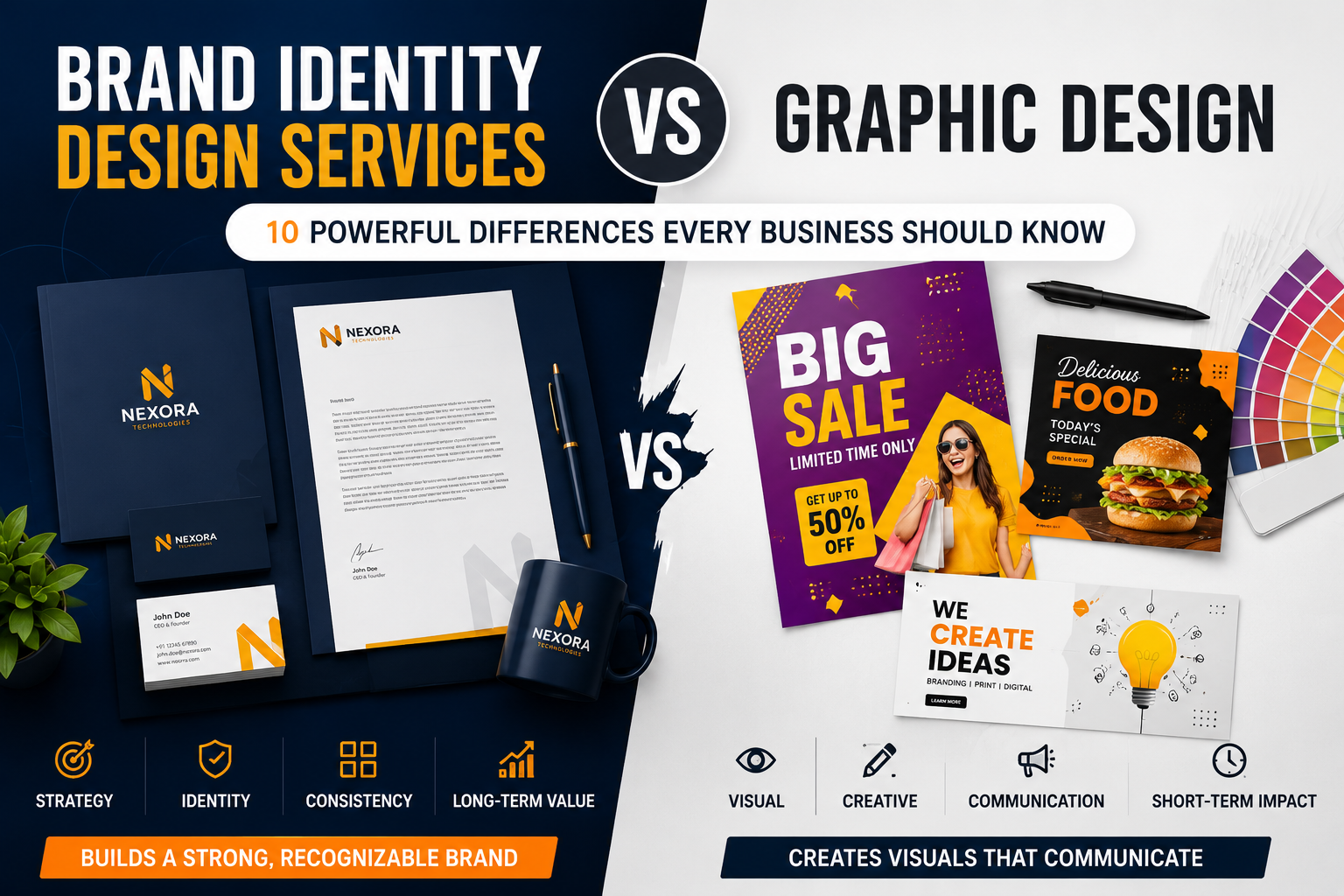
Graphic design focuses primarily on creating visual communication for specific purposes. Brand identity focuses on creating the complete visual and strategic system that makes a business recognizable and different from its competitors.
For example, designing one Instagram post is graphic design. Deciding which colours, typography, imagery, layout, logo usage, and visual style should be used across every Instagram post is part of brand identity.
Both disciplines are valuable. The question is not whether one is better than the other. The real question is which one does your business need at a particular stage?
If you are launching a company, changing your positioning, entering a new market, or trying to build a recognizable presence, understanding the difference can help you invest your time and budget more effectively.
In this guide, we’ll explore 10 powerful differences between Brand Identity Design Services and graphic design, explain what each service involves, and show when your business may need one or both.
Table of Contents
What Is Brand Identity Design?
What Is Graphic Design?
Brand Identity vs Graphic Design at a Glance
Difference #1: Strategy vs Individual Design
Difference #2: Long-Term Identity vs Short-Term Communication
Difference #3: Consistency vs Creativity for a Specific Project
Difference #4: Complete Brand System vs Individual Assets
Difference #5: Brand Recognition vs Visual Communication
Difference #6: Business Positioning vs Marketing Execution
Difference #7: Brand Guidelines vs Project Requirements
Difference #8: Customer Perception vs Message Presentation
Difference #9: Long-Term Investment vs Immediate Design Need
Difference #10: Brand Foundation vs Content Production
Can a Business Need Both?
When Should You Invest in Brand Identity Design Services?
When Is Graphic Design Enough?
Common Mistakes Businesses Make
How to Choose the Right Service
Frequently Asked Questions
Conclusion
Build Your Brand with Gowenza
What Is Brand Identity Design?
Brand identity is the collection of visual and verbal elements that represent a business.
It determines how customers recognize and perceive a company.
A complete brand identity can include:
Logo
Colour palette
Typography
Brand imagery
Graphic elements
Iconography
Brand voice
Messaging style
Photography direction
Layout principles
Brand guidelines
Marketing applications
But brand identity is not simply a collection of design files.
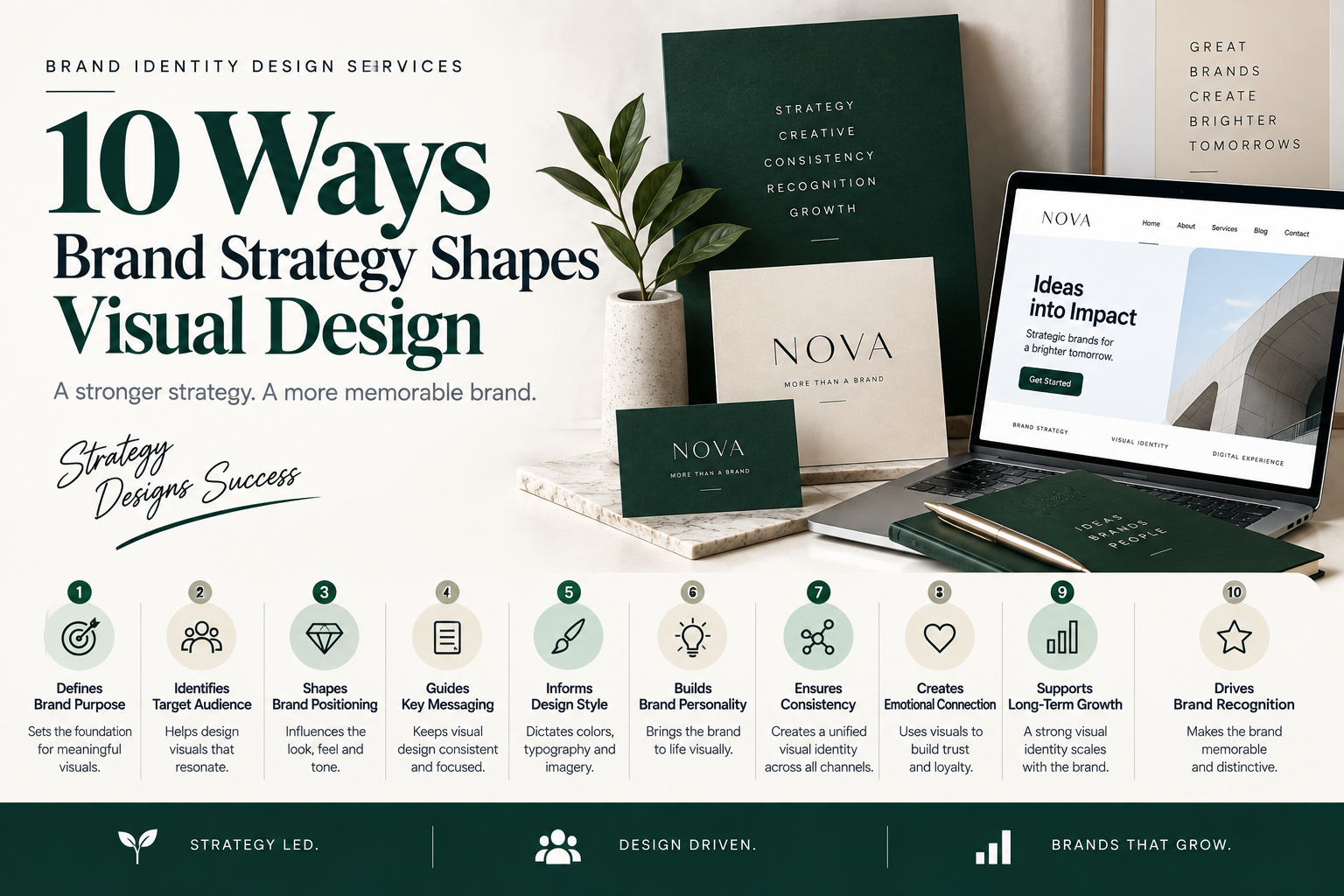
The strongest identities are based on strategy.
Before designing anything, a branding professional may examine the company’s:
Professional Brand Identity Design Services bring these strategic and visual components together into one consistent system.
The purpose is to make the business recognizable, memorable, and relevant to its audience.
What Is Graphic Design?
Graphic design is the process of communicating information or ideas through visual elements.
Graphic designers create materials for specific purposes.
These may include:
Social media posts
Flyers
Posters
Brochures
Advertisements
Business cards
Presentations
Infographics
Website graphics
Banners
Promotional materials
Packaging
Graphic design can exist without a complete brand identity.
For example, a business may need a promotional poster for an upcoming event. A graphic designer can create an effective poster using the information provided by the business.
However, if the business already has established branding, the designer should apply its existing logo, colours, fonts, and visual rules.
This distinction is important.
Brand identity establishes the rules. Graphic design applies those rules to individual communication pieces.
Brand Identity vs Graphic Design at a Glance
| Area | Brand Identity | Graphic Design |
|---|
| Main purpose | Define the brand | Communicate visually |
| Focus | Long-term identity | Individual projects |
| Strategy | Major component | May not be required |
| Logo | Creates the logo system | May use an existing logo |
| Colours | Establishes brand palette | Applies selected colours |
| Typography | Defines typography system | Uses approved fonts |
| Guidelines | Creates brand rules | Follows project requirements |
| Goal | Recognition and positioning | Communication and engagement |
| Timeline | Long-term | Project-based |
| Output | Complete identity system | Individual visual assets |
The two services often work together, but their roles are different.
Difference #1: Strategy vs Individual Design
The first major difference is strategy.
Brand identity begins by asking questions about the business.
Graphic design often begins with a specific design requirement.
For example, a business might approach a graphic designer and say:
“We need a promotional poster for our new service.”
The designer’s immediate responsibility is to create that poster.
A branding project begins differently.
It may ask:
Who is the target customer?
What should customers think when they see the brand?
What makes the company different?
What personality should the brand have?
What competitors are already doing?
What visual direction supports the business strategy?
This strategic foundation influences every visual decision.
Professional Brand Identity Design Services therefore go beyond making something look attractive. They establish the reasoning behind the visual identity.
Graphic design can communicate a message effectively.
Brand identity determines how the business should consistently communicate its message.
Difference #2: Long-Term Identity vs Short-Term Communication
Graphic design is frequently project-based.
A company might need:
Once the project is complete, the design may no longer be needed.
Brand identity has a much longer lifespan.
A logo, colour palette, typography system, and brand guidelines can remain in use for years.
This makes brand identity a long-term business asset.
For example, a company may use the same core identity across hundreds of campaigns.
Each campaign can look different while still feeling like the same brand.
That’s the power of having a defined identity.
Without one, every new design may look completely different.
Customers then have difficulty recognizing the business.
Difference #3: Consistency vs Creativity for a Specific Project
Graphic design allows considerable creative freedom.
A designer can create a unique visual style for a particular campaign depending on the objective.
Brand identity, however, establishes consistency.
This doesn’t mean every branded design should look identical.
Instead, there should be recognizable elements connecting them.
For example, a business might use:
The same primary colours
The same typography
Consistent logo placement
Similar photography treatment
Repeated graphic elements
A social media post can be creative while still following these rules.
Professional Brand Identity Design Services establish the visual framework that allows creativity to happen without losing brand recognition.
The goal isn’t to restrict designers.
It’s to give creativity a clear direction.
Difference #4: Complete Brand System vs Individual Assets
Graphic design usually produces individual assets.
A designer might deliver:
Poster
Flyer
Banner
Brochure
Social media graphic
Brand identity produces a system that can be used to create those assets consistently.
A brand identity project may deliver:
Logo System
Primary logo
Secondary logo
Icon or symbol
Monochrome versions
Colour System
Primary colours
Secondary colours
Accent colours
Neutral colours
Typography System
Heading font
Body font
Font hierarchy
Weight guidelines
Visual System
Icons
Patterns
Shapes
Photography style
Brand Guidelines
Instructions explaining how all these elements should be used.
Once the system exists, graphic designers can use it to produce future marketing materials.
This is why brand identity is often the foundation upon which graphic design operates.
Difference #5: Brand Recognition vs Visual Communication
Graphic design aims to communicate information visually.
Brand identity has an additional objective: recognition.
Imagine seeing a familiar colour combination, typography style, and visual layout without immediately seeing the company name.
You may still recognize the brand.
That recognition doesn’t happen because of one poster.
It develops through repeated exposure to consistent brand elements.
This is why strong brands invest heavily in visual consistency.
Every customer interaction reinforces the same identity.
Over time, customers become familiar with the visual language.
Professional Brand Identity Design Services help businesses establish that visual language.
Graphic design then uses it to communicate individual messages.
Difference #6: Business Positioning vs Marketing Execution
Brand positioning determines where a business wants to sit in the market.
For example, a company may position itself as:
Affordable
Premium
Innovative
Professional
Friendly
Sustainable
Luxury
This positioning affects branding decisions.
A premium business may use minimalist layouts, refined typography, and a restrained colour palette.
A youth-focused brand may use bold colours, energetic graphics, and informal communication.
Graphic design can execute a campaign within this positioning.
But brand identity helps define the positioning in the first place.
Professional Brand Identity Design Services connect business strategy with visual communication so the brand doesn’t simply look attractive—it looks appropriate for its intended market.
Difference #7: Brand Guidelines vs Project Requirements
A graphic design project often comes with specific instructions.
For example:
Create an Instagram post announcing a 20% discount.
The designer needs information such as:
Offer details
Date
Images
Logo
Dimensions
Call to action
Brand identity guidelines operate at a higher level.
They explain how the business should be represented across many projects.
A brand guideline document may specify:
Logo clear space
Approved colours
Typography
Image style
Tone of voice
Graphic elements
Incorrect logo usage
Layout principles
This means future designers don’t have to guess how the brand should look.
They have a clear reference.
Professional Brand Identity Design Services create these guidelines to protect consistency as the business grows.
Difference #8: Customer Perception vs Message Presentation
Graphic design focuses heavily on presentation.
Brand identity considers perception.
The distinction may seem small, but it is important.
Suppose a company needs a brochure.
Graphic design determines:
Layout
Images
Typography
Spacing
Visual hierarchy
Brand identity asks:
What should the customer feel when they see this brochure?
Should the company appear:
Trustworthy?
Premium?
Innovative?
Approachable?
Experienced?
The design should support that perception.
A brochure can be visually attractive and still communicate the wrong personality.
For example, a corporate financial company using playful cartoon graphics may appear less serious than intended.
A branding strategy prevents these inconsistencies.
Difference #9: Long-Term Investment vs Immediate Design Need
Businesses often think of graphic design as an immediate expense.
They need something created, so they hire a designer.
Brand identity is better understood as a long-term investment.
A strong identity can support:
Marketing
Advertising
Website design
Social media
Sales presentations
Packaging
Customer experience
Business growth
Once the identity is established, future design projects become easier because the visual direction is already defined.
Professional Brand Identity Design Services can therefore reduce inconsistency and improve the efficiency of future marketing.
Instead of starting from scratch every time, your team works from an established system.
Difference #10: Brand Foundation vs Content Production
This may be the simplest way to understand the entire difference.
Brand identity is the foundation.
Graphic design is often the production.
Think about building a house.
The foundation determines the structure.
The furniture and decoration make the individual spaces functional and attractive.
Similarly, brand identity establishes:
Graphic design then creates individual pieces of communication using that foundation.
A business that skips the foundation may still produce attractive designs, but the overall brand can become inconsistent.
A business with a strong identity can produce hundreds of marketing assets while maintaining a recognizable appearance.
Can a Business Need Both?
Absolutely.
In fact, most growing businesses benefit from both.
A typical process might look like this:
Stage 1: Brand Identity
A business develops:
Logo
Colours
Typography
Brand personality
Visual style
Brand guidelines
Stage 2: Graphic Design
The business then creates:
Social media posts
Brochures
Advertisements
Presentations
Flyers
Website graphics
The graphic designer uses the established identity when creating these materials.
This creates a connected marketing presence.
Instead of every design looking like it came from a different company, everything feels like part of the same brand.
When Should You Invest in Brand Identity Design Services?
Not every business needs a complete branding project immediately.
However, professional branding becomes especially valuable when:
You’re Launching a New Business
Starting with a clear identity prevents inconsistent branding later.
You’re Entering a Competitive Market
A distinctive identity can help differentiate your business.
Your Existing Branding Looks Outdated
If your visual identity no longer represents your business, a strategic refresh may be appropriate.
You’re Targeting a New Audience
Your current identity may not appeal to the customers you want to reach.
You’re Expanding
Growth often creates the need for more structured brand guidelines.
Your Marketing Looks Inconsistent
If every designer uses different colours, fonts, and styles, you may need a proper identity system.
You’re Rebranding
A rebrand should address more than the logo. It should consider the complete identity.
When Is Graphic Design Enough?
Graphic design may be sufficient when your business already has a strong brand identity and simply needs individual marketing materials.
For example, you may only need graphic design if you already have:
Then you can hire a graphic designer to create:
Social media content
Flyers
Advertisements
Presentations
Brochures
Marketing campaigns
In this situation, the designer’s job is primarily to apply the existing brand system effectively.
Common Mistakes Businesses Make
Mistake #1: Thinking a Logo Is a Complete Brand
A logo is important, but it is only one part of your identity.
Mistake #2: Hiring Different Designers Without Guidelines
Different designers may interpret your brand differently.
Mistake #3: Changing Colours Frequently
Constantly changing colours weakens recognition.
Mistake #4: Following Every Design Trend
A trend may look attractive today but become outdated quickly.
Mistake #5: Designing Without Understanding the Audience
Branding should be relevant to the people you want to attract.
Mistake #6: Prioritising Appearance Over Strategy
Beautiful design cannot compensate for unclear positioning.
Mistake #7: Ignoring Brand Consistency
Inconsistent branding makes businesses appear less established.
How to Choose the Right Service
Before hiring a designer or agency, identify what you actually need.
Ask yourself:
Do we have a clear brand strategy?
If not, start with branding.
Do we already have a professional identity?
If yes, graphic design may be enough for individual projects.
Are our designs inconsistent?
If yes, consider developing brand guidelines.
Are we launching a new business?
A complete identity can provide a stronger foundation.
Are we simply producing marketing content?
Graphic design may be the appropriate service.
Are we repositioning the company?
Professional Brand Identity Design Services can help establish a new strategic and visual direction.
The important thing is to solve the actual business problem rather than buying a service simply because it sounds useful.
A Simple Example
Imagine a company called NovaTech, a technology services business.
The company has a logo but no defined colour system, typography, or visual guidelines.
Every month, different employees create social media graphics.
One post uses blue.
Another uses orange.
One uses a bold font.
Another uses a handwritten font.
The logo is positioned differently in every design.
None of the posts look terrible individually.
But together, they don’t look like they belong to the same company.
NovaTech doesn’t necessarily need more graphic designers.
It needs a stronger brand foundation.
A professional branding project could establish:
Primary colours
Typography
Logo rules
Photography style
Graphic elements
Social media templates
Brand guidelines
After that, graphic designers can create content within the system.
The result is a much more recognizable business.
Why the Difference Matters for Your Marketing Budget
Understanding the difference can prevent businesses from spending money in the wrong place.
Suppose you spend thousands creating social media graphics but have no clear brand identity.
You may end up with hundreds of attractive posts that don’t create strong recognition.
On the other hand, investing in a strong identity first can make future marketing more efficient.
Your designers already know:
This reduces guesswork.
Brand identity therefore influences not only how your business looks but also how efficiently your marketing can be produced.
Frequently Asked Questions
1. What is the difference between Brand Identity Design Services and graphic design?
Brand identity focuses on creating the complete strategic and visual system of a business, while graphic design usually focuses on creating individual visual communication materials such as posters, brochures, advertisements, and social media graphics.
2. Is logo design part of brand identity?
Yes. Logo design is one component of a complete brand identity. A professional identity may also include colours, typography, imagery, messaging, graphic elements, and brand guidelines.
3. Does every business need Brand Identity Design Services?
Not every business needs a complete identity project immediately. However, businesses launching, expanding, rebranding, repositioning, or struggling with inconsistent visuals can benefit significantly from professional branding.
4. Can a graphic designer create a brand identity?
Some graphic designers specialize in branding and can create complete identities. The important factor is their expertise and process, not simply their job title.
5. Can I use graphic design without brand identity?
Yes. A business can commission individual graphic design projects without having a complete identity. However, maintaining consistency becomes more difficult without established brand guidelines.
6. Which is more expensive: branding or graphic design?
A complete brand identity project is generally a larger investment because it involves strategy and the development of multiple brand elements. Graphic design is often priced per project or asset.
7. How long does brand identity design take?
The timeline depends on the scope. A basic identity may take several weeks, while a comprehensive project involving research, strategy, multiple applications, and guidelines may take longer.
8. Can Brand Identity Design Services help with rebranding?
Yes. Professional branding services can help businesses evaluate their existing identity, determine what should change, preserve valuable recognition, and develop a new visual and strategic direction.
Conclusion
Brand identity and graphic design are closely connected, but they serve different purposes.
Graphic design creates visual communication.
Brand identity creates the system that makes that communication recognizable and consistent.
One is not a replacement for the other.
A business with an established identity may simply need graphic design to create new marketing materials. A business without a clear identity may need to step back and establish its positioning, visual language, and brand guidelines before producing large amounts of content.
Understanding this distinction can save businesses time, money, and unnecessary design revisions.
Instead of asking, “Do I need a designer?” ask a more useful question:
“Do I need to build my brand foundation, or do I need to create something using the foundation I already have?”
If the foundation doesn’t exist, professional Brand Identity Design Services can help establish it.
If the foundation already exists, graphic design can help bring it to life through individual marketing materials and campaigns.
The strongest businesses often use both.
They build a clear identity first and then consistently apply it across their website, social media, advertising, packaging, presentations, and customer communications.
In today’s competitive market, being visually attractive is not enough. Customers need to recognize you, understand you, and remember you.
That’s what a strong brand identity helps accomplish.
Build Your Brand with Gowenza
At Gowenza, we help businesses build professional and consistent identities through strategic Brand Identity Design Services.
Our branding solutions can include:
Once your identity is established, our Graphic Design Services can help apply it consistently across social media, advertisements, brochures, presentations, and other marketing materials.
Gowenza also provides Website Development Services, SEO Services, Digital Marketing Services, and Google Ads Services to help businesses build a stronger digital presence.
Whether you’re starting a new business, updating an existing identity, or simply looking for professional marketing designs, the goal is the same: create a brand that looks consistent, communicates clearly, and stays memorable.
Gowenza — Create. Innovate. Elevate.
Understanding the difference between brand identity and graphic design becomes easier when you explore trusted design resources. Adobe’s design resources offer practical guidance on creating logos and visual brand assets, while Adobe’s typography guide explains how typography influences readability, visual style, and brand identity. Businesses can also use Google Fonts to explore open-source typefaces and Adobe Color to research colour combinations and colour theory. These resources can help business owners understand key design principles before investing in professional Brand Identity Design Services.