Brand Identity Design Services: 15 Things to Know Before You Rebrand Your Business
- Gowenza
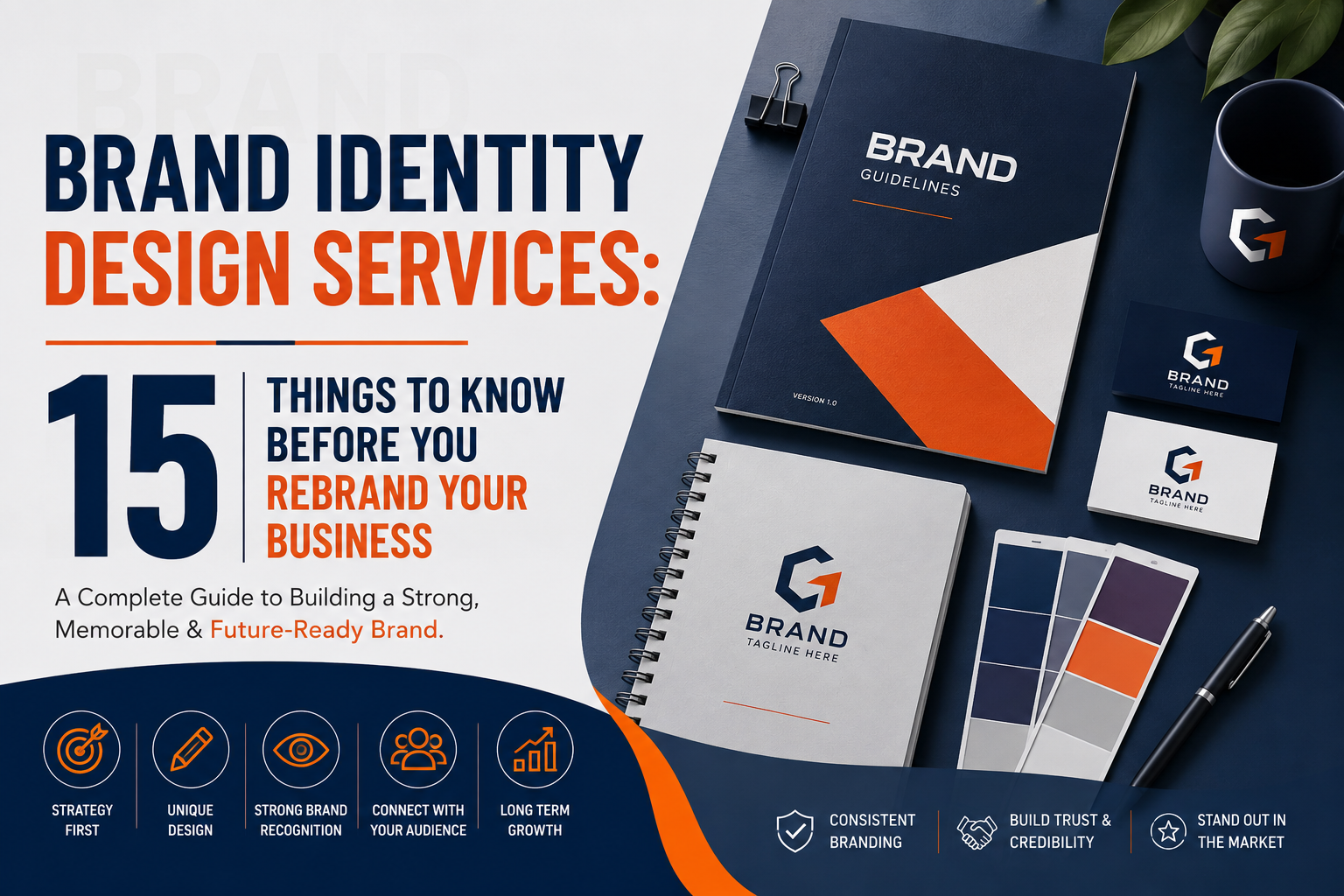
Brand Identity Design Services: 15 Things to Know Before You Rebrand Your Business
Introduction
Rebranding is one of the biggest decisions a business can make.
A successful rebrand can refresh your image, strengthen customer trust, attract new audiences, and position your business for long-term growth. On the other hand, a poorly planned rebrand can confuse loyal customers, weaken brand recognition, and waste valuable time and resources.
Many businesses believe rebranding simply means creating a new logo or changing their colours. In reality, effective rebranding goes much deeper. It involves evaluating how customers perceive your business, refining your messaging, updating your visual identity, and ensuring every customer touchpoint reflects your current goals and values.
This is where professional Brand Identity Design Services become essential. Rather than making cosmetic changes, experienced branding professionals develop a strategic identity that aligns with your business objectives, target audience, and competitive positioning.
Before investing in a rebrand, it’s important to understand what the process involves, when it’s necessary, and how to avoid common mistakes.
In this guide, we’ll cover 15 important things every business should know before starting a rebrand. Whether you’re launching a new business direction, expanding into new markets, or modernising an outdated identity, these insights will help you approach the process with confidence.
Table of Contents
- Introduction
- When Is It Time to Rebrand?
- Thing #1: Know Why You’re Rebranding
- Thing #2: Understand Your Current Brand
- Thing #3: Research Your Target Audience
- Thing #4: Study Your Competitors
- Thing #5: Define Your Brand Strategy Before Designing Anything
- Thing #6: Preserve the Brand Recognition You’ve Already Built
- Thing #7: Think Beyond the Logo
- Thing #8: Create Comprehensive Brand Guidelines
- Thing #9: Update Every Customer Touchpoint
- Thing #10: Involve Your Team Early in the Rebranding Process
- Thing #11: Plan Your Brand Launch Carefully
- Thing #12: Communicate the Change Clearly
- Thing #13: Measure the Success of Your Rebrand
- Thing #14: Stay Consistent After the Rebrand
- Thing #15: Choose the Right Branding Partner
- Common Rebranding Mistakes Businesses Should Avoid
- How to Plan a Successful Rebrand
- Frequently Asked Questions (FAQs)
- Conclusion
- Rebrand with Confidence at Gowenza
When Is It Time to Rebrand?
Not every business needs a complete rebrand.
Sometimes a refreshed website or updated marketing materials are enough.
However, there are situations where rebranding becomes a strategic necessity.
You may need to rebrand if:
- Your visual identity looks outdated.
- Your business has changed its products or services.
- You’re targeting a new audience.
- Your company has expanded into new markets.
- Your current branding no longer reflects your values.
- Customers frequently misunderstand what you do.
- You’ve merged with another company.
- Your competitors have evolved while your brand has remained unchanged.
A successful rebrand should solve a genuine business challenge rather than simply follow design trends.
Professional Brand Identity Design Services begin by identifying the underlying reason for change before developing creative solutions.
Without a clear purpose, even the most attractive redesign may fail to deliver meaningful results.
Thing #1: Know Why You’re Rebranding
The first question every business should answer is simple:
Why are we rebranding?
The answer should go beyond wanting a more modern logo.
Your objectives might include:
- Reaching new customers
- Improving brand perception
- Entering international markets
- Reflecting business growth
- Increasing credibility
- Supporting a new business strategy
When your reason is clear, every branding decision becomes easier.
For example, a company expanding into global markets may require a more universal visual identity.
A startup targeting premium clients may need branding that communicates sophistication and expertise.
Professional Brand Identity Design Services translate business goals into visual and strategic branding decisions that support long-term growth.Without a clear objective, rebranding becomes guesswork.
Thing #2: Understand Your Current Brand
Before changing your identity, understand what already works.
Many businesses focus entirely on what they dislike about their branding while ignoring valuable strengths they’ve already built.
Ask questions such as:
- What do customers currently recognise?
- Which colours are strongly associated with our business?
- What feedback do customers consistently provide?
- Which marketing materials perform well?
- What visual elements should be preserved?
Sometimes the strongest rebrands retain familiar characteristics while modernising their overall appearance.
Completely abandoning every aspect of your identity may confuse existing customers.
Professional Brand Identity Design Services often begin with a comprehensive brand audit that evaluates:
- Visual identity
- Messaging
- Customer perception
- Competitor positioning
- Digital presence
- Marketing consistency
Understanding where your brand stands today creates a stronger foundation for future improvements.
Thing #3: Research Your Target Audience
A rebrand should never be based solely on internal opinions.
The people who matter most are your customers.
Before making design decisions, understand:
- Who your ideal customers are.
- What they value.
- How they perceive your business.
- What problems they want solved.
- Which brands they already trust.
For example:
A technology startup targeting young entrepreneurs may benefit from clean, modern branding.
A law firm serving corporate clients may require a more traditional and authoritative identity.
The same branding approach rarely works for every audience.
Professional Brand Identity Design Services use audience research to ensure visual identity, messaging, typography, and colour choices resonate with the people the business wants to attract.
Branding becomes significantly more effective when it’s designed for customers rather than personal preferences.
Thing #4: Study Your Competitors
Rebranding isn’t about copying competitors.
It’s about understanding your market.
Research helps identify:
- Common industry trends
- Customer expectations
- Visual opportunities
- Areas where your business can stand out
Review competitor websites, social media, advertisements, and marketing materials.
Ask yourself:
- Which brands feel trustworthy?
- Which brands appear outdated?
- What visual styles dominate the industry?
- How can your business differentiate itself?
Professional Brand Identity Design Services perform competitive analysis to position businesses strategically rather than simply creating attractive visuals.
A successful brand should feel familiar enough to meet customer expectations while remaining distinctive enough to be memorable.
Why Strategy Matters More Than Design
Many businesses begin rebranding by asking designers to create a new logo.
In reality, strategy should always come first.
A logo is one outcome of branding—not the starting point.
Before visual design begins, businesses should define:
- Their mission
- Core values
- Target audience
- Market position
- Brand personality
- Long-term goals
These strategic decisions guide every visual element that follows.
Professional Brand Identity Design Services combine research, psychology, and business strategy to create identities that support measurable growth rather than temporary visual improvements.
Key Lessons from the First Four Steps
The first stage of any successful rebrand focuses on understanding rather than designing.
You need to:
- Clarify why you’re rebranding.
- Evaluate your current identity.
- Research your audience.
- Study your competitors.
Only after completing these steps should visual development begin.
Businesses that invest time in planning typically create stronger, more sustainable brand identities than those rushing directly into design.
Thing #5: Define Your Brand Strategy Before Designing Anything
Many businesses jump straight into choosing colours, fonts, or logo concepts when planning a rebrand.
This is one of the biggest mistakes you can make.
A successful rebrand begins with strategy, not design.
Your brand strategy answers important questions such as:
- What does your business stand for?
- What problems do you solve?
- What makes you different from competitors?
- Who is your ideal customer?
- How do you want customers to describe your business?
- What long-term goals are you trying to achieve?
Once these answers are clear, every visual decision becomes more meaningful.
For example, a premium consulting firm and a creative marketing agency may both offer professional services, but their branding should communicate completely different personalities.
Professional Brand Identity Design Services build visual identities around strategic business objectives rather than temporary design trends.
A strong strategy ensures your rebrand remains relevant for years instead of needing another redesign after a short period.
Thing #6: Preserve the Brand Recognition You’ve Already Built
Not everything about your current brand is necessarily broken.
Many businesses make the mistake of replacing every visual element during a rebrand, only to discover that loyal customers no longer recognise them.
Brand recognition is valuable.
If customers already associate certain colours, typography, or visual elements with your business, consider whether they should remain part of the updated identity.
Many successful companies refresh rather than replace.
Examples of thoughtful updates include:
- Modernising an existing logo
- Refining the colour palette
- Simplifying typography
- Improving layouts
- Updating photography styles
These changes maintain familiarity while creating a more contemporary appearance.
Professional Brand Identity Design Services identify which elements should evolve and which should remain to preserve customer recognition.
The goal is progress—not starting from zero.
Thing #7: Think Beyond the Logo
One of the biggest misconceptions about rebranding is that it only involves designing a new logo.
A logo is important, but it represents just one part of a much larger identity.
A complete brand identity also includes:
- Colour palette
- Typography
- Photography style
- Iconography
- Graphic elements
- Brand voice
- Messaging
- Website design
- Social media templates
- Presentation materials
- Email signatures
- Business stationery
- Marketing collateral
Customers interact with all of these elements—not just your logo.
Imagine a beautifully redesigned logo placed on an outdated website with inconsistent social media graphics.
The overall experience still feels disconnected.
Professional Brand Identity Design Services create complete visual systems that ensure every customer interaction reinforces the same professional image.
A successful rebrand creates consistency across the entire business.
Thing #8: Create Comprehensive Brand Guidelines
Once your new identity is complete, the next challenge is maintaining consistency.
Without clear documentation, different employees, freelancers, and marketing agencies may interpret your branding differently.
Over time, this leads to inconsistent communication.
Professional brand guidelines typically include:
Logo Usage
- Approved versions
- Minimum size
- Clear space
- Incorrect usage examples
Colour Palette
- Primary colours
- Secondary colours
- Accent colours
- HEX, RGB, CMYK values
Typography
- Heading fonts
- Body fonts
- Font sizes
- Line spacing
- Font hierarchy
Photography Style
- Image composition
- Lighting
- Editing style
- Subject matter
Tone of Voice
- Writing style
- Messaging principles
- Brand personality
- Preferred terminology
Digital Applications
- Website design
- Social media templates
- Presentation layouts
- Email signatures
Professional Brand Identity Design Services create these guidelines so every future marketing asset reflects the same visual identity.
Consistency strengthens trust and improves recognition over time.
Thing #9: Update Every Customer Touchpoint
Many businesses complete a rebrand but forget to update all the places where customers interact with their brand.
This creates confusion.
Imagine launching a new logo while your:
- Website still uses the old colours.
- Email signature shows the previous logo.
- Social media profile pictures remain unchanged.
- Printed brochures display outdated branding.
- Business cards no longer match your website.
Customers notice these inconsistencies.
A complete rebrand should include every customer touchpoint, including:
Digital Assets
- Website
- Mobile app
- Social media
- Email marketing
- Online advertisements
- Blog graphics
Printed Materials
- Business cards
- Letterheads
- Brochures
- Flyers
- Catalogues
- Packaging
Physical Branding
- Office signage
- Exhibition displays
- Uniforms
- Vehicle graphics
- Storefront branding
Professional Brand Identity Design Services help businesses create implementation plans that ensure every touchpoint transitions smoothly to the new identity.
A consistent rollout creates a stronger impression than updating assets gradually over several months.
Why Rebranding Requires Patience
Many business owners expect immediate results after launching a new identity.
In reality, successful rebranding takes time.
Customers need repeated exposure before they fully recognise and trust a new visual identity.
This process includes:
- Consistent marketing
- Regular communication
- Updated customer experiences
- Ongoing brand education
Recognition grows gradually through repetition.
Professional Brand Identity Design Services focus on building identities that remain effective over the long term rather than chasing short-term attention.
Patience is an essential part of successful branding.
Signs Your Rebrand Is Moving in the Right Direction
Although branding results develop over time, there are several early indicators of success.
You may begin noticing:
- More positive customer feedback
- Improved website engagement
- Better social media recognition
- Increased enquiries
- Stronger marketing consistency
- Higher employee confidence when representing the brand
These improvements often appear before measurable revenue growth because customer perception changes first.
Strong branding creates a foundation that supports future marketing and sales efforts.
Key Lessons from Things 5–9
The middle stage of every successful rebrand focuses on execution.
To create a strong identity:
- Build your strategy before designing.
- Preserve valuable brand recognition.
- Think beyond the logo.
- Develop comprehensive brand guidelines.
- Update every customer touchpoint consistently.
These steps ensure your new identity becomes a genuine business asset rather than simply a visual refresh.
Thing #10: Involve Your Team Early in the Rebranding Process
A brand isn’t only experienced by customers.
Your employees interact with it every day.
If your internal team doesn’t understand or support the rebrand, maintaining consistency becomes difficult.
Before launching your new identity:
- Explain why the rebrand is happening.
- Share the new brand values and positioning.
- Introduce updated brand guidelines.
- Provide training on tone of voice and visual identity.
- Encourage employees to ask questions.
When employees understand the purpose behind the changes, they become stronger brand ambassadors.
Professional Brand Identity Design Services often include internal brand documentation and training materials to help businesses implement their new identity successfully.
A rebrand is most effective when everyone represents the brand consistently.
Thing #11: Plan Your Brand Launch Carefully
Creating a new identity is only half the process.
Launching it effectively is equally important.
A poorly organised launch can reduce the impact of months of planning.
Before announcing your rebrand, prepare a detailed rollout plan.
This should include:
Website Updates
- Homepage
- Service pages
- Blog
- Contact page
- Images
- Downloads
Social Media
- Profile photos
- Cover images
- Post templates
- Highlights
- Banners
Marketing Materials
- Brochures
- Business cards
- Sales presentations
- Email signatures
- Company documents
Digital Platforms
- Google Business Profile
- YouTube
- Email marketing software
Launching everything together creates a stronger first impression than updating platforms gradually.
Professional Brand Identity Design Services often provide rollout checklists to ensure nothing is overlooked.
Thing #12: Communicate the Change Clearly
Customers appreciate transparency.
If your business suddenly appears with a completely different identity, some customers may wonder whether they’ve reached the correct company.
Explain your rebrand clearly.
Share:
- Why the change was made.
- What remains the same.
- What has improved.
- How customers will benefit.
A simple announcement through your:
- Website
- Email newsletter
- Social media
- Blog
- Press release
can eliminate confusion while generating excitement.
This is also an opportunity to reinforce your mission, vision, and future direction.
Professional Brand Identity Design Services often help businesses develop messaging that introduces the new identity confidently and consistently.
Thing #13: Measure the Success of Your RebrandBranding shouldn’t rely on assumptions.
After launching your new identity, evaluate whether it is achieving your goals.
Useful metrics include:
Website Performance
- Organic traffic
- Bounce rate
- Time on page
- Conversion rate
Brand Awareness
- Social media engagement
- Brand mentions
- Direct website traffic
- Search volume for your business name
Customer Feedback
- Reviews
- Surveys
- Testimonials
- Sales conversations
Business Performance
- Lead generation
- Customer enquiries
- Repeat purchases
- Client retention
Professional Brand Identity Design Services encourage businesses to review branding performance regularly rather than treating the project as complete after launch.
Continuous improvement strengthens long-term results.
Thing #14: Stay Consistent After the Rebrand
Many businesses launch an excellent brand identity but gradually lose consistency.
Over time:
- New fonts appear.
- Different colours are introduced.
- Social media graphics change style.
- Marketing materials become inconsistent.
These small changes weaken recognition.
Customers trust brands that appear organised and predictable.
Consistency should continue long after launch.
Review your branding regularly to ensure:
- Colours remain accurate.
- Typography follows guidelines.
- Marketing materials stay aligned.
- New content reflects the brand’s personality.
Professional Brand Identity Design Services create flexible systems that help businesses maintain consistency as they grow.
Consistency isn’t restrictive.
It’s what makes branding memorable.
Thing #15: Choose the Right Branding Partner
Perhaps the most important decision in the entire rebranding process is selecting the right branding agency or design partner.
Don’t choose based solely on price.
Instead, evaluate:
Portfolio
Do they create unique identities rather than repeating similar designs?
Strategy
Do they ask questions about your business goals before discussing design?
Industry Experience
Have they worked with businesses similar to yours?
Process
Do they explain each stage of the branding journey?
Communication
Are they responsive, transparent, and collaborative?
Professional Brand Identity Design Services involve much more than creating attractive visuals.
A good branding partner helps businesses clarify their positioning, understand their audience, and build identities designed for long-term growth.
The right agency becomes a strategic partner—not simply a designer.
Common Rebranding Mistakes Businesses Should Avoid
Even well-intentioned businesses sometimes make avoidable mistakes.
Here are some of the most common.
Rebranding Without a Clear Reason
Changing your identity simply because you’re tired of it rarely produces meaningful business results.
Ignoring Customer Feedback
Your customers experience your brand every day.
Their opinions provide valuable insights during the rebranding process.
Following Temporary Trends
Design trends change quickly.
Build an identity that remains effective for years rather than months.
Focusing Only on the Logo
A logo alone cannot transform customer perception.
Successful branding considers every customer touchpoint.
Launching Inconsistently
Updating some platforms while leaving others unchanged creates confusion.
Plan a coordinated rollout.
Forgetting Internal Branding
Employees need to understand the new identity before customers do.
Internal consistency supports external credibility.
How to Plan a Successful Rebrand
Bringing everything together, a successful rebrand usually follows this process:
Step 1
Evaluate your current brand.
Step 2
Identify why change is necessary.
Step 3
Research your audience and competitors.
Step 4
Develop a clear brand strategy.
Step 5
Create your visual identity.
Step 6
Prepare comprehensive brand guidelines.
Step 7
Update every customer touchpoint.
Step 8
Launch consistently.
Step 9
Measure performance.
Step 10
Maintain consistency over time.
Following a structured process helps businesses avoid costly mistakes while building stronger customer relationships.
Professional Brand Identity Design Services guide businesses through each stage, ensuring every decision supports long-term growth.
Final Thoughts Before Launching Your New Brand
Rebranding isn’t about changing who you are.
It’s about communicating who you’ve become.
When approached strategically, a rebrand strengthens recognition, improves customer trust, and positions your business for future success.
Businesses that combine research, planning, consistency, and professional guidance achieve far better outcomes than those rushing directly into visual design.
Frequently Asked Questions (FAQs)
1. What are Brand Identity Design Services?
Brand Identity Design Services help businesses create a consistent and memorable brand identity through strategy, logo design, typography, colour palettes, brand guidelines, messaging, and marketing assets. These services ensure every customer interaction reflects the same professional image.
2. When should a business consider rebranding?
A business should consider rebranding when its identity no longer reflects its services, target audience, or business goals. Other common reasons include entering new markets, merging with another company, expanding product offerings, or modernising an outdated image.
3. Is rebranding the same as designing a new logo?
No. A logo is only one part of a brand identity. A successful rebrand also includes updating colours, typography, messaging, brand voice, website design, marketing materials, and customer experiences.
4. How long does a professional rebranding project take?
The timeline depends on the size of the business and the complexity of the project. Small businesses may complete a rebrand in a few weeks, while larger organisations often require several months for research, strategy, design, implementation, and launch.
5. Will rebranding affect my existing customers?
A well-planned rebrand should strengthen customer relationships rather than weaken them. Clear communication and maintaining familiar brand elements where appropriate help customers understand and accept the transition.
6. How much do Brand Identity Design Services typically include?
Most professional branding packages include:
- Brand strategy
- Logo design
- Colour palette
- Typography
- Brand guidelines
- Business stationery
- Social media assets
- Website branding
- Marketing collateral
Deliverables vary depending on the agency and business requirements.
7. How can I measure whether my rebrand is successful?
Success can be measured through:
- Website traffic
- Lead generation
- Customer feedback
- Brand recognition
- Social media engagement
- Conversion rates
- Customer retention
- Sales growth over time
Monitoring these metrics helps determine whether the rebrand is achieving its objectives.
8. Why should businesses work with professional Brand Identity Design Services?
Professional branding agencies combine strategy, market research, design expertise, and customer psychology to create identities that support long-term business growth. Rather than focusing only on visual appearance, they ensure every branding decision aligns with your goals and audience.
Conclusion
Rebranding is far more than updating a logo or choosing a new colour palette. It’s a strategic opportunity to redefine how your business is perceived, strengthen customer trust, and prepare your brand for future growth. When approached thoughtfully, a rebrand can help your business stay relevant in a changing market while reinforcing the values and purpose that make it unique.
Throughout this guide, we’ve explored 15 essential things every business should understand before beginning a rebrand. From identifying the real reason for change and researching your audience to preserving valuable brand recognition, developing comprehensive brand guidelines, and measuring long-term success, every step contributes to a stronger and more meaningful brand identity.
One of the biggest lessons is that successful rebranding always begins with strategy. Attractive visuals alone cannot transform customer perception if they aren’t supported by clear positioning, consistent messaging, and a deep understanding of your audience. Every design decision should reinforce your business goals rather than simply follow current design trends.
Professional Brand Identity Design Services provide the expertise needed to navigate this process with confidence. By combining research, strategy, creativity, and implementation planning, they help businesses build identities that remain relevant, recognisable, and adaptable as markets continue to evolve. Instead of making isolated design changes, they create complete branding systems that improve consistency across websites, marketing materials, social media, packaging, presentations, and every other customer touchpoint.
It’s also important to remember that a rebrand doesn’t end on launch day. Building recognition takes time. Customers need repeated exposure to your new identity before it becomes familiar. Consistency, patience, and ongoing evaluation are essential for turning a successful launch into lasting business value.
Whether you’re refreshing an outdated identity, repositioning your company, or preparing for the next stage of growth, investing in thoughtful branding is an investment in your business’s future. A well-executed rebrand helps customers understand who you are, what you stand for, and why they should choose your business over the competition.
Ultimately, the strongest brands aren’t those that change the most—they’re the ones that evolve with purpose.
Rebrand with Confidence at Gowenza
A successful rebrand starts with a clear strategy, not just a new logo. At Gowenza, our Brand Identity Design Services help businesses create professional, memorable, and future-ready brands that build trust and support long-term growth. From brand strategy and logo design to typography, colour systems, brand guidelines, marketing collateral, and digital branding, we create identities that remain consistent across every customer touchpoint.
Looking to strengthen your business beyond branding? Explore our Website Development Services, SEO Services, Graphic Design Services, Digital Marketing Services, and Google Ads Services to build a complete online presence that attracts, engages, and converts your ideal customers.
Gowenza — Create. Innovate. Elevate.
Trusted Resources
To learn more about branding, rebranding, and design strategy, explore these trusted resources:
- Google Search Central – Website quality and SEO best practices
https://developers.google.com/search - Adobe Creative Cloud – Branding, typography, colour, and creative design resources
https://www.adobe.com/creativecloud.html - Nielsen Norman Group (NN/g) – Research-based insights on user experience, usability, and customer behaviour
https://www.nngroup.com - Interaction Design Foundation – Educational resources on branding, UX, accessibility, and design systems
https://www.interaction-design.org - HubSpot Marketing Blog – Practical guides on branding, marketing strategy, and business growth
https://blog.hubspot.com - Canva Design School – Free learning resources on branding, visual communication, and design principles
https://www.canva.com/learn/