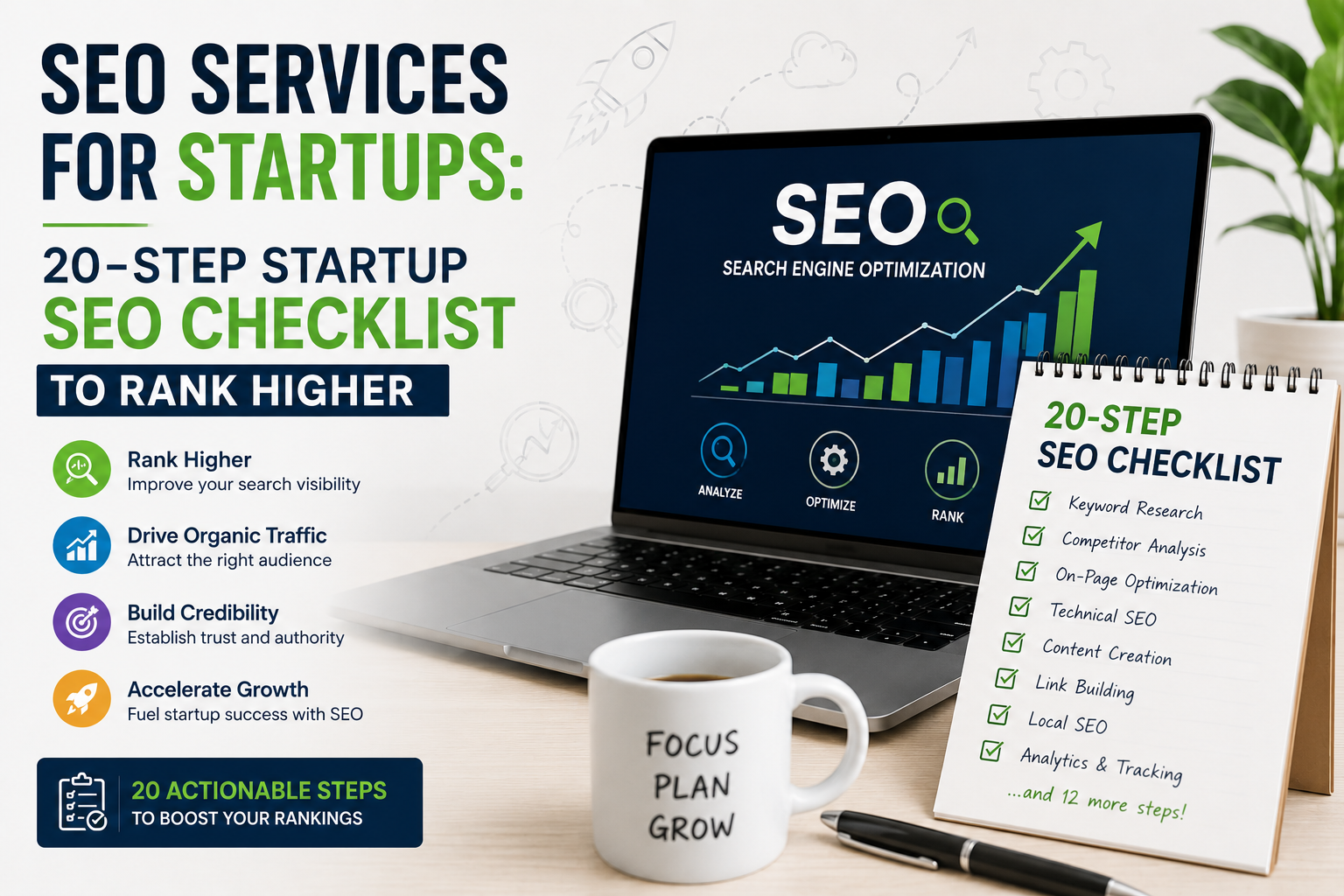
SEO Services for Startups: 20-Step Startup SEO Checklist to Rank Higher
Introduction
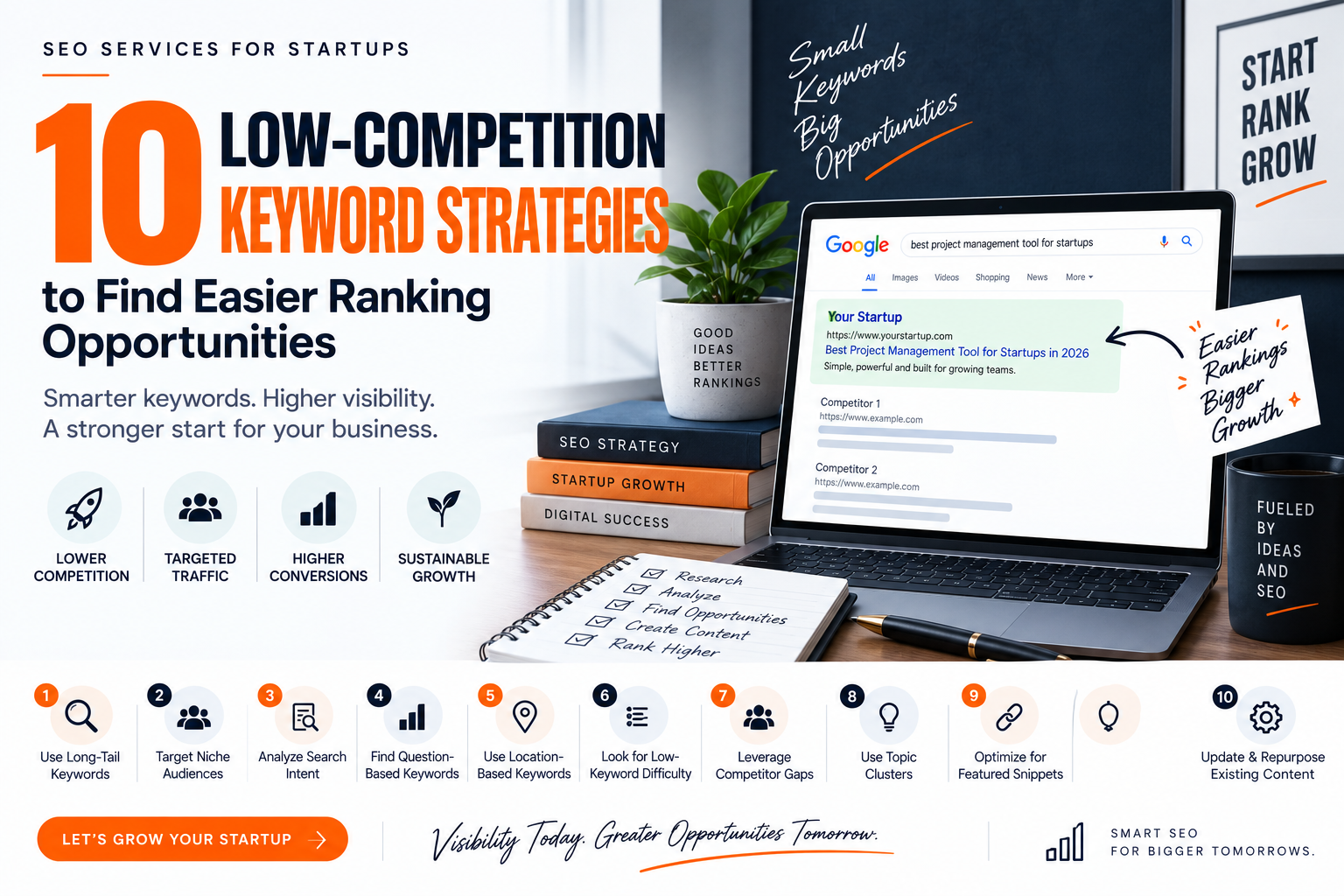
Launching a startup is exciting, but getting consistent traffic to your website is often one of the biggest challenges. Many founders invest heavily in website design, branding, and paid advertising, only to realize that customers still aren’t finding them on Google. A great product or service alone isn’t enough—you also need visibility.
That’s where SEO services for startups make a real difference.
Search Engine Optimization (SEO) helps your website appear in front of people who are actively searching for the products or services you offer. Unlike paid advertising, SEO focuses on building long-term visibility, making it one of the most cost-effective marketing strategies for startups with limited budgets.
Whether you’re launching a SaaS product, an eCommerce store, a local business, or a digital agency, implementing the right SEO strategy from the beginning can save time, reduce customer acquisition costs, and create a sustainable flow of organic traffic.
This guide walks you through a practical 20-step startup SEO checklist that covers everything from keyword research and technical SEO to content marketing and performance tracking. Follow these steps to build a strong SEO foundation and position your startup for long-term success.
Why SEO Matters for Startups
Before diving into the checklist, it’s important to understand why SEO deserves a place in every startup’s growth strategy.
Unlike paid ads that stop delivering traffic as soon as your budget runs out, SEO continues to generate visitors over time. A well-optimized website can attract qualified leads every day without paying for each click.
Professional SEO services for startups also help build trust. People are more likely to click on websites that rank organically because they perceive them as more credible than advertisements.
In addition, SEO improves the overall quality of your website by making it faster, easier to navigate, and more useful for visitors. These improvements don’t just help search rankings—they also improve conversion rates.
20-Step Startup SEO Checklist
1. Understand Your Target Audience
Before choosing keywords or writing content, define exactly who your customers are.
Ask yourself:
- What problems are they trying to solve?
- What questions are they ask on Google?
- Which words would they use to search for your services?
Understanding search intent is the foundation of every successful SEO strategy.
2. Perform Keyword Research
Keyword research helps you discover what potential customers are searching for.
Focus on keywords that have:
- Good search volume
- Low to medium competition
- High buying intent
For example, if you run a digital marketing agency, keywords like SEO services for startups, startup SEO checklist, and affordable SEO agency for startups are much more valuable than generic terms like “SEO.”
Create a keyword list before writing any content.
3. Analyze Your Competitors
Search your target keywords and study the websites ranking on the first page.
Look at:
- Their content structure
- Word count
- Headings
- Images
- Internal links
- FAQs
Your goal isn’t to copy them—it’s to create something more useful.
4. Secure a Fast and Reliable Website
Google prioritizes websites that provide a good user experience.
Choose quality hosting and ensure your website:
- Loads in under three seconds
- Uses HTTPS
- Works on mobile devices
- Has minimal downtime
A fast website improves both rankings and conversions.
5. Optimize Your Website Structure
A clear website structure helps users and search engines navigate your content.
Example:
- Home
- About
- Services
- Blog
- Contact
Keep URLs short, descriptive, and keyword-friendly.
6. Optimize Every Page Title and Meta Description
Each page should have a unique title and meta description.
Include your primary keyword naturally without stuffing it.
Good titles encourage more clicks from search results.
7. Create High-Quality Service Pages
Many startups only focus on blogging.
Don’t ignore your service pages.
Clearly explain:
- What you offer
- Who it’s for
- Benefits
- Process
- Pricing (if possible)
- Call to action
Your service pages are often where conversions happen.
8. Publish Helpful Blog Content
Google rewards websites that consistently publish valuable content.
Instead of writing random articles, answer questions your audience actually asks.
Examples include:
- Startup SEO Guide
- Website Development Tips
- Local SEO Strategies
- Digital Marketing Mistakes
Every article becomes another opportunity to attract organic traffic.
9. Optimize Heading Structure
Every page should use proper headings.
- One H1
- Multiple H2s
- H3s under relevant sections
This improves readability and helps search engines understand your content.
10. Add Internal Links
Internal linking connects related pages on your website.
For example, this article could link to:
- Website Development Services
- Local SEO Services
- Technical SEO Guide
Internal links distribute authority and help visitors explore your website.
11. Optimize Images for Better SEO
Images make your content more engaging, but they can also slow down your website if they’re not optimized properly. A slow website creates a poor user experience and can negatively affect your search rankings.
Before uploading images:
- Compress image sizes without reducing quality.
- Use descriptive file names like
startup-seo-checklist.jpg instead of IMG001.jpg.
- Add relevant alt text that describes the image.
- Use modern image formats such as WebP whenever possible.
Optimized images improve page speed, accessibility, and search visibility.
12. Focus on Mobile-First Optimization
More than half of all Google searches now come from mobile devices. If your website isn’t mobile-friendly, visitors are likely to leave quickly.
Make sure your website:
- Uses responsive design.
- Has readable fonts.
- Features buttons that are easy to tap.
- Loads quickly on smartphones.
- Doesn’t require users to zoom in to read content.
Google uses mobile-first indexing, meaning it primarily evaluates the mobile version of your website for rankings.
13. Improve Website Speed
Page speed is both a ranking factor and a conversion factor.
Studies consistently show that users abandon slow-loading websites. Even a one-second delay can reduce conversions.
Ways to improve speed include:
- Enable browser caching.
- Compress CSS and JavaScript files.
- Use a Content Delivery Network (CDN).
- Remove unnecessary plugins.
- Choose reliable web hosting.
- Lazy-load images.
- Minify HTML, CSS, and JavaScript.
A fast website improves user satisfaction while supporting the goals of SEO services for startups.
14. Set Up Google Search Console
Google Search Console is one of the most valuable free SEO tools available.
It helps you monitor:
- Search performance
- Keyword rankings
- Click-through rate
- Indexing status
- Website errors
- Mobile usability
- Core Web Vitals
Checking Search Console regularly allows you to identify issues before they affect your rankings.
15. Install Google Analytics
Traffic without data is just guesswork.
Google Analytics helps you understand:
- Where visitors come from.
- Which pages perform best.
- How long users stay.
- Which pages generate leads.
- Bounce rate.
- User behavior.
By analyzing this information, you can continuously improve your content and website.
16. Build High-Quality Backlinks
Backlinks remain one of Google’s strongest ranking signals.
A backlink is simply another website linking to yours.
However, quality matters much more than quantity.
Good ways to earn backlinks include:
- Publishing original research.
- Writing guest posts.
- Creating helpful guides.
- Building free tools.
- Sharing case studies.
- Networking with industry blogs.
- Listing your startup in reputable directories.
Avoid buying backlinks or participating in spammy link-building schemes, as these can result in search engine penalties.
17. Optimize for Local SEO (If Applicable)
If your startup serves customers in a specific city or region, local SEO should be part of your strategy.
Steps include:
- Create and verify your Google Business Profile.
- Add consistent Name, Address, and Phone Number (NAP) across directories.
- Collect customer reviews.
- Include location-based keywords.
- Create location-specific landing pages if you serve multiple cities.
Local SEO can significantly increase visibility for startups targeting nearby customers.
18. Create Topic Clusters Instead of Random Blogs
One of the biggest mistakes startups make is publishing unrelated content.
Instead, organize your content around key topics.
For example, if your startup offers digital marketing services, create a content cluster like this:
Pillar Page
- SEO Services for Startups
Supporting Articles
- Startup SEO Checklist
- Technical SEO Guide
- Local SEO Tips
- Keyword Research for Startups
- SEO Mistakes to Avoid
- SEO vs Google Ads
- Website Speed Optimization
- On-Page SEO Guide
These articles should link to one another, helping search engines understand your expertise while keeping visitors engaged longer.
19. Track Your SEO Performance Regularly
SEO isn’t something you “set and forget.”
Every month, review key metrics such as:
- Organic traffic
- Keyword rankings
- Impressions
- Click-through rate (CTR)
- Leads generated
- Conversion rate
- Page speed
- Bounce rate
Regular monitoring allows you to identify opportunities for improvement and measure the effectiveness of your SEO efforts.
20. Keep Updating Your Content
Google prefers fresh, accurate, and relevant content.
Instead of constantly creating new articles, revisit your existing content every six to twelve months.
Update:
- Statistics
- Screenshots
- Examples
- Internal links
- FAQs
- Keywords where appropriate
- Outdated information
Refreshing older content often improves rankings faster than publishing entirely new articles.
Common SEO Mistakes Startups Should Avoid
Even with a solid strategy, many startups unknowingly make mistakes that limit their growth.
Here are some of the most common pitfalls:
Ignoring Search Intent
Ranking isn’t just about using keywords. Your content must answer the questions users actually have.
Publishing Thin Content
A 300-word article rarely provides enough value for competitive topics. Focus on comprehensive, helpful content.
Keyword Stuffing
Using SEO services for startups excessively makes content difficult to read and can hurt SEO. Use the keyword naturally where it fits.
Neglecting Technical SEO
Broken links, slow pages, and poor mobile experiences can reduce rankings even if your content is excellent.
Failing to Measure Results
Without tracking your traffic and conversions, it’s impossible to know what’s working or where improvements are needed.
90-Day SEO Action Plan for Startups
SEO doesn’t produce results overnight, but following a structured plan helps you build momentum and see measurable improvements over time. Here’s a practical roadmap you can follow during your first three months.
Days 1–30: Build the Foundation
The first month is about setting up your website correctly.
Your priorities should include:
- Research keywords related to your business.
- Install Google Analytics and Google Search Console.
- Optimize page titles and meta descriptions.
- Improve website speed.
- Ensure your website is mobile-friendly.
- Create essential pages such as Home, About, Services, Blog, and Contact.
- Publish your first two to three high-quality blog posts.
- Submit your XML sitemap to Google.
This foundation ensures search engines can crawl and understand your website effectively.
Days 31–60: Create Valuable Content
Once your website is technically optimized, focus on building authority through content.
Create articles that answer your audience’s most common questions.
Examples include:
- How to Choose an SEO Agency
- Website Development Tips for Startups
- Local SEO Guide
- Technical SEO Basics
- Startup Marketing Checklist
Each article should be well-researched, easy to read, and designed to solve a real problem.
Content is one of the most valuable long-term assets your startup can create.
Days 61–90: Build Authority
By the third month, begin expanding your online presence.
Focus on:
- Earning quality backlinks.
- Updating older articles.
- Improving internal linking.
- Publishing customer case studies.
- Collecting Google reviews (for local businesses).
- Monitoring keyword rankings.
- Optimizing underperforming pages.
SEO is a continuous process. Every improvement strengthens your website and increases your chances of ranking for competitive keywords.
When Should a Startup Hire Professional SEO Services?
Many founders try to handle SEO themselves during the early stages, and that’s completely reasonable. However, as your business grows, SEO becomes more technical and time-consuming.
Hiring professionals allows your team to focus on running the business while experts handle optimization.
Consider investing in SEO services for startups if:
- Your website isn’t receiving organic traffic.
- You’re struggling to rank for important keywords.
- Competitors consistently outrank your business.
- Your website has technical SEO issues.
- You don’t have time to create optimized content.
- You want to generate more qualified leads through Google.
- Organic traffic has stopped growing.
A professional SEO team can identify issues, develop a customized strategy, and monitor performance to ensure steady growth.
How to Choose the Right SEO Agency
Not every SEO agency delivers the same quality of work. Before making a decision, evaluate potential partners carefully.
Look for an agency that:
- Understands your industry and target audience.
- Performs detailed keyword research.
- Provides transparent monthly reports.
- Uses ethical, white-hat SEO techniques.
- Offers technical SEO expertise.
- Creates high-quality content rather than relying on AI-generated filler.
- Has real case studies or client testimonials.
- Communicates clearly and sets realistic expectations.
Avoid agencies that guarantee instant rankings or promise “Page 1 in a week.” SEO takes time, and trustworthy agencies focus on sustainable results rather than unrealistic claims.
Measuring SEO Success
SEO success isn’t measured by rankings alone.
The real goal is business growth.
Track metrics such as:
- Organic traffic
- Qualified leads
- Contact form submissions
- Phone calls
- Sales generated
- Keyword rankings
- Conversion rate
- Click-through rate
- Average engagement time
- Returning visitors
These metrics provide a clearer picture of whether your SEO strategy is contributing to your business objectives.
Long-Term Benefits of SEO
One of the greatest advantages of SEO is that it continues to deliver value long after the initial work is complete.
Unlike advertising campaigns that require constant spending, SEO builds a long-term digital asset.
Some of the long-term benefits include:
- Consistent organic traffic
- Higher brand credibility
- Better user experience
- Lower customer acquisition costs
- Increased lead generation
- Stronger online visibility
- Higher conversion rates
- Sustainable business growth
As your content library grows and your website gains authority, it becomes easier to rank for additional keywords, creating a compounding effect that strengthens your online presence.
Final Thoughts
Growing a startup isn’t just about building a great product—it’s about making sure the right people can find it. Search engines remain one of the most important channels for discovering new businesses, which is why investing in SEO from the beginning is one of the smartest marketing decisions a founder can make.
This 20-step startup SEO checklist provides a practical roadmap for improving your website, attracting qualified visitors, and building long-term organic visibility. From understanding your audience and researching keywords to optimizing technical SEO, publishing valuable content, and tracking results, every step contributes to sustainable growth.
Professional SEO services for startups can accelerate this process by helping you avoid common mistakes, implement proven strategies, and stay up to date with changing search engine algorithms. Rather than relying solely on paid advertising, SEO allows your startup to create a marketing asset that continues generating traffic and leads over time.
Remember, SEO is not about quick wins or shortcuts. It’s about consistently providing value, improving your website, and meeting the needs of your audience. Businesses that invest in these fundamentals are better positioned to compete, build trust, and achieve lasting success.
Whether you’re launching your first startup or looking to grow an existing business, following this checklist is a strong first step toward improving your online visibility and reaching more potential customers.
Frequently Asked Questions
1. What are SEO services for startups?
SEO services for startups include keyword research, on-page optimization, technical SEO, content creation, link building, local SEO, and performance tracking. These services help new businesses improve their visibility on search engines and attract organic traffic.
2. How long does it take for startup SEO to work?
Most startups begin seeing measurable improvements within 3–6 months. Results depend on factors such as competition, website quality, and the consistency of SEO efforts.
3. Should startups choose SEO or paid advertising?
The best strategy is often a combination of both. Paid ads can generate immediate traffic, while SEO builds long-term visibility and reduces customer acquisition costs over time.
4. How often should startups publish SEO content?
Publishing 2–4 high-quality articles each month is a good starting point. Consistency and relevance are more important than publishing a large volume of content.
5. Can startups do SEO themselves?
Yes, startups can handle basic SEO tasks such as keyword research, content creation, and on-page optimization. As the business grows, many choose professional SEO services for startups to manage technical SEO, advanced strategies, and ongoing optimization.