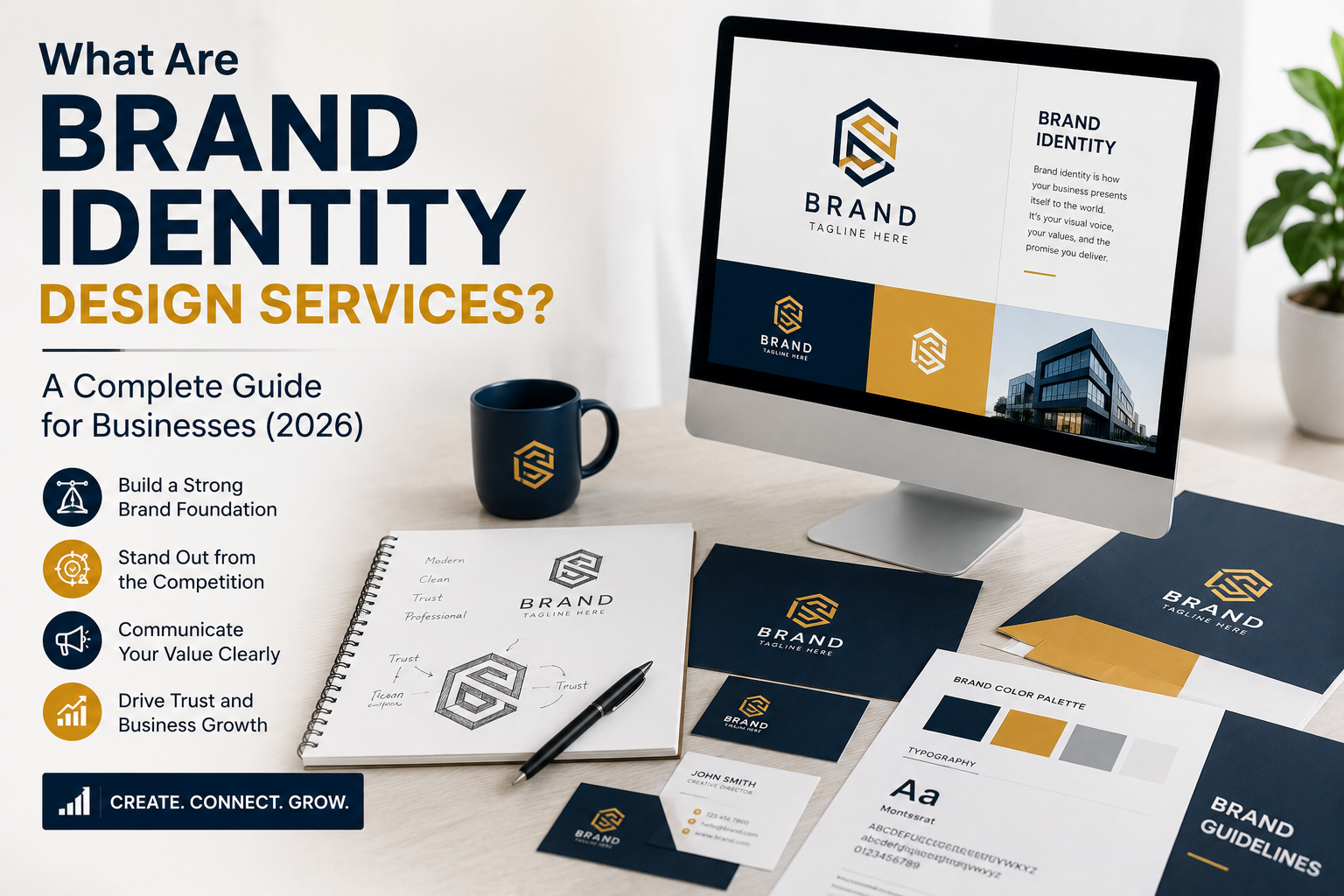
What Are Brand Identity Design Services? A Complete Guide for Businesses (2026)
Your business has only a few seconds to make a lasting impression. Whether someone visits your website, sees your social media profile, receives your business card, or notices your advertisement, they immediately form an opinion about your brand.
That first impression is influenced by much more than a logo. Your colors, typography, messaging, visual consistency, packaging, website, and marketing materials all work together to create a recognizable identity. This is exactly where brand identity design services become essential.
Many businesses believe branding starts and ends with a logo. In reality, a logo is just one element of a complete brand identity. Without a clear and consistent identity, businesses often struggle to build trust, attract their ideal audience, and stand out in competitive markets.
In 2026, customers have more choices than ever before. They compare brands within seconds, making consistency and professionalism critical for success. Businesses with a strong identity appear more trustworthy, memorable, and credible than competitors with inconsistent branding.
This comprehensive guide explains everything you need to know about brand identity design services, including what they are, what they include, why they matter, the design process, common mistakes to avoid, and how to choose the right branding partner.
Table of Contents
- What Are Brand Identity Design Services?
- Why Brand Identity Matters in 2026
- Brand Identity vs Brand Image vs Branding
- What Is Included in Brand Identity Design Services?
- The Complete Brand Identity Design Process
- Benefits of Professional Brand Identity Design Services
- Signs Your Business Needs a Brand Identity
- Common Branding Mistakes Businesses Make
- How to Choose the Right Brand Identity Design Agency
- Frequently Asked Questions
- Final Thoughts
What Are Brand Identity Design Services?
Brand identity design services are professional services that create the complete visual and communication system of a business. They help businesses establish a consistent personality that customers can easily recognize across every platform.
Rather than designing only a logo, these services build a complete identity that reflects your company’s mission, values, target audience, and market positioning.
A professionally designed brand identity ensures every customer interaction feels connected—from your website and social media to packaging, email signatures, advertisements, presentations, and printed materials.
Think of your business as a person.
- Your mission is your purpose.
- Your voice is your personality.
- Your logo is your face.
- Your colors represent your emotions.
- Your typography reflects your style.
- Your messaging shows how you communicate.
Together, these elements create an identity that people remember.
Why Brand Identity Matters More Than Ever in 2026
Markets are becoming increasingly competitive. Customers interact with dozens of brands every day through websites, search engines, social media platforms, email campaigns, and digital advertisements.
Businesses that fail to create a recognizable identity often become forgettable.
A strong brand identity helps customers instantly recognize your business, even before reading your company name.
Imagine seeing:
- A specific shade of red
- Minimalist packaging
- Clean typography
- Consistent social media graphics
Many successful brands can be recognized instantly because they have invested in professional branding.
A consistent identity creates confidence.
When customers notice the same design style everywhere, they assume the company is organized, reliable, and professional.
On the other hand, inconsistent branding creates confusion.
For example:
- Different logos across platforms
- Random color combinations
- Multiple fonts
- Inconsistent messaging
- Poor-quality graphics
These inconsistencies reduce credibility and may cause potential customers to choose competitors instead.
Brand Identity vs Branding vs Brand Image
Many business owners confuse these three terms.
Although closely related, they have different meanings.
Brand Identity
Brand identity is everything a business intentionally creates to represent itself.
This includes:
- Logo
- Color palette
- Typography
- Icons
- Photography style
- Brand voice
- Visual elements
- Design guidelines
These are created through brand identity design services.
Branding
Branding is the ongoing process of communicating your identity to the world.
It includes:
- Marketing campaigns
- Customer experience
- Advertising
- Website
- Social media
- Sales materials
- Customer support
Branding is how your identity is presented consistently over time.
Brand Image
Brand image is how customers perceive your business.
You control your identity.
Customers create your image based on their experiences.
A strong identity increases the chances of creating a positive brand image.
What Is Included in Brand Identity Design Services?
Professional brand identity design services include much more than logo creation.
Below are the core components of a complete branding package.
1. Brand Discovery
Every successful branding project starts with research.
Designers learn about:
- Business goals
- Company mission
- Target audience
- Competitors
- Industry
- Brand values
- Customer expectations
This discovery phase ensures the final identity aligns with business objectives rather than personal preferences.
2. Brand Strategy
Before designing visuals, a clear strategy is developed.
This typically includes:
- Brand positioning
- Unique value proposition
- Brand personality
- Brand promise
- Tone of voice
- Messaging direction
Without strategy, even beautiful designs may fail to connect with the intended audience.
3. Logo Design
Your logo is often the most recognizable part of your identity.
Professional designers create logos that are:
- Memorable
- Scalable
- Timeless
- Versatile
- Easy to recognize
- Suitable for print and digital platforms
A strong logo works equally well on websites, business cards, packaging, signage, mobile apps, and social media profiles.
4. Color Palette
Colors influence emotions and buying decisions.
Professional designers carefully select primary and secondary colors based on:
- Industry
- Audience psychology
- Brand personality
- Accessibility
- Digital consistency
For example:
- Blue represents trust.
- Green symbolizes growth.
- Black communicates luxury.
- Orange conveys creativity.
- Purple reflects innovation.
- Red creates excitement and urgency.
Choosing the right palette helps strengthen brand recognition across every customer touchpoint.
5. Typography
Fonts communicate personality just as much as colors.
A modern technology company may use clean sans-serif fonts.
A luxury fashion brand may prefer elegant serif fonts.
Professional branding includes:
- Primary font
- Secondary font
- Heading styles
- Body text styles
- Digital typography rules
Using consistent typography improves readability while reinforcing your brand identity.
6. Brand Voice and Messaging
Visual identity is only one part of branding.
Your words also shape how customers perceive your business.
A professional brand voice defines:
- Tone
- Writing style
- Vocabulary
- Communication guidelines
- Taglines
- Messaging framework
Whether you’re writing website copy, emails, or social media captions, a consistent voice builds familiarity and trust.
7. Visual Elements
Beyond the logo, brands use supporting visual assets to create a cohesive look.
These may include:
- Icons
- Illustrations
- Graphic patterns
- Shapes
- Photography style
- Background textures
- Social media templates
- Presentation layouts
These elements help maintain a recognizable appearance across all marketing channels.
8. Brand Guidelines
A brand guideline document explains how every branding element should be used.
It usually covers:
- Logo usage rules
- Color codes
- Font hierarchy
- Spacing requirements
- Image style
- Tone of voice
- Do’s and don’ts
- Social media branding standards
Brand guidelines ensure consistency, especially as your business grows or works with multiple designers and marketing teams.
The Complete Brand Identity Design Process
Professional brand identity design services follow a structured process rather than creating designs based on guesswork. Every stage is designed to ensure the final identity reflects your business goals, resonates with your audience, and remains consistent across all platforms.
Step 1: Discovery and Research
The first step is understanding the business. Designers gather information about:
- Your products or services
- Business goals
- Mission and vision
- Target audience
- Industry trends
- Competitors
- Unique selling proposition (USP)
For example, a startup targeting young entrepreneurs requires a different identity than a law firm serving corporate clients.
This research provides the foundation for every design decision that follows.
Step 2: Competitor Analysis
Understanding your competitors helps identify opportunities to stand out.
A branding team typically analyzes:
- Logo styles
- Color schemes
- Website design
- Typography
- Brand messaging
- Social media presence
- Marketing materials
The goal isn’t to copy competitors—it’s to create a distinctive identity that makes your business memorable.
Step 3: Brand Strategy Development
Before any visuals are created, the strategy is defined. This includes:
- Brand positioning
- Core values
- Mission statement
- Brand personality
- Tone of voice
- Customer perception goals
A strong strategy ensures your brand communicates the right message to the right audience.
Step 4: Visual Identity Design
Once the strategy is finalized, designers begin creating the visual identity.
This stage typically includes:
- Logo concepts
- Color palette
- Typography selection
- Iconography
- Graphic elements
- Image style
- Layout systems
Several concepts are usually explored before refining the strongest direction.
Step 5: Brand Applications
A great brand identity should work everywhere—not just on a website.
Professional designers create mockups for:
- Business cards
- Letterheads
- Email signatures
- Social media profiles
- Website UI
- Packaging
- Brochures
- Presentation templates
- Merchandise
- Signage
Seeing the identity applied across different touchpoints ensures it remains practical and consistent.
Step 6: Brand Guidelines
The final deliverable is often a comprehensive brand guideline document.
This document explains how to use every branding element correctly.
Typical sections include:
- Logo spacing
- Logo size
- Incorrect logo usage
- Brand colors
- Font hierarchy
- Image style
- Social media design rules
- Brand voice
- Icon usage
These guidelines help maintain consistency as your business grows.
Benefits of Professional Brand Identity Design Services
Investing in brand identity design services isn’t just about improving appearance—it directly impacts customer trust, recognition, and long-term business growth.
1. Creates a Strong First Impression
Research consistently shows that people form opinions about a business within seconds.
A polished visual identity communicates professionalism immediately.
An outdated or inconsistent identity can discourage potential customers before they even explore your products or services.
2. Builds Customer Trust
People are more likely to buy from businesses they trust.
Consistency across your website, social media, advertisements, and printed materials signals reliability and attention to detail.
When every customer interaction feels cohesive, your brand appears more credible.
3. Improves Brand Recognition
Think about globally recognized companies—you can often identify them by their colors, typography, or design style alone.
Consistent branding makes it easier for customers to remember your business.
The more familiar your brand becomes, the more likely customers are to choose you over competitors.
4. Differentiates Your Business
Many industries are crowded with similar products and services.
A unique brand identity helps communicate why your business is different.
Rather than competing only on price, you compete on perception, value, and customer experience.
5. Supports Marketing Efforts
Marketing campaigns become more effective when every visual element follows a consistent identity.
Whether you’re running:
- SEO campaigns
- Google Ads
- Social media advertising
- Email marketing
- Print campaigns
A recognizable brand increases engagement and improves recall.
6. Increases Customer Loyalty
People don’t just buy products—they connect with brands.
A strong identity creates emotional familiarity, making customers more likely to return and recommend your business.
Loyal customers often become brand advocates, helping your business grow through referrals.
7. Saves Time and Money
Without clear branding guidelines, every new design project starts from scratch.
Employees, freelancers, and agencies may create inconsistent materials that require revisions.
A complete brand identity system streamlines future design work and reduces unnecessary costs.
Signs Your Business Needs Brand Identity Design Services
Not sure whether your business needs professional branding?
Here are some common signs.
Your Logo Looks Outdated
Design trends and customer expectations evolve.
If your logo no longer represents your business, it may be time for a refresh.
Your Branding Is Inconsistent
Do your:
- Website
- Social media
- Business cards
- Email signatures
- Marketing materials
all look different?
If so, customers may struggle to recognize your brand.
Customers Don’t Remember Your Business
If people frequently forget your company after interacting with it, your identity may not be memorable enough.
A distinctive visual system improves recognition.
You’re Launching a New Business
Launching with professional branding helps establish credibility from day one.
It also prevents costly redesigns later.
You’re Rebranding
Businesses often rebrand because of:
- New services
- New target audience
- Business expansion
- Mergers
- Market repositioning
- Outdated identity
Professional brand identity design services ensure the transition is strategic rather than purely cosmetic.
Your Competitors Look More Professional
If competing businesses appear more polished, customers may assume they offer better products or services—even if they don’t.
A strong brand identity helps level the playing field and improves perceived value.
signs that your brand needs a new brand identity
Common Branding Mistakes Businesses Make
Many businesses invest in marketing before building a solid brand identity. As a result, they struggle to create a consistent experience for customers. Avoiding these common mistakes can save time, money, and missed opportunities.
1. Thinking a Logo Is the Entire Brand
A logo is important, but it is only one part of your brand identity.
Your brand also includes:
- Color palette
- Typography
- Visual style
- Messaging
- Brand voice
- Customer experience
- Marketing materials
Without these elements working together, your brand may appear inconsistent and forgettable.
2. Inconsistent Visual Identity
Using different colors, fonts, and logo variations across platforms confuses customers.
For example:
- One logo on your website
- Another on social media
- Different fonts in brochures
- Random color combinations in advertisements
Consistency builds recognition. Every customer touchpoint should reflect the same identity.
3. Copying Competitors
Looking at competitors for inspiration is useful, but copying their design style makes your business blend in.
Your identity should highlight what makes your business unique.
Professional brand identity design services focus on creating a distinctive look that aligns with your goals and audience.
4. Ignoring Your Target Audience
Your branding should appeal to the people you want to attract—not just your personal preferences.
For example:
- A luxury brand requires a refined and sophisticated identity.
- A children’s brand benefits from bright colors and playful visuals.
- A technology company often uses clean, modern design.
Understanding your audience is the foundation of effective branding.
5. Not Creating Brand Guidelines
Without documented guidelines, different designers and marketing teams may use your brand inconsistently.
Brand guidelines ensure that every future design follows the same standards, keeping your identity recognizable across all platforms.
How to Choose the Right Brand Identity Design Services
Selecting the right branding partner is an important business decision. Here are key factors to consider before hiring an agency or designer.
Review Their Portfolio
A portfolio reveals the quality and versatility of previous work.
Look for projects that demonstrate:
- Originality
- Consistency
- Professional execution
- Experience across different industries
Understand Their Process
Professional agencies follow a structured workflow that includes:
- Research
- Strategy
- Design
- Revisions
- Brand guideline creation
Avoid providers who jump straight into logo design without learning about your business.
Ask What Is Included
Brand identity packages vary significantly.
A comprehensive package may include:
- Brand strategy
- Logo design
- Color palette
- Typography
- Brand patterns
- Social media templates
- Business stationery
- Brand guidelines
Knowing exactly what is included helps you compare options more effectively.
Read Client Reviews
Testimonials and case studies provide insight into an agency’s communication, reliability, and results.
Look for feedback on:
- Timely delivery
- Creative quality
- Professionalism
- Ongoing support
Consider Long-Term Value
Choosing the lowest-priced option may seem attractive, but poor branding often leads to expensive redesigns later.
A well-developed brand identity is a long-term investment that supports marketing, customer trust, and business growth.
Frequently Asked Questions
What are brand identity design services?
Brand identity design services help businesses create a complete visual and communication system, including logos, color palettes, typography, brand guidelines, and messaging that reflect the company’s values and goals.
Why are brand identity design services important?
They help businesses build trust, improve recognition, maintain consistency, and create a memorable impression across websites, social media, packaging, and marketing materials.
Is a logo enough for branding?
No. A logo is only one part of a brand identity. Effective branding also includes colors, fonts, imagery, messaging, and design standards that work together to create a consistent customer experience.
How long does it take to develop a brand identity?
The timeline depends on the project’s complexity. A complete brand identity typically takes anywhere from a few weeks to a couple of months, including research, strategy, design, revisions, and guideline creation.
Can small businesses benefit from professional branding?
Absolutely. Small businesses often compete with larger companies. A professional brand identity helps establish credibility, attract the right customers, and create a strong market presence.
Final Thoughts
In today’s competitive business landscape, your brand is often your first opportunity to make a lasting impression. Customers judge businesses quickly, and a professional, consistent identity can influence whether they choose your company or move on to a competitor.
Investing in brand identity design services is about more than creating attractive visuals. It is about defining how your business communicates, building trust with your audience, and creating a consistent experience across every customer touchpoint.
Whether you are launching a startup, refreshing an existing business, or expanding into new markets, a strong brand identity provides the foundation for long-term growth. It supports your marketing efforts, strengthens customer recognition, and helps your business stand out in an increasingly crowded marketplace.
A memorable brand isn’t built overnight, but with the right strategy and design, it becomes one of your most valuable business assets.
Conclusion
Professional brand identity design services give businesses the tools they need to build recognition, inspire confidence, and communicate consistently across every platform. From logo design and typography to brand strategy and visual guidelines, every element works together to create a cohesive identity that customers remember.
If you’re ready to strengthen your brand, now is the time to invest in a thoughtful identity that reflects your values and supports your long-term goals. A well-designed brand doesn’t just look good—it helps your business grow.
explore Gowenza other blogs