Website Development Company Guide: 10 Critical Things Every Business Should Expect

Website Development Company

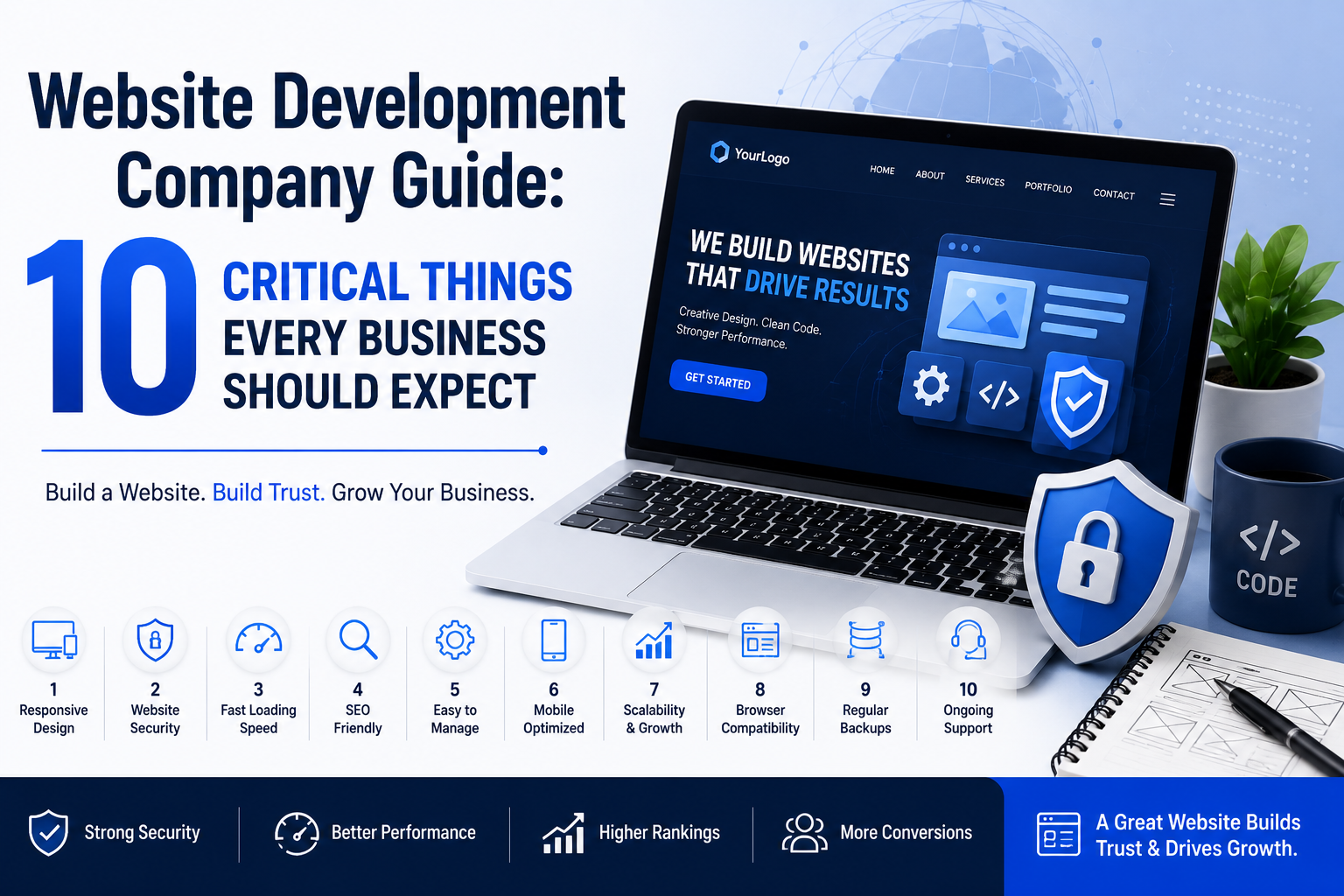
Website Development Company Guide: 10 Critical Things Every Business Should Expect

Table of Contents

  1. Introduction
  2. Why Choosing the Right Website Development Company Matters
  3. Expectation #1: A Thorough Discovery and Consultation Process
  4. Expectation #2: A Clear Project Plan and Timeline
  5. Expectation #3: Custom Website Design That Reflects Your Brand
  6.  
  7. Conclusion to Part 1

Introduction

A business website is more than an online presence—it’s a platform that represents your brand, attracts potential customers, generates leads, and supports long-term growth. Whether you’re launching a startup, expanding an established business, or redesigning an outdated website, choosing the right development partner is one of the most important decisions you’ll make.

Unfortunately, many businesses hire a web developer without knowing what a professional service should actually include. They focus only on pricing or design, only to discover later that their website is slow, difficult to manage, poorly optimized for search engines, or lacks ongoing support.

Working with a professional Website Development Company should be a collaborative process that delivers much more than an attractive website. A reliable development partner understands your business objectives, creates a strategy tailored to your audience, implements modern technologies, and builds a website that performs well across all devices while meeting current SEO standards.

From planning and design to development, testing, security, and maintenance, every stage contributes to the success of your website. Knowing what to expect helps you ask the right questions, set realistic expectations, and choose a company capable of delivering long-term value instead of short-term solutions.

In this guide, we’ll explore the ten critical things every business should expect when working with a Website Development Company, ensuring your next web project is delivered professionally, efficiently, and with measurable results.

Why Choosing the Right Website Development Company Matters

Your website directly influences how customers perceive your business. It affects your brand image, online visibility, lead generation, customer trust, and even revenue.

A professional Website Development Company doesn’t simply write code. Instead, it combines strategy, design, development, user experience, SEO, security, and ongoing optimization to create a website that supports your business goals.

Choosing the wrong company often leads to problems such as:

  • Delayed project delivery
  • Poor communication
  • Generic website templates
  • Slow loading pages
  • Weak SEO performance
  • Security vulnerabilities
  • Expensive redesigns later

On the other hand, working with an experienced Website Development Company provides:

  • Better planning
  • High-quality development
  • Transparent communication
  • Modern design
  • SEO-ready architecture
  • Reliable support
  • Long-term scalability

Understanding what you should expect helps you separate true professionals from companies that simply promise attractive websites without considering long-term performance.

Expectation #1: A Thorough Discovery and Consultation Process

Every successful website begins with understanding the business behind it.

A professional Website Development Company doesn’t immediately start designing pages or writing code. Instead, the first step is learning about your business, customers, competitors, goals, and expectations.

Skipping this phase often results in websites that look attractive but fail to achieve business objectives.

What Should Happen During Discovery?

The discovery phase should include discussions about:

  • Business goals
  • Target audience
  • Products or services
  • Brand identity
  • Competitor analysis
  • Website functionality
  • Budget
  • Timeline
  • Future growth plans

This information becomes the foundation of the entire project.

Why Discovery Matters

Without proper planning:

  • Features may be overlooked.
  • Project costs increase.
  • Deadlines become unrealistic.
  • Customer expectations differ from deliverables.
  • User experience suffers.

Good planning prevents expensive revisions later.

Questions a Website Development Company Should Ask

Expect questions like:

  • What are your business goals?
  • Who are your ideal customers?
  • What actions should visitors take?
  • Which competitors inspire you?
  • Do you need booking, eCommerce, or CRM integration?
  • Will you require multilingual support?
  • How will success be measured?

If these questions aren’t asked, the company may not fully understand your project.

Best Practices

A quality discovery process should produce:

  • Clear project objectives
  • Website requirements document
  • Feature list
  • Project scope
  • Development roadmap

This creates clarity for both the client and the development team.

Expectation #2: A Clear Project Plan and Timeline

One of the biggest frustrations businesses experience is uncertainty during website development.

Professional companies avoid this by creating a structured project plan with clearly defined milestones.

A reputable Website Development Company explains every stage before development begins so you always know what to expect.

Typical Project Stages

Most professional website projects follow a process similar to:

  1. Discovery
  2. Planning
  3. Wireframing
  4. UI/UX Design
  5. Development
  6. Content Integration
  7. Testing
  8. Client Review
  9. Launch
  10. Ongoing Support

Each phase has specific deliverables and approval checkpoints.

Benefits of a Project Timeline

A structured timeline helps:

  • Prevent delays
  • Improve communication
  • Track project progress
  • Manage expectations
  • Reduce misunderstandings
  • Keep everyone accountable

Businesses always know which stage the project has reached.

What You Should Receive

A professional Website Development Company usually provides:

  • Project schedule
  • Estimated launch date
  • Milestone deadlines
  • Revision process
  • Approval stages
  • Communication plan

Transparency creates confidence throughout the project.

Best Practices

Ensure your project includes:

  • Written scope of work
  • Delivery timeline
  • Milestone reviews
  • Regular progress updates
  • Defined responsibilities
  • Launch checklist

Clear planning leads to smoother execution.

Expectation #3: Custom Website Design That Reflects Your Brand

Your website should be unique to your business—not a copy of another company’s website or a generic template with different colors.

An experienced Website Development Company creates a website that communicates your brand identity while providing an intuitive user experience.

What Makes a Website Truly Custom?

Custom design involves much more than visual appearance.

Professional designers consider:

  • Brand colors
  • Typography
  • Layout
  • User journey
  • Navigation
  • Calls-to-action
  • Accessibility
  • Content hierarchy

Every design decision should support your business objectives.

Why Custom Design Matters

A professionally designed website:

  • Builds credibility
  • Improves trust
  • Increases engagement
  • Encourages conversions
  • Differentiates your business
  • Strengthens brand recognition

Visitors should immediately recognize your professionalism.

What a Website Development Company Should Deliver

Instead of relying entirely on templates, a quality Website Development Company should provide:

  • Custom homepage design
  • Consistent branding
  • Responsive layouts
  • Modern interface
  • User-focused navigation
  • Optimized page structure

The website should reflect your company’s personality while remaining functional.

Best Practices

Look for websites that feature:

  • Clean layouts
  • Consistent branding
  • Easy navigation
  • High-quality visuals
  • Clear call-to-action buttons
  • Professional typography
  • Balanced white space

Remember, great design isn’t about decoration—it’s about helping users achieve their goals quickly and comfortably.

 

Expectation #4: Mobile-Responsive Website Development

Today, the majority of website visitors access websites using smartphones and tablets. Whether they’re searching for products, booking services, or contacting a business, users expect websites to work seamlessly on every screen size.

That’s why mobile responsiveness is no longer an optional feature—it’s a standard expectation. A professional Website Development Company builds websites using a mobile-first approach, ensuring every page looks and functions perfectly across desktops, tablets, and smartphones.

Why Mobile Responsiveness Matters

A responsive website automatically adjusts its layout, images, text, and navigation according to the user’s device.

This provides several benefits:

  • Better user experience
  • Improved Google rankings
  • Lower bounce rates
  • Faster navigation
  • Higher conversion rates
  • Greater customer satisfaction

Since Google uses mobile-first indexing, the mobile version of your website is the primary version evaluated for search rankings.

What You Should Expect

A professional Website Development Company should ensure:

  • Responsive layouts
  • Mobile-friendly navigation
  • Readable typography
  • Touch-friendly buttons
  • Optimized images
  • Fast loading on mobile devices
  • Proper spacing between elements
  • Consistent design across devices

The experience should remain smooth regardless of screen size.

Best Practices

Look for websites that:

  • Load quickly on smartphones.
  • Require no horizontal scrolling.
  • Have easy-to-use menus.
  • Display readable text.
  • Keep forms simple.
  • Provide large tap targets.

A responsive website increases customer satisfaction while supporting long-term SEO performance.

Expectation #5: SEO-Friendly Website Development

Many businesses mistakenly believe SEO begins after a website is launched. In reality, search engine optimization starts during the development process.

A professional Website Development Company builds websites with SEO best practices already integrated into the foundation.

Without proper technical SEO, even outstanding content may struggle to rank in Google.

What SEO-Friendly Development Includes

Professional development should include:

  • Clean website architecture
  • SEO-friendly URLs
  • Proper heading structure
  • XML Sitemap
  • Robots.txt configuration
  • Schema markup
  • Optimized images
  • Internal linking structure
  • Canonical tags
  • Mobile optimization

Each element helps search engines crawl and understand your website more effectively.

Why It Matters

SEO-friendly development improves:

  • Organic visibility
  • Crawl efficiency
  • Indexing
  • User experience
  • Page authority
  • Website performance

It also reduces the amount of technical work needed after launch.

What to Expect

A reliable Website Development Company should discuss SEO during planning—not after the website goes live.

Developers should work alongside SEO specialists to ensure every page is optimized from the beginning.

Best Practices

Expect your website to include:

  • Clean code.
  • Optimized page structure.
  • Search-friendly URLs.
  • Image optimization.
  • Proper metadata support.
  • Breadcrumb navigation.
  • Fast page loading.

Building SEO into development saves time and improves long-term rankings.


Expectation #6: Fast Loading Speed and Performance Optimization

Website speed directly affects user experience, search engine rankings, and conversion rates.

Research consistently shows that visitors abandon slow websites within seconds. Google also considers page speed and Core Web Vitals when evaluating website quality.

A professional Website Development Company treats performance optimization as an essential part of development rather than an optional upgrade.

What Slows Websites Down?

Common causes include:

  • Oversized images
  • Poor hosting
  • Heavy JavaScript
  • Unoptimized CSS
  • Too many plugins
  • Uncompressed files
  • Excessive animations
  • Poor caching

These problems reduce both user satisfaction and SEO performance.

What Performance Optimization Includes

Professional developers improve speed by:

  • Compressing images
  • Minifying CSS and JavaScript
  • Enabling browser caching
  • Implementing lazy loading
  • Optimizing databases
  • Using Content Delivery Networks (CDNs)
  • Removing unnecessary scripts
  • Choosing quality hosting

Every optimization contributes to faster loading times.

Why Speed Matters

Fast websites typically experience:

  • Better Google rankings
  • Higher engagement
  • More leads
  • Improved conversion rates
  • Lower bounce rates
  • Better customer satisfaction

Speed isn’t simply a technical improvement—it directly impacts business results.

Best Practices

A high-performing website should:

  • Load within a few seconds.
  • Use optimized images.
  • Minimize unnecessary code.
  • Pass Core Web Vitals.
  • Deliver a smooth browsing experience.

Performance should be monitored continuously after launch.

Expectation #7: Transparent Communication Throughout the Project

One of the biggest reasons website projects fail isn’t poor development—it’s poor communication.

Businesses should never wonder what’s happening with their project or when the next update will arrive.

A trustworthy Website Development Company maintains clear, consistent communication from the first consultation until after launch.

What Good Communication Looks Like

Professional companies typically provide:

  • Regular progress updates
  • Clear timelines
  • Scheduled review meetings
  • Prompt responses
  • Honest discussions about challenges
  • Detailed explanations of technical decisions

Transparency prevents misunderstandings and builds trust.

Why Communication Matters

Effective communication helps:

  • Prevent scope changes
  • Reduce delays
  • Improve collaboration
  • Keep projects on schedule
  • Resolve issues quickly
  • Ensure client satisfaction

The development process becomes much smoother when both parties remain aligned.

What You Should Expect

Throughout the project, your Website Development Company should:

  • Explain each development stage.
  • Share progress regularly.
  • Request feedback at key milestones.
  • Clarify technical terminology.
  • Discuss changes before implementation.
  • Provide realistic delivery dates.

You should always know the current project status.

Best Practices

Choose a company that:

  • Responds promptly.
  • Documents important decisions.
  • Provides clear timelines.
  • Welcomes client feedback.
  • Maintains transparency.
  • Offers ongoing support after launch.

Strong communication often determines whether a website project becomes stressful or successful.


Expectation #8: Website Security and Ongoing Maintenance

Launching a website is only the beginning. As technology evolves and cyber threats become more sophisticated, your website requires continuous updates and maintenance to remain secure, fast, and reliable. A professional Website Development Company doesn’t disappear after launch—it provides ongoing support to keep your website performing at its best.

Ignoring maintenance can result in security vulnerabilities, broken functionality, slow performance, and even lower Google rankings.

Why Ongoing Maintenance Matters

Regular maintenance helps:

  • Protect against cyber threats
  • Improve website performance
  • Fix bugs and errors
  • Update plugins and software
  • Prevent website downtime
  • Improve SEO performance
  • Ensure compatibility with new browsers and devices

Without regular maintenance, even a well-built website will gradually lose its effectiveness.

What You Should Expect

A reliable Website Development Company should provide:

  • Regular CMS updates
  • Plugin and theme updates
  • Website backups
  • Malware scanning
  • Security monitoring
  • Performance optimization
  • Broken link checks
  • Technical support

These services help ensure your website remains secure and continues to deliver a great user experience.

Best Practices

Choose a company that offers:

  • Scheduled maintenance plans
  • Automatic backups
  • Website monitoring
  • Security audits
  • Fast issue resolution
  • Regular performance reports

A secure and well-maintained website protects both your business and your customers.

Expectation #9: Comprehensive Testing Before Website Launch

A professional website should never be published without thorough testing. Even small issues such as broken links, slow-loading pages, or non-functional forms can create a poor first impression and reduce customer trust.

An experienced Website Development Company follows a structured quality assurance (QA) process to identify and fix issues before the website goes live.

Areas That Should Be Tested

A complete website review should include:

  • Mobile responsiveness
  • Browser compatibility
  • Contact forms
  • Navigation menus
  • Internal links
  • Images
  • Website speed
  • Security settings
  • SEO elements
  • User experience

Every page should function correctly across different browsers and devices.

Why Testing Is Important

Proper testing helps:

  • Reduce launch-day problems
  • Improve customer experience
  • Prevent broken functionality
  • Ensure consistent performance
  • Strengthen SEO
  • Increase customer confidence

Launching without testing often leads to avoidable issues that affect both users and search engines.

What You Should Expect

Before launch, your Website Development Company should:

  • Test every page
  • Verify forms and integrations
  • Check mobile usability
  • Review website speed
  • Validate technical SEO
  • Confirm SSL functionality
  • Fix broken links
  • Obtain final client approval

Nothing should be left to chance.

Best Practices

Professional testing should include:

  • Functional testing
  • Performance testing
  • Cross-browser testing
  • Mobile testing
  • Security testing
  • User acceptance testing (UAT)

A successful launch begins with thorough preparation.

Expectation #10: Post-Launch Support and Future Scalability

Your website should grow alongside your business. As your company expands, you may want to add new services, integrate additional tools, improve performance, or redesign certain sections.

A professional Website Development Company builds websites that are scalable and easy to expand without requiring a complete rebuild.

Why Scalability Matters

Your future website may require:

  • New service pages
  • Blog expansion
  • eCommerce functionality
  • Online booking
  • Customer portals
  • Payment gateways
  • CRM integration
  • Marketing automation
  • Multilingual support

Planning for future growth saves both time and money.

What Post-Launch Support Should Include

Reliable support often includes:

  • Bug fixes
  • Technical assistance
  • Content updates
  • Website monitoring
  • Performance optimization
  • Security improvements
  • SEO enhancements
  • Feature development

A long-term partnership helps your website continue delivering value.

Signs of a Reliable Website Development Company

Look for a company that:

  • Offers ongoing support
  • Responds quickly
  • Provides clear documentation
  • Monitors website performance
  • Recommends improvements
  • Adapts to business growth

A website should evolve with your business—not become outdated after a few years.

Best Practices

Before choosing a Website Development Company, ask:

  • Do you offer maintenance plans?
  • How quickly do you respond to support requests?
  • Can the website be expanded later?
  • Will you assist with future updates?
  • How do you handle security issues?

The answers will help you choose a development partner that supports your long-term success.

Conclusion

Choosing the right Website Development Company is about much more than finding someone who can build a visually appealing website. A professional development partner should understand your business objectives, create a strategic roadmap, design a user-friendly interface, implement SEO best practices, optimize website performance, maintain strong security, and provide reliable support long after the website goes live.

The ten expectations covered in this guide represent the qualities every business should look for when selecting a development partner. From a detailed discovery process and transparent project management to responsive design, technical SEO, performance optimization, quality assurance, and ongoing maintenance, each stage contributes to the success of your website.

Investing in a professional Website Development Company means investing in a website that supports your marketing efforts, builds customer trust, improves search engine visibility, and grows with your business. Rather than focusing solely on cost, businesses should prioritize expertise, communication, quality, and long-term value.

A well-developed website is one of the most powerful assets your business can own. By understanding what to expect throughout the development process, you’ll be better equipped to choose the right partner and ensure your website becomes a reliable tool for attracting visitors, generating leads, and achieving sustainable growth.


Frequently Asked Questions (FAQs)

1. Why should I hire a Website Development Company instead of using a website builder?

A professional Website Development Company creates custom, scalable, SEO-friendly websites tailored to your business needs. Unlike website builders, professional development offers greater flexibility, performance, security, and long-term support.

2. How long does a website development project usually take?

The timeline depends on the size and complexity of the project. A standard business website may take several weeks, while larger custom websites or eCommerce platforms can take several months.

3. What information should I prepare before meeting a Website Development Company?

Prepare details about your business goals, target audience, preferred design style, required features, competitors, budget, and project timeline.

4. Will my website be optimized for search engines?

Yes. A professional Website Development Company should implement technical SEO best practices, including clean code, mobile responsiveness, SEO-friendly URLs, optimized page structure, and fast loading speeds.

5. Can my website be updated after launch?

Absolutely. A professionally developed website should allow future updates, additional pages, new features, and ongoing improvements without requiring a complete redesign.

6. What kind of support should I expect after the website is launched?

Post-launch support typically includes technical assistance, security updates, software maintenance, backups, bug fixes, and performance monitoring.

7. How do I know if a Website Development Company is reliable?

Look for a company with a strong portfolio, transparent communication, clear project timelines, positive client reviews, ongoing support services, and experience in developing SEO-friendly, responsive websites.

8. What is the most important factor when choosing a Website Development Company?

The most important factor is finding a company that understands your business goals and can deliver a secure, high-performing, scalable website while providing reliable communication and long-term support.

know Gowenza

Choosing the right development partner is the first step toward building a website that delivers long-term business results. At Gowenza, we combine strategy, design, development, and SEO to create websites that are fast, secure, mobile-friendly, and built for growth. As a trusted Website Development Company, we work closely with businesses to develop custom websites that not only look professional but also perform exceptionally in search engines and provide an outstanding user experience. If you’re planning your next website project, explore our guides on 10 Website Development Mistakes That Hurt Your Google Rankings and The Ultimate Website Security Checklist for Small Businesses to learn how professional development and strong security practices contribute to a successful, future-ready website 


helpful Resources 


Learn more about website development and industry best practices from these trusted sources:

Leave a Reply

Your email address will not be published. Required fields are marked *