Launching a startup is only the beginning of your journey toward building a successful online business. Even if you’ve invested in a professional website, compelling branding, and excellent products or services, none of it matters if your target audience can’t find you online. This is where search engine optimization becomes an essential part of your growth strategy.
Many startup founders expect SEO to deliver instant results. After publishing a few pages or blog posts, they assume their website will immediately rank on the first page of Google. When that doesn’t happen, they often believe SEO isn’t working.
The reality is very different.
SEO is a long-term investment that builds momentum over time. Unlike paid advertising, where traffic stops when your budget runs out, SEO creates a foundation that continues attracting qualified visitors long after the initial work is completed.
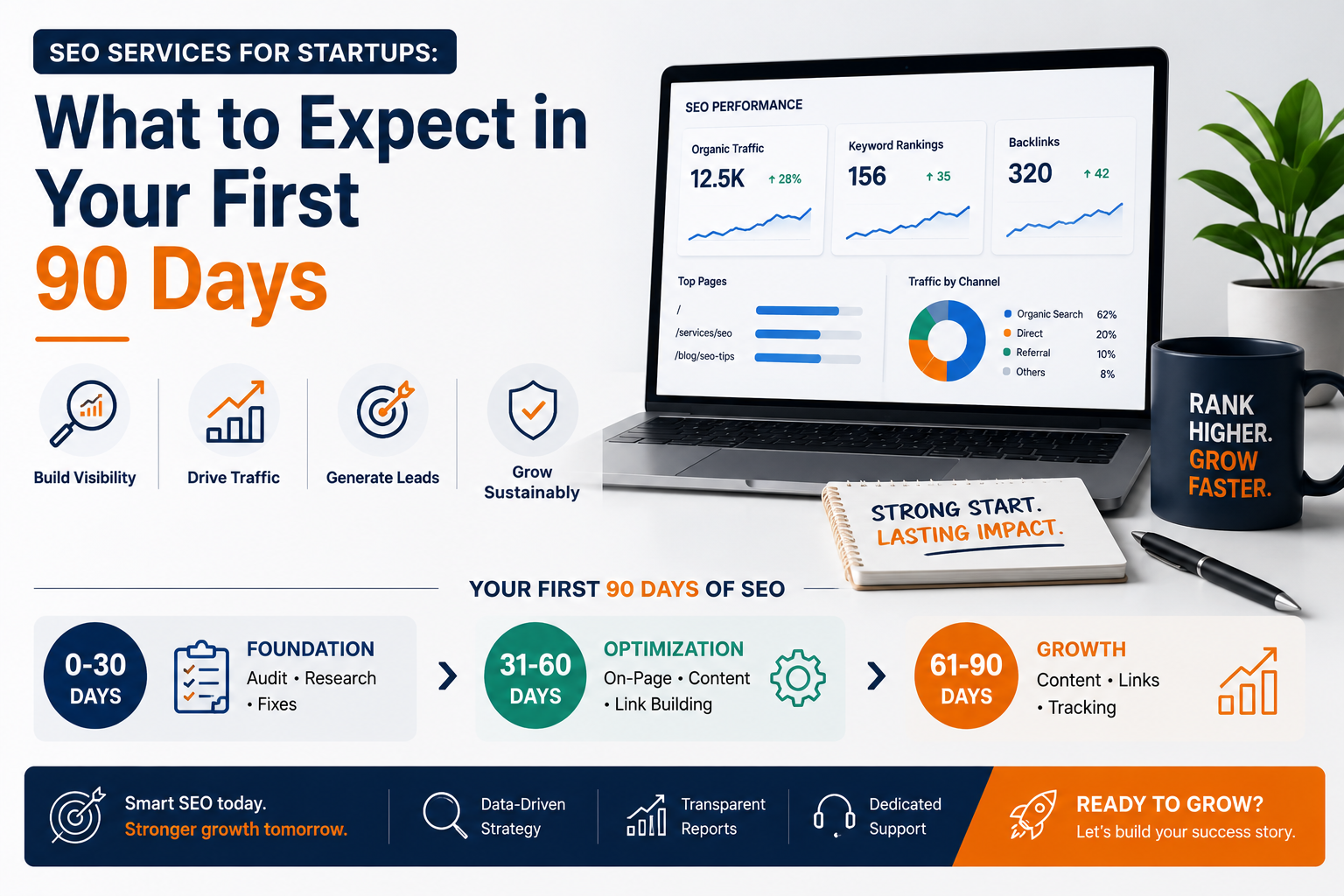
Professional SEO Services for Startups focus on building that foundation step by step. During the first 90 days, the goal isn’t simply to increase rankings overnight. Instead, the objective is to establish a technically sound website, create valuable content, target the right keywords, improve user experience, and begin building authority within your industry.
Every optimization made during this period contributes to stronger long-term performance. Keyword research helps identify valuable opportunities. Technical improvements ensure search engines can crawl and index your website efficiently. Optimized content attracts relevant visitors, while internal linking and authority-building activities strengthen your overall SEO strategy.
Whether you’re running a SaaS startup, an eCommerce business, a healthcare company, a digital agency, or a local service business, understanding what happens during your first three months of SEO helps you set realistic expectations and measure progress more effectively.
In this guide, you’ll learn exactly what to expect from SEO Services for Startups during the first 90 days, the activities completed in each phase, and how these efforts contribute to sustainable business growth.
Table of Contents
- Why Startups Should Invest in SEO Early
- Why SEO Takes Time
- Days 1–30: Building a Strong SEO Foundation
- Days 31–60: Content Creation and On-Page Optimization
- Days 61–90: Authority Building and Performance Tracking
- What Results Should You Expect After 90 Days?
- Common SEO Mistakes During the First 90 Days
- 90-Day Startup SEO Checklist
- Frequently Asked Questions
- Final Thoughts
Why Startups Should Invest in SEO Early
One of the biggest advantages startups have is the opportunity to build a strong SEO foundation before their competitors become firmly established.
Many businesses delay SEO until they have larger marketing budgets. Unfortunately, this means they also delay building domain authority, publishing valuable content, and earning organic visibility.
Starting SEO early offers several advantages.
Long-Term Organic Growth
Unlike paid campaigns that stop producing traffic when your budget ends, SEO creates long-lasting visibility.
Each optimized page becomes another opportunity for customers to discover your business through search engines.
Lower Customer Acquisition Costs
Organic traffic generally costs less over time than continuously paying for advertisements.
As your rankings improve, you gain consistent visitors without paying for every click.
Better Brand Visibility
Appearing in Google search results increases awareness and helps establish trust with potential customers.
Many users naturally view highly ranked businesses as more credible.
Stronger Competitive Position
The sooner you begin optimizing your website, the sooner you start building authority.
Over time, this makes it easier to compete with larger businesses targeting similar keywords.
Professional SEO Services for Startups help new businesses establish these advantages while creating a scalable strategy for future growth.
Why SEO Takes Time
Many startup founders ask:
“How long will it take before my website ranks on Google?”
The honest answer depends on several factors.
Search engines evaluate:
- Website quality
- Content relevance
- Competition
- Technical performance
- User experience
- Backlink profile
- Domain authority
A brand-new startup typically has little authority compared to established competitors.
Because of this, Google needs time to:
- Discover your pages.
- Crawl your website.
- Index new content.
- Evaluate quality.
- Measure user engagement.
- Understand your expertise.
SEO is not about finding shortcuts.
Instead, SEO Services for Startups focus on gradually improving every ranking factor so your website becomes increasingly trustworthy over time.
The first 90 days establish this foundation.
Days 1–30: Building a Strong SEO Foundation
The first month focuses on research, planning, technical improvements, and establishing the groundwork for future growth.
Although rankings may not change dramatically during this period, the work completed here influences everything that follows.
Step 1: SEO Audit
A comprehensive SEO audit identifies existing problems before optimization begins.
Typical audit areas include:
- Website structure
- Crawlability
- Indexing
- Page speed
- Mobile responsiveness
- Internal linking
- Broken links
- Duplicate content
- Metadata
- Technical errors
Fixing these issues early prevents future ranking problems.
Step 2: Keyword Research
Keyword research determines which search terms your startup should target.
Professional SEO Services for Startups analyze:
- Search volume
- Competition
- User intent
- Long-tail opportunities
- Local keywords
- Commercial keywords
Rather than targeting only high-volume keywords, startups often benefit from more specific phrases that attract qualified visitors.
Step 3: Competitor Analysis
Understanding competitor strategies helps identify opportunities.
An SEO competitor analysis typically examines:
- Ranking keywords
- Backlink profiles
- Content strategy
- Website structure
- Technical performance
- Internal linking
Learning from successful competitors helps refine your own SEO strategy.
Step 4: Technical SEO Setup
Before publishing new content, your website must be technically optimized.
Key tasks include:
- Connecting Google Search Console
- Installing Google Analytics
- Creating an XML sitemap
- Optimizing robots.txt
- Improving website speed
- Fixing crawl errors
- Enabling HTTPS
- Optimizing mobile usability
These improvements help search engines crawl and understand your website efficiently.
Step 5: Website Structure
A clear website structure benefits both users and search engines.
Typical improvements include:
- Better navigation
- Organized service pages
- Internal linking
- Clear URL structure
- Logical content hierarchy
Visitors should be able to reach important information within just a few clicks.
Step 6: Initial Content Planning
Content creation begins with planning rather than writing.
Professional SEO teams usually prepare:
- Keyword maps
- Content calendars
- Blog topics
- Service page improvements
- Internal linking strategy
This ensures future content supports your overall SEO objectives.
What You Can Expect After the First 30 Days
By the end of the first month, your startup may not yet experience dramatic traffic increases, but significant progress has been made behind the scenes.
Typical achievements include:
- Technical issues resolved
- SEO strategy established
- Keywords identified
- Search Console connected
- Analytics configured
- Website optimized for crawling
- Content roadmap created
- Initial optimizations completed
These improvements provide the strong foundation necessary for future rankings.
Quick 30-Day SEO Checklist
| Task | Complete |
|---|---|
| Website audit completed |  |
| Keyword research finished | |
| Competitor analysis performed | |
| Google Search Console connected | |
| Google Analytics installed | |
| XML sitemap submitted | |
| Technical issues fixed | |
| Content strategy created | |
Days 31–60: Content Creation and On-Page Optimization
Once the technical foundation is in place, the second month focuses on creating valuable content and optimizing every important page on your website.
This stage is where your SEO strategy begins taking shape. Search engines start discovering new pages, understanding your website structure, and evaluating how well your content answers users’ questions.
Professional SEO Services for Startups shift from planning to execution during this phase, ensuring every page contributes to long-term organic growth.
Although dramatic ranking improvements may still be limited, your website is becoming significantly stronger from an SEO perspective.
Step 1: Optimize Core Service Pages
Before publishing large amounts of new content, your most important pages should be fully optimized.
These usually include:
- Home Page
- About Us
- Service Pages
- Contact Page
- Location Pages (if applicable)
Every service page should clearly explain:
- What you offer
- Who you help
- Benefits of your service
- Frequently asked questions
- Clear calls to action
Search engines reward pages that provide complete, relevant information.
Elements Optimized During This Stage
Professional SEO Services for Startups improve:
- SEO titles
- Meta descriptions
- Heading structure
- Keyword placement
- Internal links
- Images
- URL structure
- Calls to action
Each page is optimized around one primary topic while maintaining a natural reading experience.
Step 2: Publish High-Quality Blog Content
Content marketing is one of the most effective ways to increase organic visibility.
Instead of publishing short articles targeting dozens of keywords, successful startups focus on creating comprehensive resources that solve real problems.
Examples include:
- Beginner guides
- Industry insights
- Step-by-step tutorials
- Frequently asked questions
- Case studies
- Comparison articles
Each article should answer a specific search query while supporting your core services.
Why Content Matters
Publishing valuable content helps:
- Target additional keywords
- Increase website authority
- Improve internal linking
- Generate backlinks
- Build trust
- Attract qualified visitors
Over time, every optimized article becomes another opportunity for customers to discover your startup.
Step 3: Strengthen Internal Linking
Many startup websites publish excellent content but fail to connect related pages.
Internal links help search engines understand relationships between pages while encouraging visitors to explore more of your website.
For example:
A blog about startup SEO can naturally link to:
- Your SEO Services page
- Keyword research guide
- Technical SEO guide
- Local SEO article
- Contact page
This structure improves both navigation and SEO performance.
Benefits of Internal Linking
Strong internal linking:
- Passes authority between pages
- Improves crawlability
- Reduces bounce rates
- Increases time on site
- Supports conversions
Professional SEO Services for Startups build content clusters that organize related pages around your primary services.
Step 4: Improve Local SEO
If your startup serves a specific geographic area, local optimization becomes a priority during the second month.
Typical improvements include:
- Optimizing your Google Business Profile
- Updating business categories
- Adding business photos
- Improving service descriptions
- Managing customer reviews
- Creating local landing pages
- Building local citations
These activities increase your chances of appearing in local search results and Google Maps.
Step 5: Improve User Experience
Google increasingly rewards websites that provide a positive user experience.
During this stage, SEO professionals evaluate:
- Navigation
- Readability
- Mobile usability
- Website speed
- Contact forms
- Call-to-action placement
Even small improvements can increase engagement and conversion rates.
User Experience Improvements
Examples include:
- Simplifying menus
- Reducing page load times
- Improving button placement
- Making content easier to scan
- Adding clear contact options
These adjustments help visitors find information more quickly.
Step 6: Begin Tracking Keyword Performance
By the second month, search engines often begin recognizing newly optimized pages.
Although rankings may still fluctuate, monitoring keyword movement provides valuable insights.
Professional SEO Services for Startups track:
- Keyword rankings
- Organic impressions
- Click-through rates
- Website traffic
- User engagement
- Page performance
These reports help identify which pages require additional optimization.
What You Can Expect After 60 Days
By the end of the second month, many startups begin seeing encouraging signs that their SEO efforts are gaining momentum.
Typical progress includes:
- More pages indexed by Google
- Increased keyword impressions
- Initial ranking improvements
- Growth in organic traffic
- Better website engagement
- Stronger content library
- Improved internal linking
- Enhanced local visibility
Although results vary depending on competition and industry, this stage marks the beginning of measurable SEO progress.
Common Mistakes During Month Two
Many startups unintentionally slow their SEO progress by making avoidable mistakes.
Common issues include:
Publishing Low-Quality Content
Quality consistently outperforms quantity.
One comprehensive guide provides more long-term value than several thin articles.
Ignoring Existing Pages
Creating new content is important, but older pages also require regular updates.
Refreshing existing content often produces faster improvements than publishing entirely new articles.
Keyword Stuffing
Repeating keywords unnaturally makes content difficult to read.
Instead, use your primary keyword naturally while supporting it with related terms.
Weak Internal Linking
Every important page should connect logically to other relevant pages on your website.
This improves both user experience and crawl efficiency.
60-Day Progress Checklist
| Task | Complete |
|---|---|
| Service pages optimized | |
| Blog content published | |
| Internal links added | |
| Google Business Profile improved | |
| Local SEO implemented | |
| User experience enhanced | |
| Keyword rankings monitored | |
| Content strategy expanded | |
Why Month Two Is So Important
The second month transforms planning into action.
Instead of simply preparing for SEO, your startup now begins building the content, website structure, and optimization signals that search engines use to evaluate your business.
This stage lays the groundwork for stronger authority, higher rankings, and increased organic traffic in the months ahead.
Professional SEO Services for Startups ensure every optimization aligns with your long-term growth strategy rather than chasing quick wins that rarely produce lasting results.
Days 61–90: Authority Building and Performance Tracking
By the third month, your startup should have a technically optimized website, valuable content, and a clear SEO strategy in place. The focus now shifts toward increasing your website’s authority, improving rankings, and refining your SEO efforts based on real performance data.
This is the stage where many startups begin noticing meaningful progress. While reaching the first position for highly competitive keywords may still take time, you should start seeing improvements in visibility, impressions, keyword rankings, and organic traffic.
Professional SEO Services for Startups use this phase to strengthen the authority built during the first two months and prepare the website for long-term growth.
Step 1: Build High-Quality Backlinks
Backlinks remain one of Google’s strongest ranking signals.
A backlink is a hyperlink from another website pointing to yours. Search engines treat quality backlinks as votes of confidence.
However, quality is far more important than quantity.
A single backlink from a reputable industry website can be more valuable than dozens of links from low-quality sources.
Ethical Link Building Strategies
Professional SEO Services for Startups focus on earning backlinks through ethical methods, such as:
- Guest posting on reputable websites
- Publishing original research
- Creating comprehensive guides
- Developing free resources
- Building relationships with industry publications
- Digital PR campaigns
- Local business partnerships
These methods help improve your website’s authority without risking search engine penalties.
Step 2: Update Existing Content
SEO isn’t just about publishing new articles. Updating existing content is equally important.
As Google collects more information about your website, refreshing older pages helps maintain relevance and improve rankings.
Content updates may include:
- Adding new statistics
- Improving readability
- Expanding sections
- Refreshing screenshots
- Updating internal links
- Fixing outdated information
- Adding new FAQs
Keeping your content current demonstrates that your website remains active and reliable.
Step 3: Monitor SEO Performance
The third month is an ideal time to evaluate how your SEO strategy is performing.
Instead of guessing, professional SEO Services for Startups rely on measurable data.
Important Metrics to Track
Organic Traffic
Monitor the number of visitors arriving through search engines.
Keyword Rankings
Track how your primary and secondary keywords are performing.
Impressions
Measure how often your pages appear in Google Search.
Click-Through Rate (CTR)
Analyze how often users click your pages after seeing them in search results.
Conversions
SEO success isn’t measured by traffic alone.
Monitor:
- Contact form submissions
- Quote requests
- Phone calls
- Product purchases
- Newsletter sign-ups
These metrics help determine whether your SEO strategy is attracting the right audience.
Step 4: Strengthen Internal Linking
As your website grows, new content should connect with existing pages.
Professional SEO Services for Startups continually review internal links to ensure authority flows naturally across your website.
Examples include linking:
- Blog articles to service pages
- Service pages to case studies
- Related guides to each other
- FAQs to relevant resources
This structure improves navigation while helping search engines understand the relationship between your content.
Step 5: Continue Technical Improvements
SEO is never truly finished.
Regular technical maintenance helps prevent issues from affecting your rankings.
Common technical tasks include:
- Fixing crawl errors
- Improving Core Web Vitals
- Checking mobile usability
- Repairing broken links
- Monitoring indexing
- Updating schema markup
- Improving website speed
Even small technical improvements contribute to long-term SEO success.
What Results Should You Expect After 90 Days?
Every startup is different, but by the end of the first 90 days, you should expect measurable progress rather than overnight success.
Typical improvements include:
Improved Website Structure
Your website becomes easier for both users and search engines to navigate.
Better Search Visibility
More pages begin appearing in Google Search results.
Increased Organic Traffic
Many startups experience gradual growth in visitors from search engines.
More Keyword Rankings
Your website starts ranking for additional keywords, particularly long-tail search terms.
Higher Engagement
Visitors spend more time exploring your website because of improved content and navigation.
Better Lead Generation
As qualified traffic increases, businesses often notice more inquiries and contact form submissions.
30-Day vs. 60-Day vs. 90-Day Progress
| Time Period | Primary Focus | Expected Outcome |
|---|---|---|
| Days 1–30 | Research, technical setup, keyword planning | Strong SEO foundation |
| Days 31–60 | Content creation, on-page optimization, local SEO | Increased indexing and keyword visibility |
| Days 61–90 | Authority building, backlinks, performance tracking | Better rankings, organic traffic, and qualified leads |
This timeline provides realistic expectations while emphasizing that SEO is a continuous process.
Common SEO Mistakes During the First 90 Days
Even with a solid strategy, startups often make mistakes that slow their progress.
Avoid these common issues:
Expecting Immediate Rankings
SEO requires patience.
Search engines need time to evaluate your website and build trust.
Publishing Inconsistent Content
Publishing several articles one month and then stopping altogether reduces long-term momentum.
Consistency matters.
Ignoring Technical Issues
Broken links, slow loading pages, and indexing problems can prevent your content from reaching its ranking potential.
Chasing High-Competition Keywords
New startups often struggle to compete for broad, highly competitive keywords.
Focusing on niche and long-tail keywords usually produces better results.
Not Measuring Results
Without tracking keyword rankings, traffic, and conversions, it’s impossible to understand whether your SEO strategy is succeeding.
Why Professional SEO Services Matter
Many startup founders attempt SEO on their own but quickly realize how many moving parts are involved.
A successful SEO strategy requires expertise in:
- Keyword research
- Technical SEO
- Content strategy
- User experience
- Link building
- Analytics
- Local SEO
- Ongoing optimization
Professional SEO Services for Startups combine these disciplines into a structured process that helps businesses achieve sustainable growth while avoiding costly mistakes.
Key Takeaways After 90 Days
By the end of your first three months, your startup should have:
- A technically optimized website
- Clearly defined target keywords
- Optimized service pages
- Valuable blog content
- Improved internal linking
- Better website performance
- Initial keyword rankings
- Growing organic traffic
- A scalable SEO strategy
Although SEO doesn’t stop after 90 days, this period establishes the foundation needed for long-term success.
90-Day Startup SEO Checklist
Use this checklist to measure your progress during the first three months of your SEO campaign. Completing these tasks creates a solid foundation for long-term organic growth.
| SEO Task | Status |
|---|---|
| Website SEO audit completed | |
| Keyword research finalized | |
| Competitor analysis performed | |
| Google Search Console connected | |
| Google Analytics installed | |
| XML sitemap submitted | |
| Robots.txt configured correctly | |
| HTTPS enabled | |
| Core service pages optimized | |
| SEO titles and meta descriptions written | |
| Blog content published consistently | |
| Internal linking implemented | |
| Images optimized with alt text | |
| Mobile responsiveness tested | |
| Website speed improved | |
| Google Business Profile optimized (if applicable) | |
| High-quality backlinks acquired | |
| Keyword rankings monitored | |
| Organic traffic reviewed | |
| Monthly SEO report completed | |
Frequently Asked Questions
Can SEO produce results within 90 days?
Yes, but the results are usually gradual rather than dramatic. During the first 90 days, startups often see improvements in keyword rankings, search impressions, indexed pages, and organic traffic. Significant growth typically continues over the following months as your website gains authority.
Why don’t startups rank immediately on Google?
New websites need time to build trust and authority. Search engines evaluate many factors, including content quality, technical performance, backlinks, and user experience before rewarding pages with higher rankings.
What should be the main goal during the first 90 days?
The primary objective is to build a strong SEO foundation by:
- Optimizing your website
- Publishing valuable content
- Improving technical performance
- Building authority
- Tracking performance
These activities prepare your startup for sustainable long-term growth.
How many blog posts should a startup publish?
There is no fixed number.
A better approach is to publish consistent, high-quality content that answers your audience’s questions. One comprehensive article each week generally delivers better long-term value than several low-quality posts.
Is SEO better than paid advertising for startups?
SEO and paid advertising serve different purposes.
Paid advertising generates immediate traffic but requires continuous spending.
SEO takes longer but creates lasting visibility, lowers long-term customer acquisition costs, and continues generating traffic even after the initial optimization work.
Many startups achieve the best results by combining both strategies.
Final Thoughts
The first 90 days of SEO are about building momentum rather than chasing instant rankings. Every technical improvement, optimized page, blog article, internal link, and quality backlink contributes to a stronger online presence.
Although you may not dominate competitive search results within three months, you should expect meaningful progress. Your website will become easier for search engines to crawl, your content will begin ranking for relevant keywords, and your business will start attracting more qualified organic visitors.
The key is consistency.
SEO rewards businesses that continue improving their websites, publishing helpful content, monitoring performance, and adapting to changes in search behavior.
Professional SEO Services for Startups provide the expertise needed to manage this ongoing process efficiently. From technical optimization and keyword research to content strategy and authority building, every step works together to improve visibility, generate qualified leads, and support sustainable business growth.
Rather than viewing SEO as a one-time project, treat it as a long-term investment. The work completed during your first 90 days creates the foundation for stronger rankings, increased organic traffic, and greater business opportunities in the months and years ahead.
Grow Your Startup with Gowenza
At Gowenza, we specialize in SEO Services for Startups that help new businesses build a strong digital foundation from day one. Our team combines in-depth keyword research, technical SEO, on-page optimization, content strategy, ethical link building, local SEO, and performance tracking to create customized strategies that align with your business goals. Whether you’re launching a new website or improving an existing one, we focus on delivering measurable improvements in search visibility, organic traffic, and lead generation, helping your startup achieve sustainable long-term growth.
Helpful Resources
To learn more about SEO and monitor your website’s performance, explore these official resources:
- Google Search Central SEO Starter Guide
https://developers.google.com/search/docs/fundamentals/seo-starter-guide - Google Search Console Help Center
https://support.google.com/webmasters/ - Google Analytics Help Center
https://support.google.com/analytics/ - Google PageSpeed Insights
https://pagespeed.web.dev/ - Schema.org
https://schema.org/